Ormos Mihály, Zibriczky Dávid
Department of Finance, Budapest University of Technology and Economics, Magyar tudósok krt. 2., 1117, Budapest, Hungary.
PLoS One. 2014 Dec 29;9(12):e115742. doi: 10.1371/journal.pone.0115742. eCollection 2014.
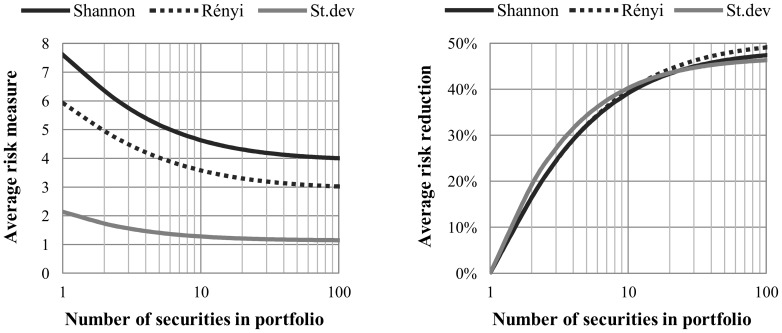
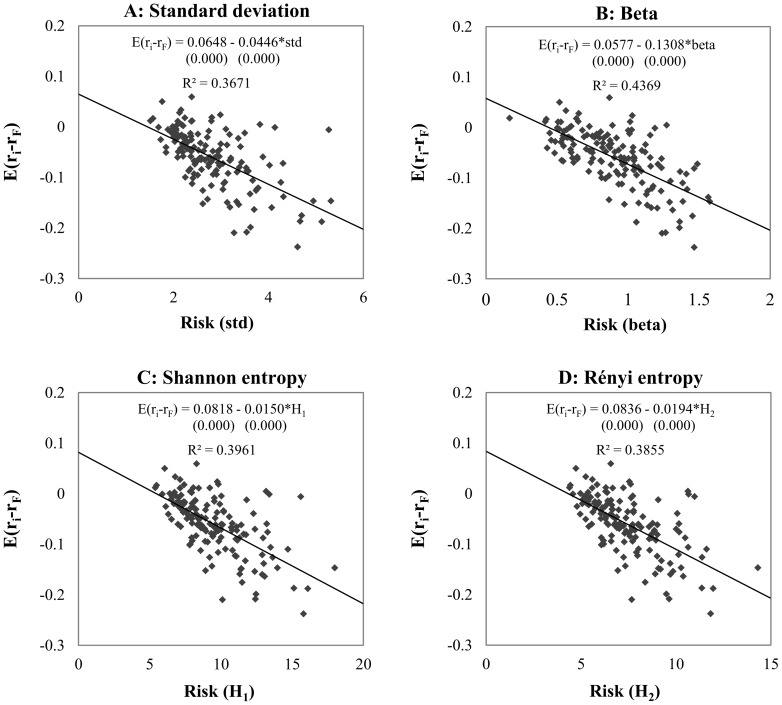
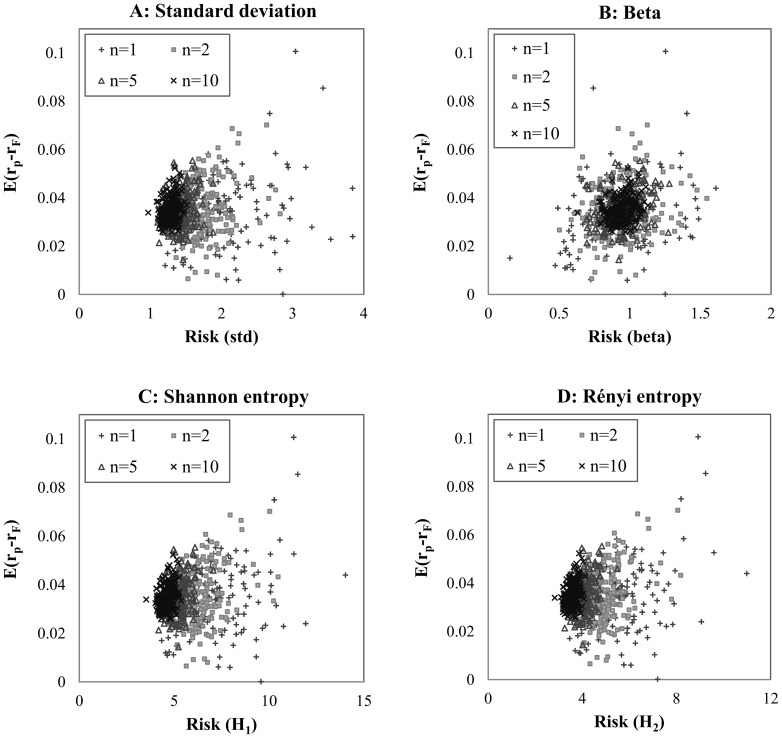
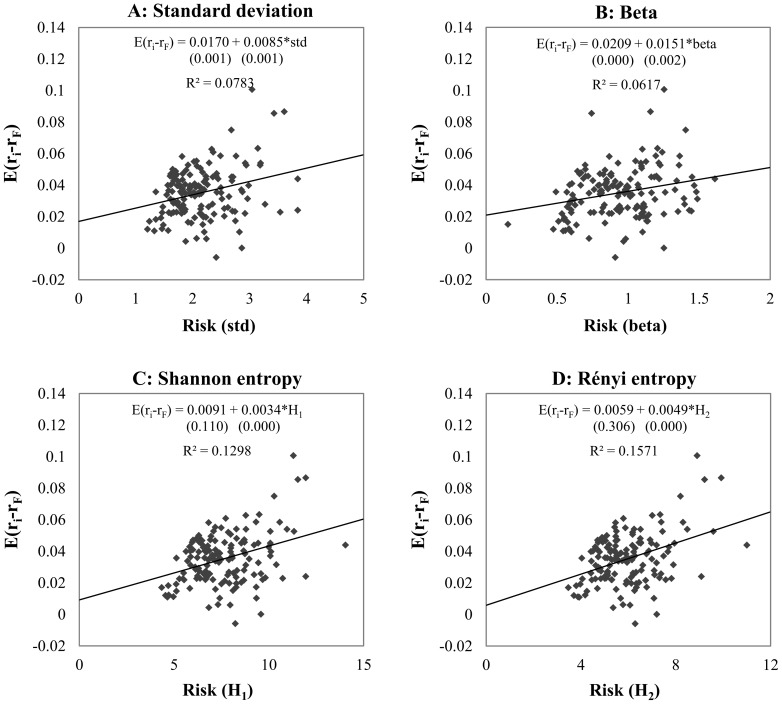
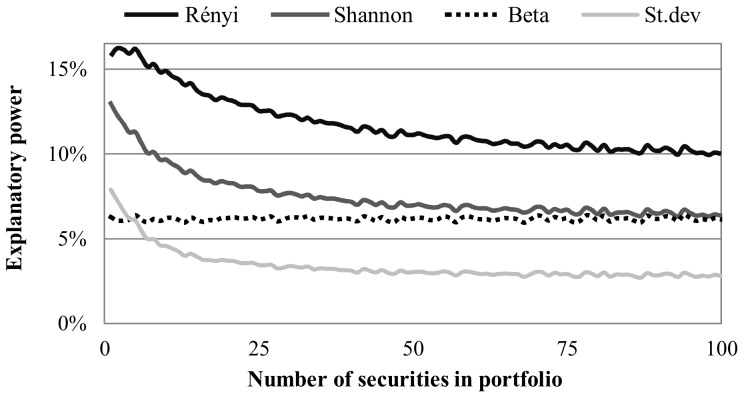
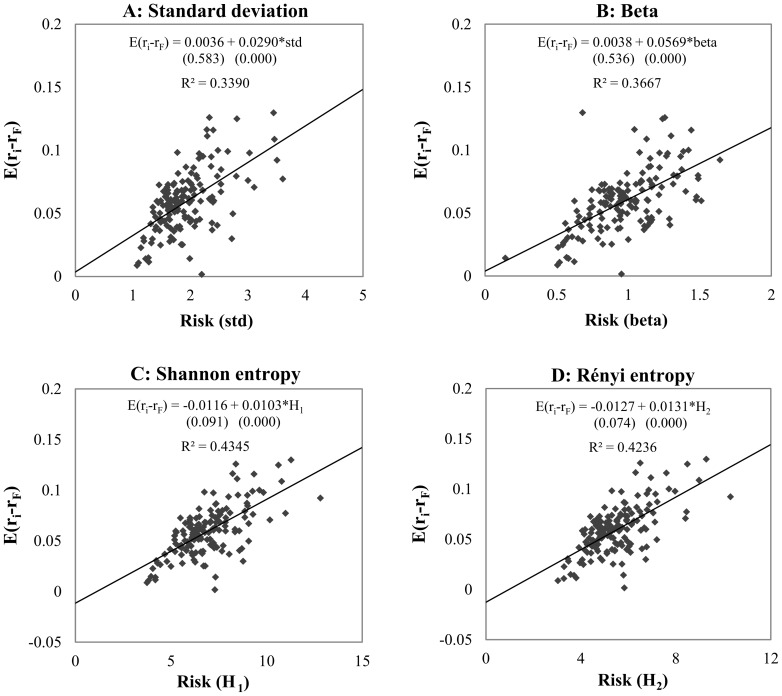
We investigate entropy as a financial risk measure. Entropy explains the equity premium of securities and portfolios in a simpler way and, at the same time, with higher explanatory power than the beta parameter of the capital asset pricing model. For asset pricing we define the continuous entropy as an alternative measure of risk. Our results show that entropy decreases in the function of the number of securities involved in a portfolio in a similar way to the standard deviation, and that efficient portfolios are situated on a hyperbola in the expected return-entropy system. For empirical investigation we use daily returns of 150 randomly selected securities for a period of 27 years. Our regression results show that entropy has a higher explanatory power for the expected return than the capital asset pricing model beta. Furthermore we show the time varying behavior of the beta along with entropy.
我们将熵作为一种金融风险度量进行研究。熵以一种更简单的方式解释了证券和投资组合的股权溢价,同时,其解释力高于资本资产定价模型的贝塔参数。对于资产定价,我们将连续熵定义为一种风险的替代度量。我们的结果表明,熵随投资组合中所涉及证券数量的函数而下降,其方式与标准差类似,并且有效投资组合位于预期收益 - 熵系统中的一条双曲线上。为了进行实证研究,我们使用了150只随机选取证券在27年期间的日收益率。我们的回归结果表明,熵对预期收益的解释力高于资本资产定价模型的贝塔。此外,我们展示了贝塔随时间变化的行为以及熵的情况。