Vercelli Cristina, Barbero Raffaella, Cuniberti Barbara, Racca Silvia, Abbadessa Giuliana, Piccione Francesca, Re Giovanni
Department of Veterinary Sciences, Section of Pharmacology and Toxicology, University of Turin, Grugliasco, Italy.
Department of Clinical and Biological Sciences, Azienda Ospedaliero-Universitaria San Luigi Gonzaga, Orbassano, Italy.
J Breast Cancer. 2014 Dec;17(4):332-8. doi: 10.4048/jbc.2014.17.4.332. Epub 2014 Dec 26.
Transient receptor potential vanilloid 1 (TRPV1) is a nonselective cation channel belonging to the transient receptor potential family, and it is expressed in different neoplastic tissues. Its activation is associated with regulation of cancer growth and progression. The aim of this research was to study the expression and pharmacological characteristics of TRPV1 in cells derived from human breast cancer MCF-7 cells.
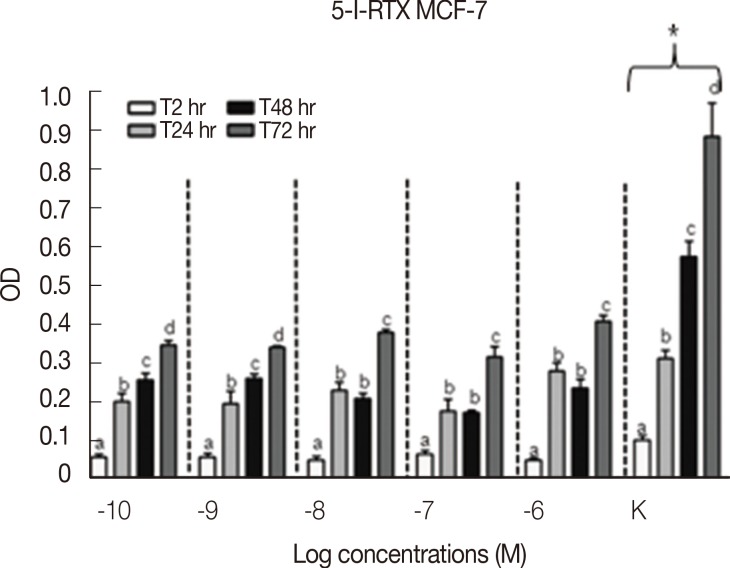
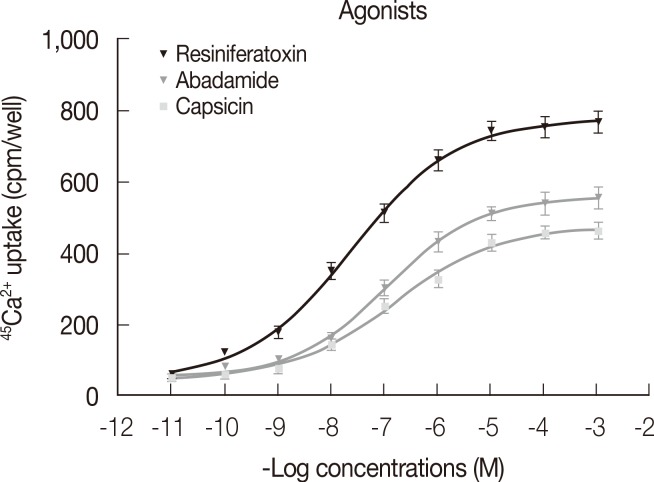
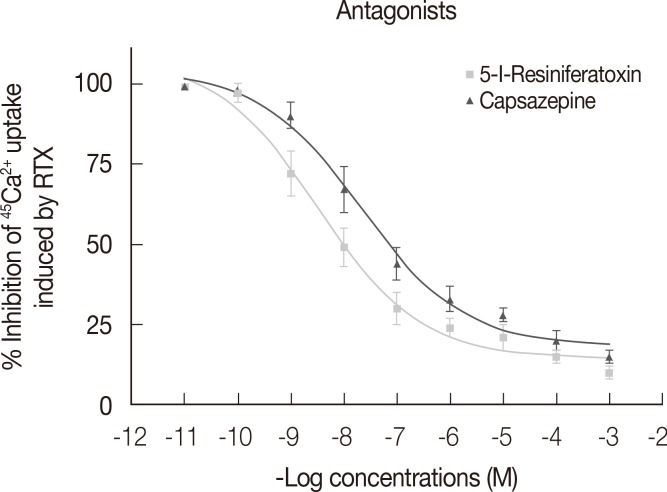
TRPV1 presence was assessed by binding studies and Western blotting. Receptor binding characteristics were evaluated through competition assays, while 3-(4,5-dimethylthiazol-2-yl)-2,5,-dipheyltetrazolium bromide reduction assays were performed to confirm an early hypothesis regarding the modulation of cancer cell proliferation. The functionality of TRPV1 was evaluated by measuring Ca(2+) uptake in the presence of increasing concentrations of TRPV1 agonists and antagonists.
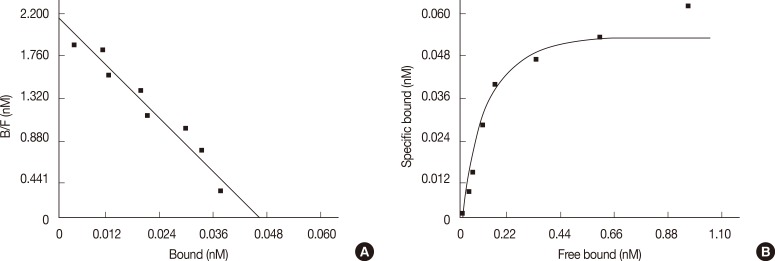
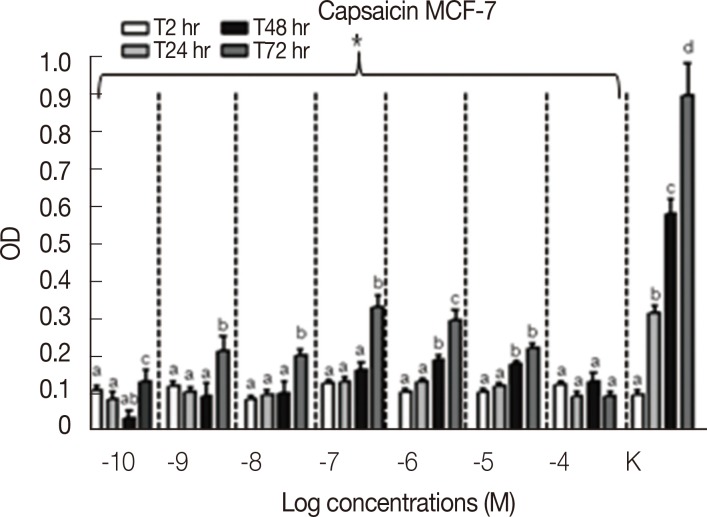
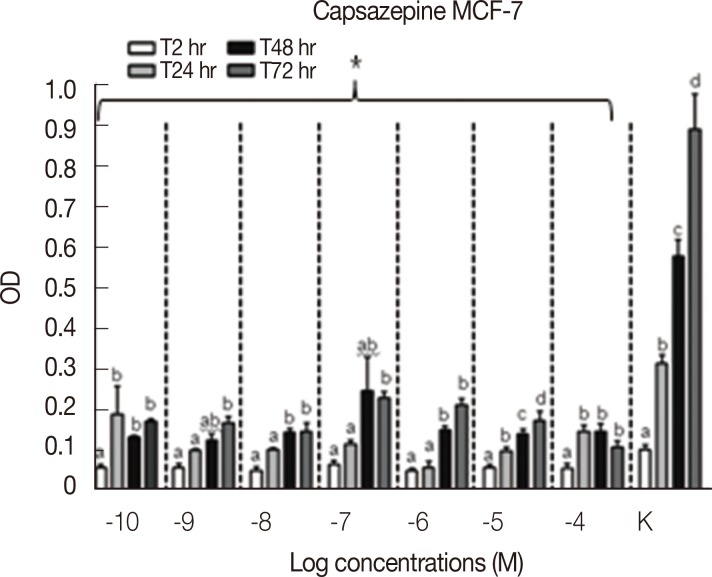
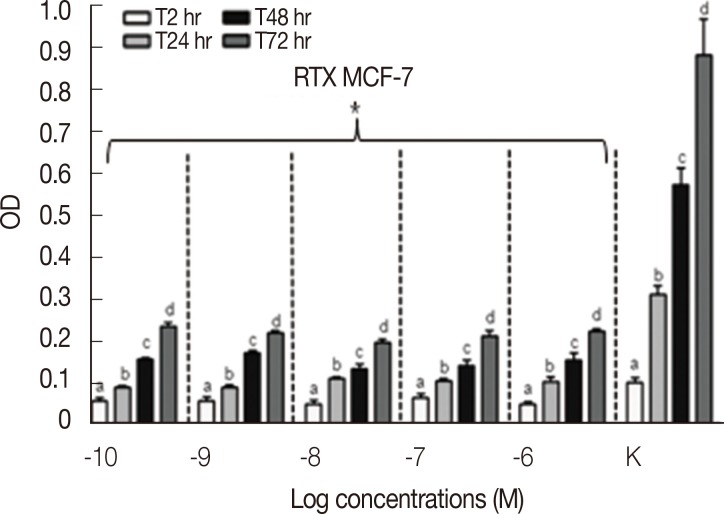
Binding studies identified a single class of TRPV1 (Bmax 1,492±192 fmol/mg protein), and Western blot showed a signal at 100 kDa corresponding to the molecular weight of human TRPV1. Among the different tested agonists and antagonists, anandamide (Ki: 2.8×10(-11) M) and 5-iodoresiniferatoxin (5-I-RTX) (Ki: 5.6×10(-11) M) showed the highest degrees of affinity for TRPV1, respectively. All tested TRPV1 agonists and antagonists caused a significant (p<0.05) decrease in cell growth rate in MCF-7 cells. For agonists and antagonists, the efficacy of tested compounds displayed the following rank order: resiniferatoxin>anandamide>capsaicin and 5-I-RTX=capsazepine, respectively.
These data indicate that both TRPV1 agonists and antagonists induce significant inhibition of MCF-7 cell growth. Even though the mechanisms involved in the antiproliferative effects of TRPV1 agonists and antagonists should be further investigated, it has been suggested that agonists cause desensitization of the receptor, leading to alteration in Ca(2+)-influx regulation. By contrast, antagonists cause a functional block of the receptor with consequent fatal dysregulation of cell homeostasis.
瞬时受体电位香草酸亚型1(TRPV1)是一种属于瞬时受体电位家族的非选择性阳离子通道,在不同的肿瘤组织中均有表达。其激活与癌症生长和进展的调控相关。本研究旨在探讨TRPV1在人乳腺癌MCF - 7细胞衍生细胞中的表达及药理学特性。
通过结合研究和蛋白质印迹法评估TRPV1的存在情况。通过竞争试验评估受体结合特性,同时进行3 -(4,5 - 二甲基噻唑 - 2 - 基)- 2,5 - 二苯基四氮唑溴盐还原试验,以证实关于癌细胞增殖调节的早期假设。通过在存在浓度递增的TRPV1激动剂和拮抗剂的情况下测量Ca(2+)摄取来评估TRPV1的功能。
结合研究确定了一类单一的TRPV1(Bmax 1,492±192 fmol/mg蛋白),蛋白质印迹显示在100 kDa处有一个信号,对应于人TRPV1的分子量。在不同测试的激动剂和拮抗剂中,花生四烯乙醇胺(Ki:2.8×10(-11) M)和5 - 碘树脂毒素(5 - I - RTX)(Ki:5.6×10(-11) M)分别对TRPV1表现出最高程度的亲和力。所有测试的TRPV1激动剂和拮抗剂均导致MCF - 7细胞的细胞生长速率显著(p<0.05)降低。对于激动剂和拮抗剂,测试化合物的效力显示出以下顺序:树脂毒素>花生四烯乙醇胺>辣椒素,以及5 - I - RTX =辣椒平。
这些数据表明,TRPV1激动剂和拮抗剂均能显著抑制MCF - 7细胞生长。尽管TRPV1激动剂和拮抗剂的抗增殖作用机制应进一步研究,但有人认为激动剂会导致受体脱敏,从而导致Ca(2+)内流调节改变。相比之下,拮抗剂会导致受体功能阻断,进而导致细胞内稳态的致命失调。