Conti Anastasia, Carnevali Davide, Bollati Valentina, Fustinoni Silvia, Pellegrini Matteo, Dieci Giorgio
Department of Life Sciences, University of Parma, 43124 Parma, Italy Department of Clinical and Experimental Medicine, University of Parma, 43126 Parma, Italy.
Department of Life Sciences, University of Parma, 43124 Parma, Italy.
Nucleic Acids Res. 2015 Jan;43(2):817-35. doi: 10.1093/nar/gku1361. Epub 2014 Dec 29.
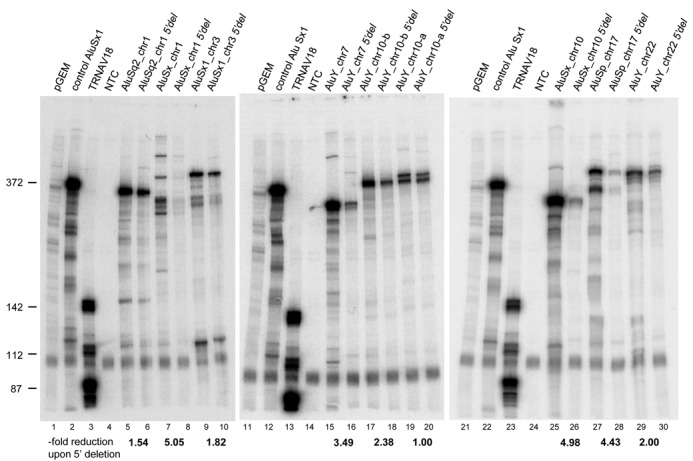
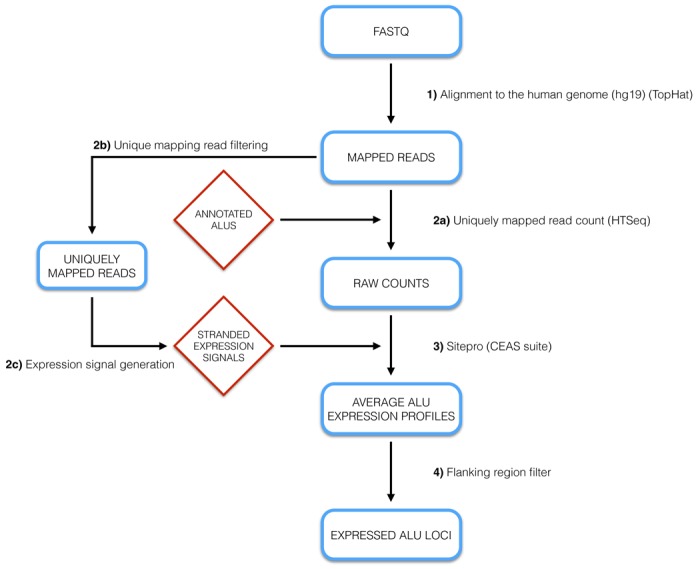
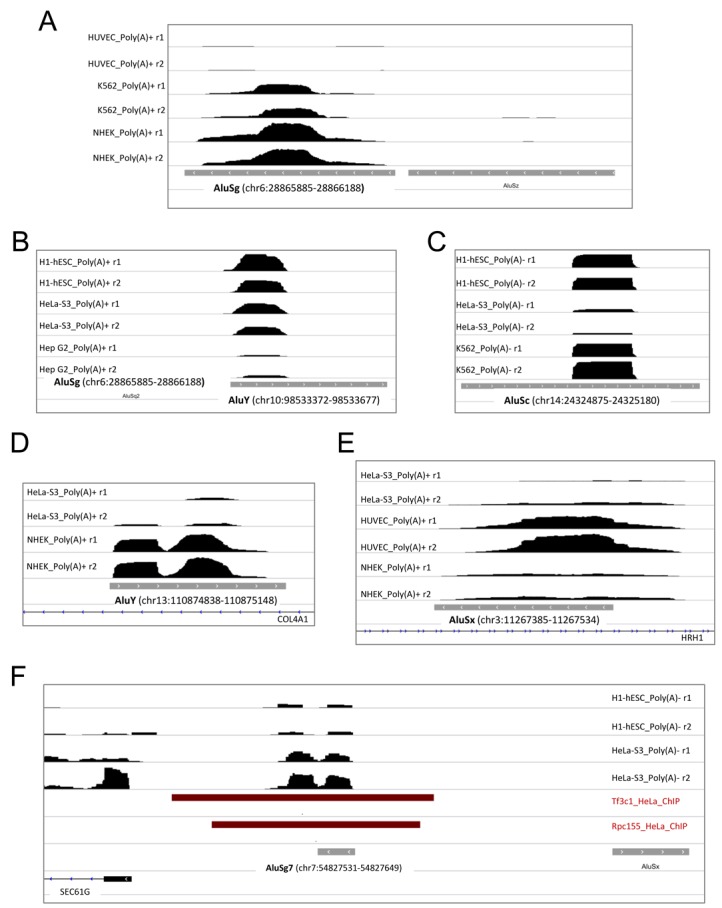
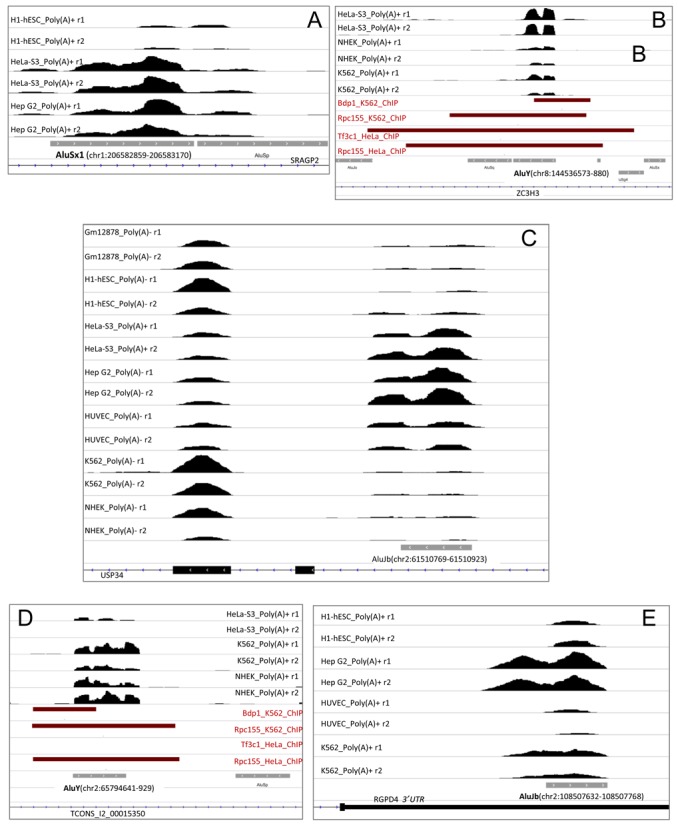
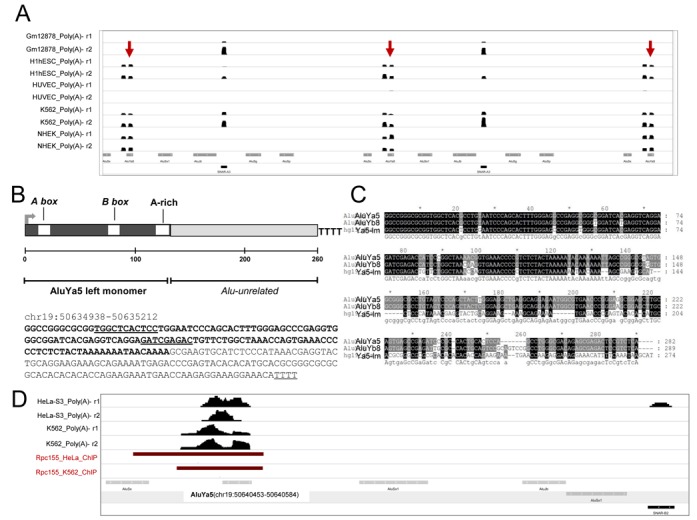
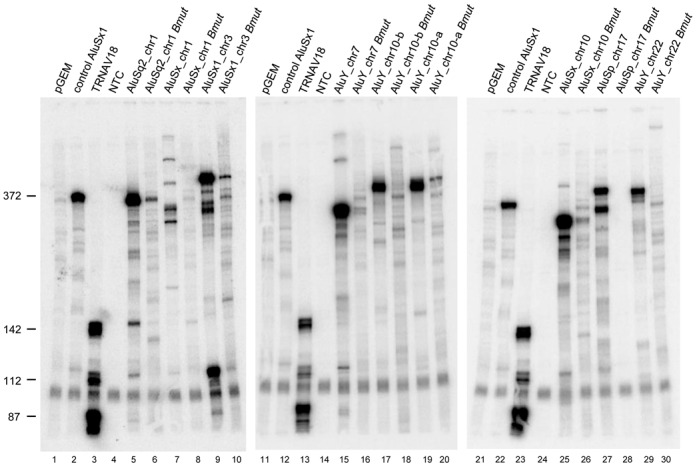
Of the ∼ 1.3 million Alu elements in the human genome, only a tiny number are estimated to be active in transcription by RNA polymerase (Pol) III. Tracing the individual loci from which Alu transcripts originate is complicated by their highly repetitive nature. By exploiting RNA-Seq data sets and unique Alu DNA sequences, we devised a bioinformatic pipeline allowing us to identify Pol III-dependent transcripts of individual Alu elements. When applied to ENCODE transcriptomes of seven human cell lines, this search strategy identified ∼ 1300 Alu loci corresponding to detectable transcripts, with ∼ 120 of them expressed in at least three cell lines. In vitro transcription of selected Alus did not reflect their in vivo expression properties, and required the native 5'-flanking region in addition to internal promoter. We also identified a cluster of expressed AluYa5-derived transcription units, juxtaposed to snaR genes on chromosome 19, formed by a promoter-containing left monomer fused to an Alu-unrelated downstream moiety. Autonomous Pol III transcription was also revealed for Alus nested within Pol II-transcribed genes. The ability to investigate Alu transcriptomes at single-locus resolution will facilitate both the identification of novel biologically relevant Alu RNAs and the assessment of Alu expression alteration under pathological conditions.
在人类基因组中约130万个Alu元件中,估计只有极少数能被RNA聚合酶(Pol)III转录激活。由于Alu元件具有高度重复性,追踪其转录本的来源位点很复杂。通过利用RNA测序数据集和独特的Alu DNA序列,我们设计了一种生物信息学流程,使我们能够识别单个Alu元件的Pol III依赖性转录本。将这种搜索策略应用于7种人类细胞系的ENCODE转录组时,共识别出约1300个与可检测转录本相对应的Alu位点,其中约120个在至少三种细胞系中表达。对选定Alu元件的体外转录并不能反映其体内表达特性,除内部启动子外还需要天然的5'侧翼区域。我们还在19号染色体上识别出一组由表达的AluYa5衍生的转录单元,它们与snaR基因并列,由一个含启动子的左单体与一个与Alu无关的下游部分融合而成。对于嵌套在Pol II转录基因中的Alu元件,也发现了自主的Pol III转录现象。以单一位点分辨率研究Alu转录组的能力,将有助于识别新的具有生物学相关性的Alu RNA,并评估病理条件下Alu表达的改变。