Hartlieb Karel J, Witus Leah S, Ferris Daniel P, Basuray Ashish N, Algaradah Mohammed M, Sarjeant Amy A, Stern Charlotte L, Nassar Majed S, Botros Youssry Y, Stoddart J Fraser
Department of Chemistry, Northwestern University , 2145 Sheridan Road, Evanston, Illinois 60208, United States.
ACS Nano. 2015 Feb 24;9(2):1461-70. doi: 10.1021/nn505895j. Epub 2015 Jan 23.
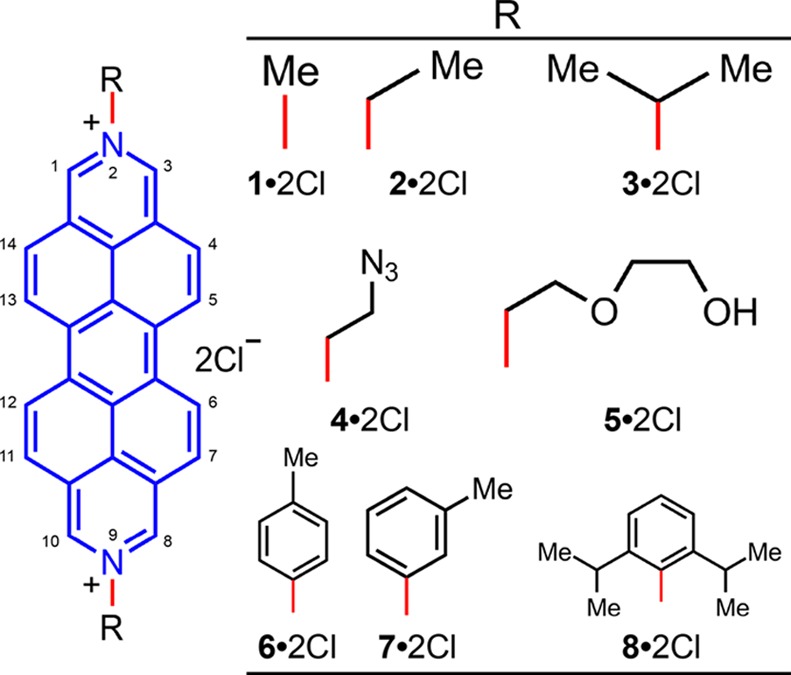
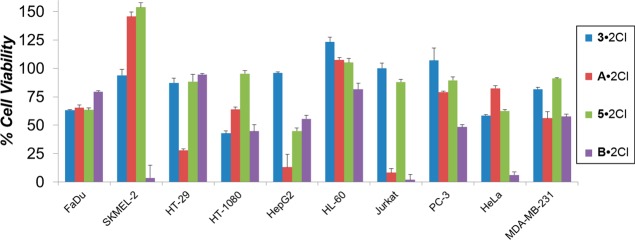
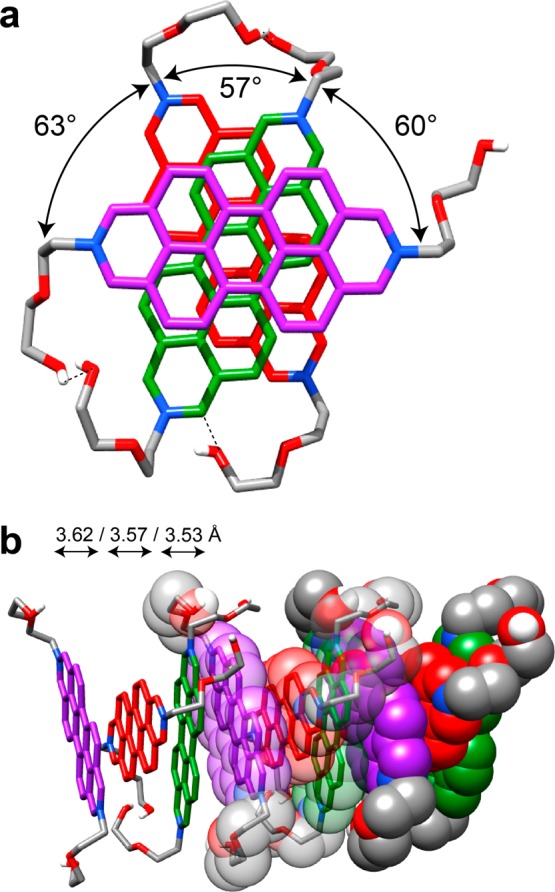
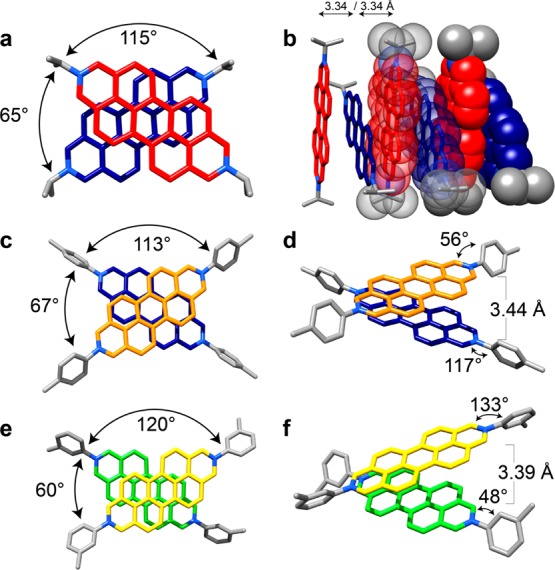
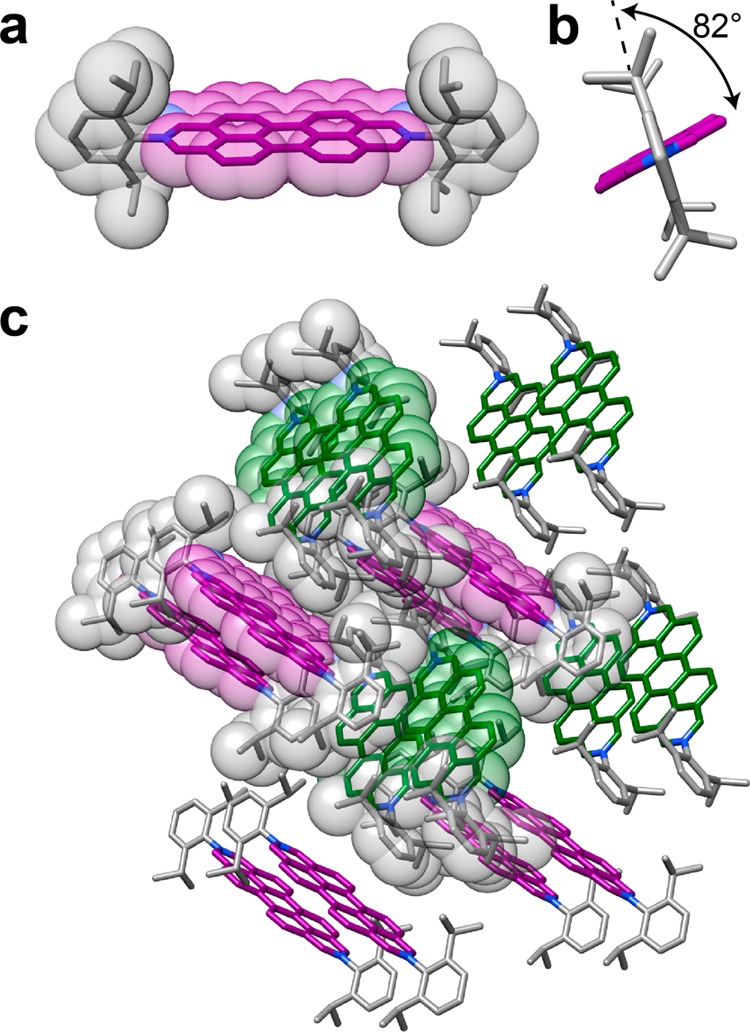
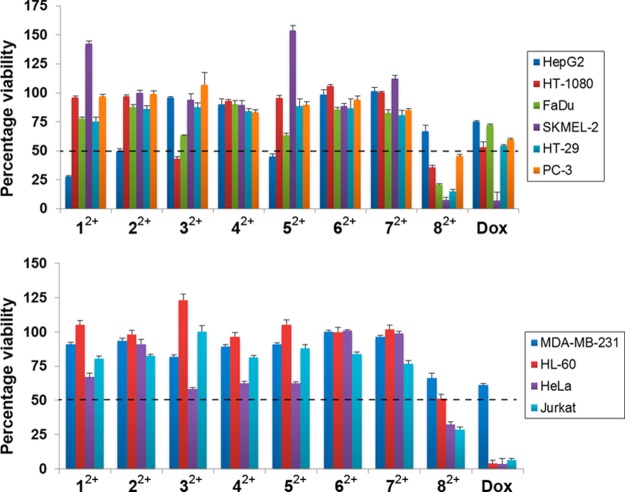
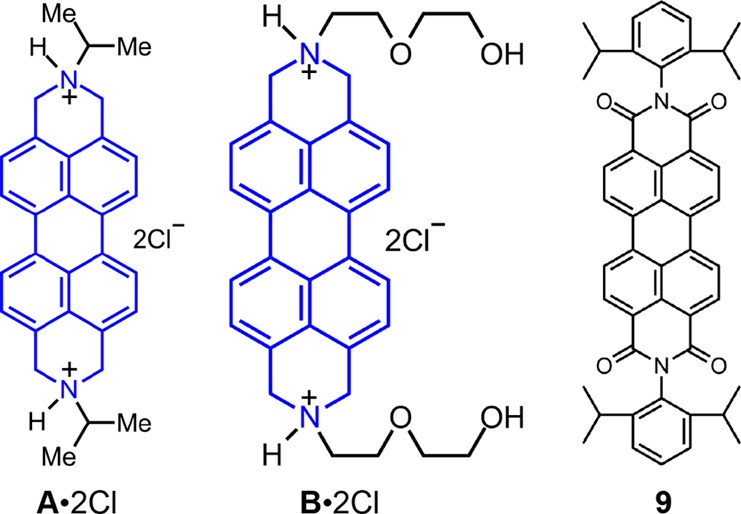
Polyaromatic compounds are well-known to intercalate DNA. Numerous anticancer chemotherapeutics have been developed upon the basis of this recognition motif. The compounds have been designed such that they interfere with the role of the topoisomerases, which control the topology of DNA during the cell-division cycle. Although many promising chemotherapeutics have been developed upon the basis of polyaromatic DNA intercalating systems, these candidates did not proceed past clinical trials on account of their dose-limiting toxicity. Herein, we discuss an alternative, water-soluble class of polyaromatic compounds, the 2,9-diazaperopyrenium dications, and report in vitro cell studies for a library of these dications. These investigations reveal that a number of 2,9-diazaperopyrenium dications show similar activities as doxorubicin toward a variety of cancer cell lines. Additionally, we report the solid-state structures of these dications, and we relate their tendency to aggregate in solution to their toxicity profiles. The addition of bulky substituents to these polyaromatic dications decreases their tendency to aggregate in solution. The derivative substituted with 2,6-diisopropylphenyl groups proved to be the most cytotoxic against the majority of the cell lines tested. In the solid state, the 2,6-diisopropylphenyl-functionalized derivative does not undergo π···π stacking, while in aqueous solution, dynamic light scattering reveals that this derivative forms very small (50-100 nm) aggregates, in contrast with the larger ones formed by dications with less bulky substituents. Alteration of the aromaticitiy in the terminal heterocycles of selected dications reveals a drastic change in the toxicity of these polyaromatic species toward specific cell lines.
众所周知,多环芳烃化合物可嵌入DNA。许多抗癌化疗药物都是基于这种识别基序开发的。这些化合物的设计目的是干扰拓扑异构酶的作用,拓扑异构酶在细胞分裂周期中控制DNA的拓扑结构。尽管基于多环芳烃DNA嵌入系统已经开发出了许多有前景的化疗药物,但由于其剂量限制性毒性,这些候选药物并未进入临床试验阶段。在此,我们讨论一类替代性的水溶性多环芳烃化合物——2,9-二氮杂芘二价阳离子,并报告对这些二价阳离子文库进行的体外细胞研究。这些研究表明,一些2,9-二氮杂芘二价阳离子对多种癌细胞系表现出与阿霉素相似的活性。此外,我们报告了这些二价阳离子的固态结构,并将它们在溶液中的聚集倾向与其毒性特征联系起来。在这些多环芳烃二价阳离子上添加庞大的取代基会降低它们在溶液中的聚集倾向。事实证明,被2,6-二异丙基苯基取代的衍生物对大多数测试细胞系的细胞毒性最大。在固态下,2,6-二异丙基苯基官能化的衍生物不会发生π···π堆积,而在水溶液中,动态光散射显示该衍生物形成非常小的(50-100纳米)聚集体,这与取代基较小的二价阳离子形成的较大聚集体形成对比。对选定二价阳离子末端杂环中的芳香性进行改变,揭示了这些多环芳烃物种对特定细胞系的毒性发生了急剧变化。