Yang Hengwen, Chen Yu-Zen, Zhang Yi, Wang Xiaohui, Zhao Xiang, Godfroy James I, Liang Qian, Zhang Man, Zhang Tianying, Yuan Quan, Ann Royal Mary, Driscoll Monica, Xia Ning-Shao, Yin Hang, Xue Ding
Department of Molecular, Cellular and Developmental Biology, University of Colorado, Boulder, Colorado 80309, USA.
School of Life Sciences, Tsinghua University, Beijing 100084, China.
Nat Commun. 2015 Jan 7;6:5717. doi: 10.1038/ncomms6717.
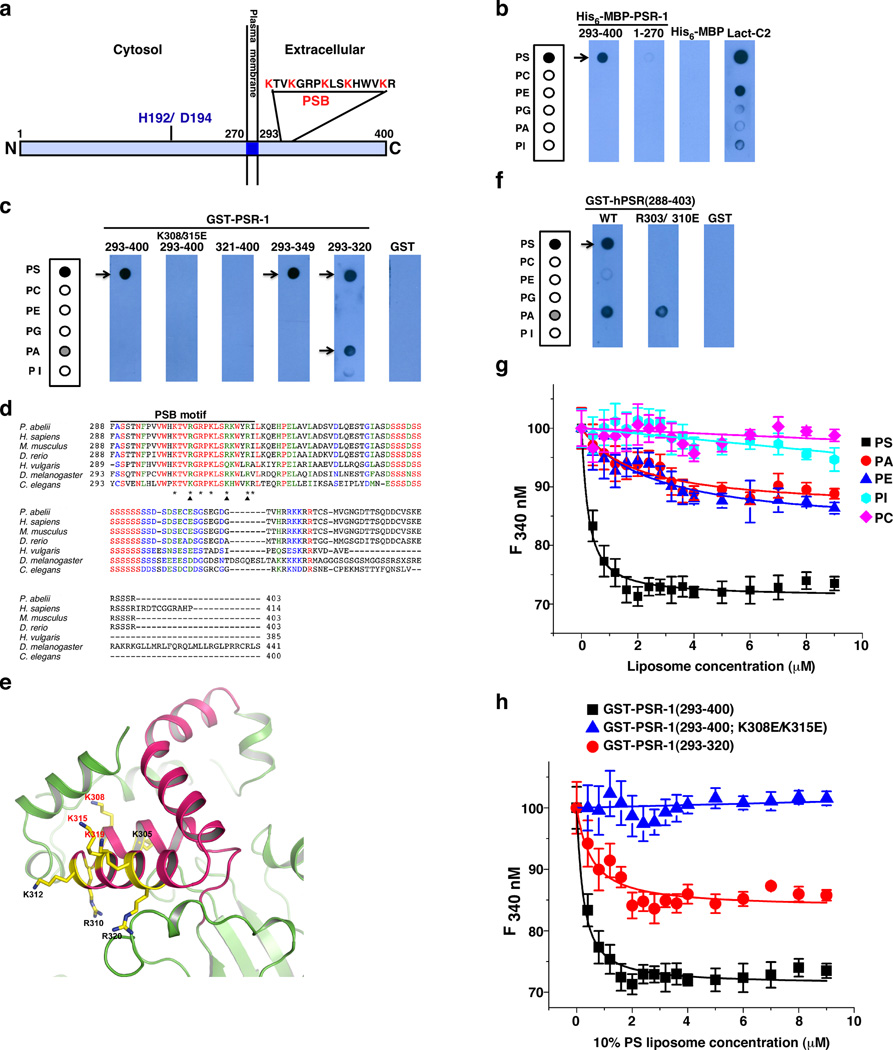
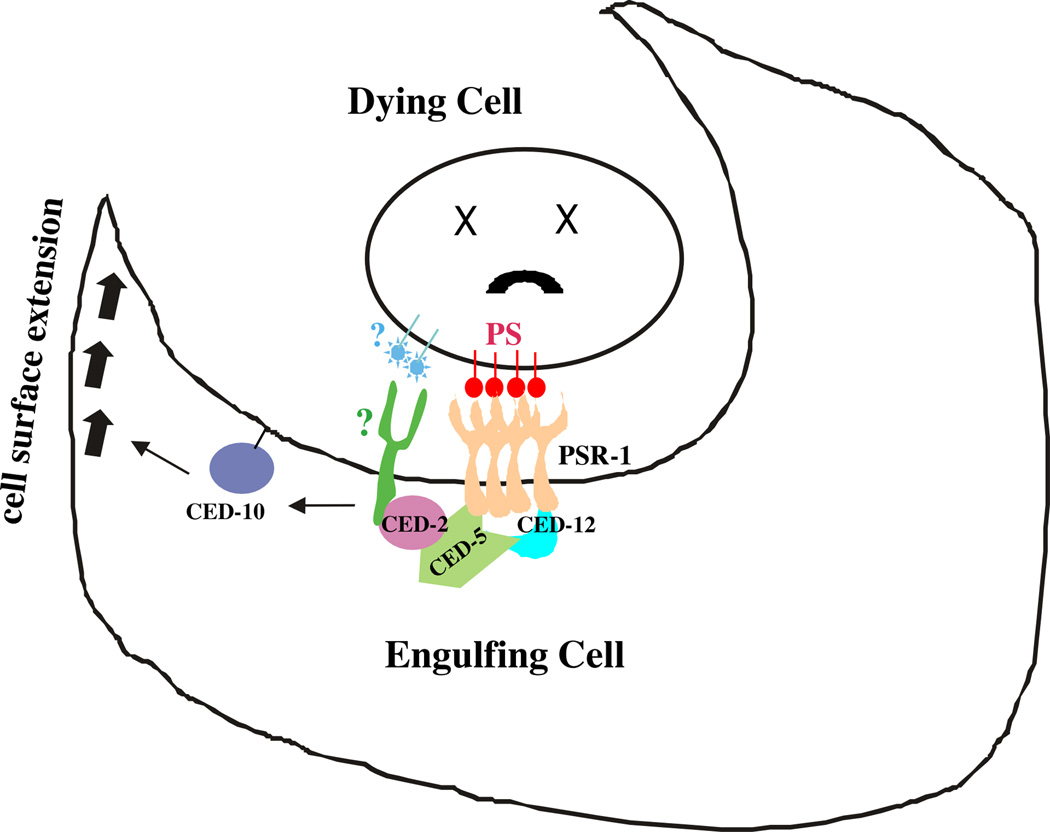
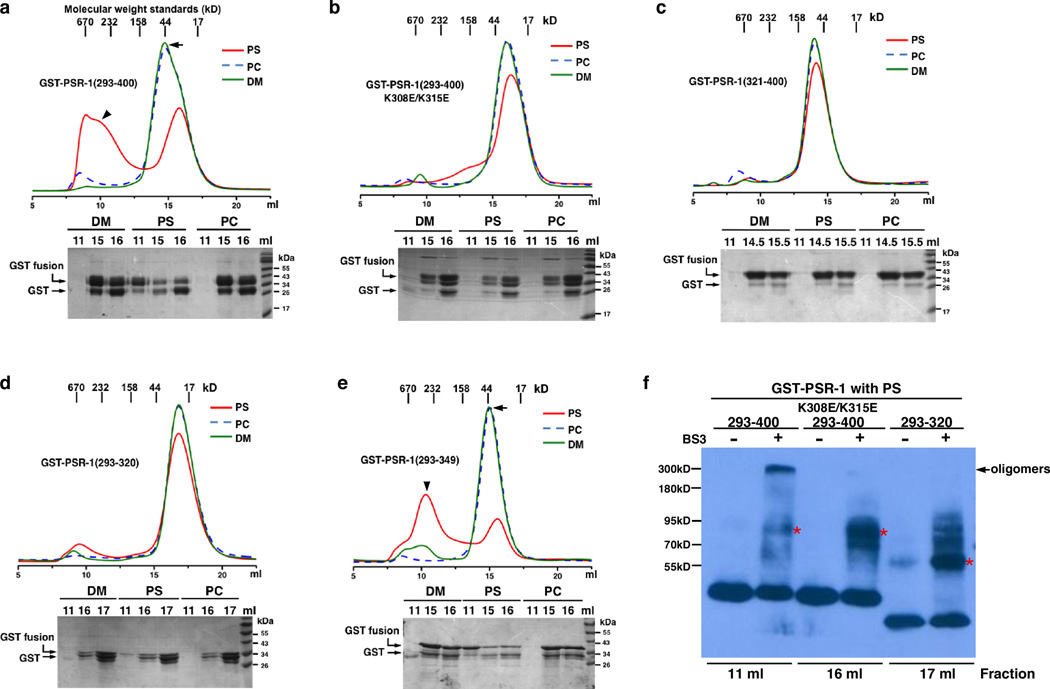
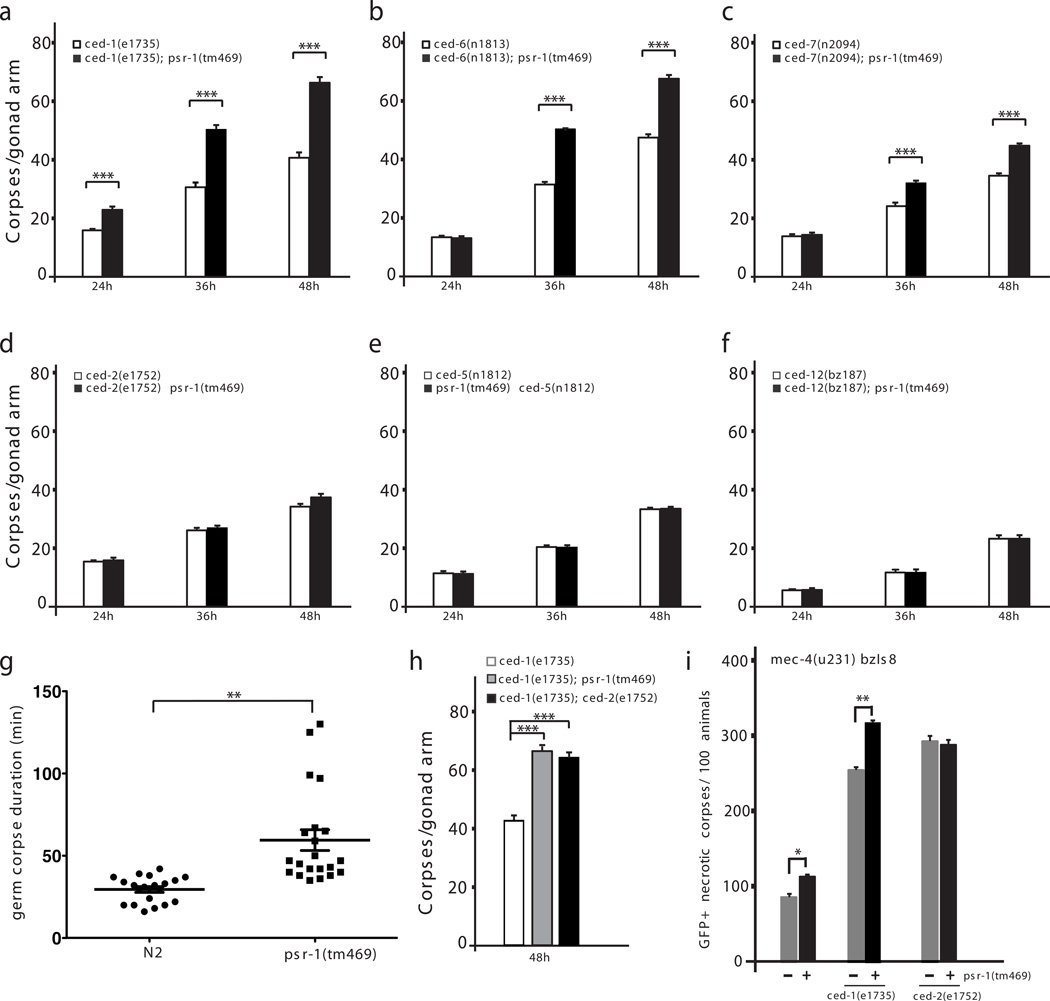
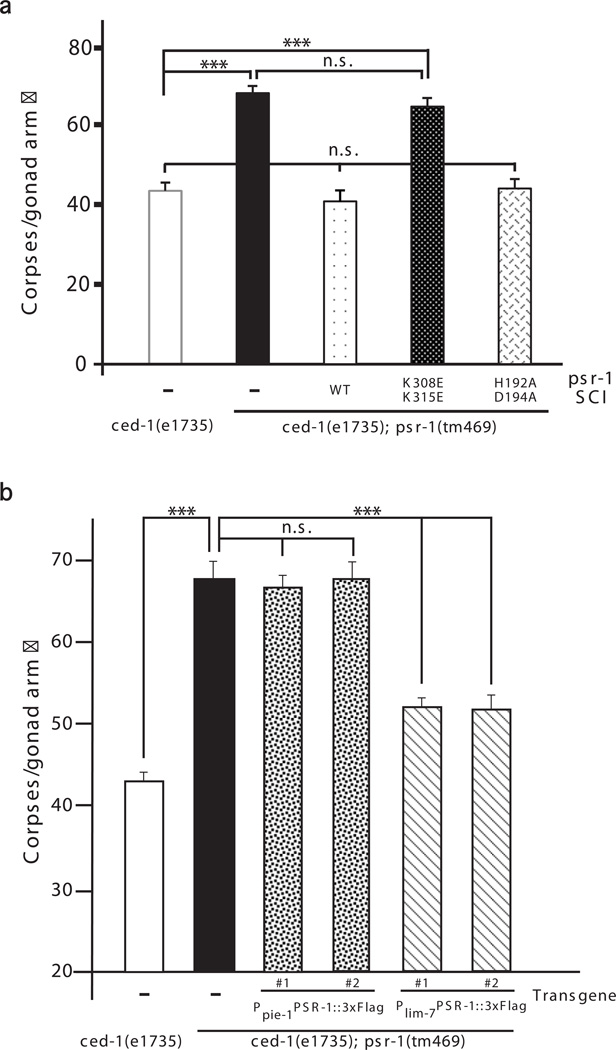
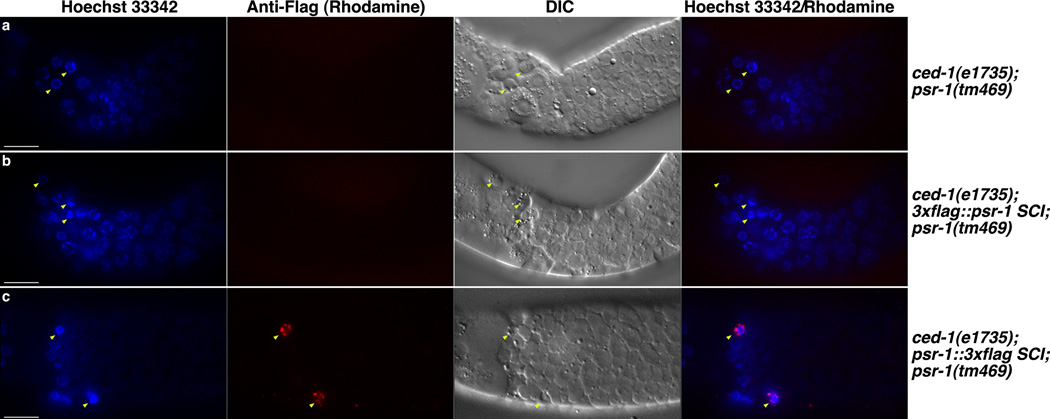
The conserved phosphatidylserine receptor (PSR) was first identified as a receptor for phosphatidylserine, an 'eat-me' signal exposed by apoptotic cells. However, several studies suggest that PSR may also act as an arginine demethylase, a lysyl hydroxylase, or an RNA-binding protein through its N-terminal JmjC domain. How PSR might execute drastically different biochemical activities, and whether they are physiologically significant, remain unclear. Here we report that a lysine-rich motif in the extracellular domain of PSR-1, the Caenorhabditis elegans PSR, mediates specific phosphatidylserine binding in vitro and clearance of apoptotic cells in vivo. This motif also mediates phosphatidylserine-induced oligomerization of PSR-1, suggesting a mechanism by which PSR-1 activates phagocytosis. Mutations in the phosphatidylserine-binding motif, but not in its Fe(II) binding site critical for the JmjC activity, abolish PSR-1 phagocytic function. Moreover, PSR-1 enriches and clusters around apoptotic cells during apoptosis. These results establish that PSR-1 is a conserved, phosphatidylserine-recognizing phagocyte receptor.
保守的磷脂酰丝氨酸受体(PSR)最初被鉴定为磷脂酰丝氨酸的受体,磷脂酰丝氨酸是凋亡细胞暴露的一种“吃我”信号。然而,多项研究表明,PSR还可能通过其N端JmjC结构域作为精氨酸脱甲基酶、赖氨酰羟化酶或RNA结合蛋白发挥作用。PSR如何执行截然不同的生化活性,以及这些活性在生理上是否重要,目前尚不清楚。在此,我们报告秀丽隐杆线虫PSR-1胞外结构域中富含赖氨酸的基序在体外介导特异性磷脂酰丝氨酸结合,并在体内介导凋亡细胞的清除。该基序还介导磷脂酰丝氨酸诱导的PSR-1寡聚化,提示PSR-1激活吞噬作用的一种机制。磷脂酰丝氨酸结合基序的突变,但对JmjC活性至关重要的铁离子结合位点的突变,会消除PSR-1的吞噬功能。此外,在凋亡过程中,PSR-1在凋亡细胞周围富集并聚集。这些结果表明,PSR-1是一种保守的、识别磷脂酰丝氨酸的吞噬细胞受体。