Palsson-McDermott Eva M, Curtis Anne M, Goel Gautam, Lauterbach Mario A R, Sheedy Frederick J, Gleeson Laura E, van den Bosch Mirjam W M, Quinn Susan R, Domingo-Fernandez Raquel, Johnston Daniel G W, Jiang Jian-Kang, Israelsen William J, Keane Joseph, Thomas Craig, Clish Clary, Vander Heiden Matthew, Xavier Ramnik J, O'Neill Luke A J
School of Biochemistry and Immunology, Trinity Biomedical Science Institute, Trinity College Dublin, Dublin 2, Ireland.
Centre for Computational and Integrative Biology, Massachusetts General Hospital, Boston, MA 02114, USA; Gastrointestinal Unit and Centre for the Study of Inflammatory Bowel Disease, Massachusetts General Hospital and Harvard Medical School, Boston, MA 02114, USA; Broad Institute of Harvard University and Massachusetts Institute of Technology, Cambridge, MA 02142, USA.
Cell Metab. 2015 Jan 6;21(1):65-80. doi: 10.1016/j.cmet.2014.12.005.
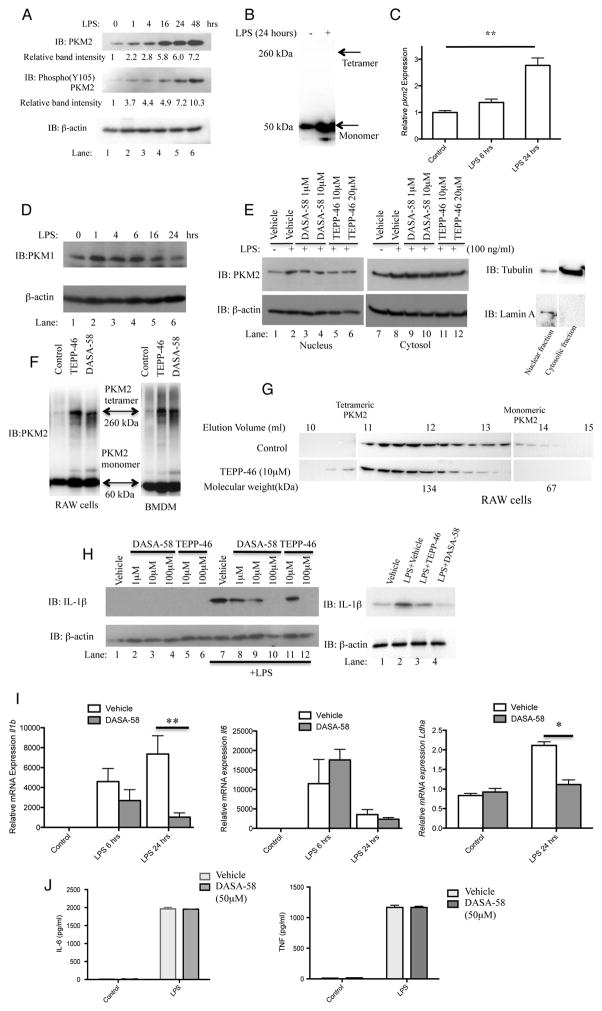
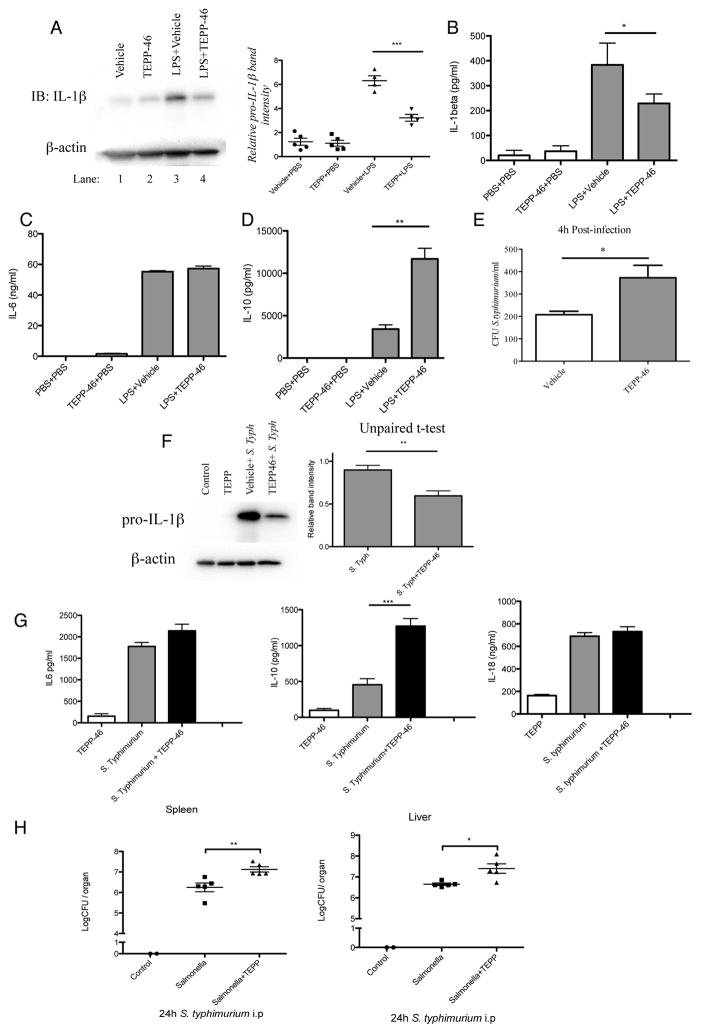
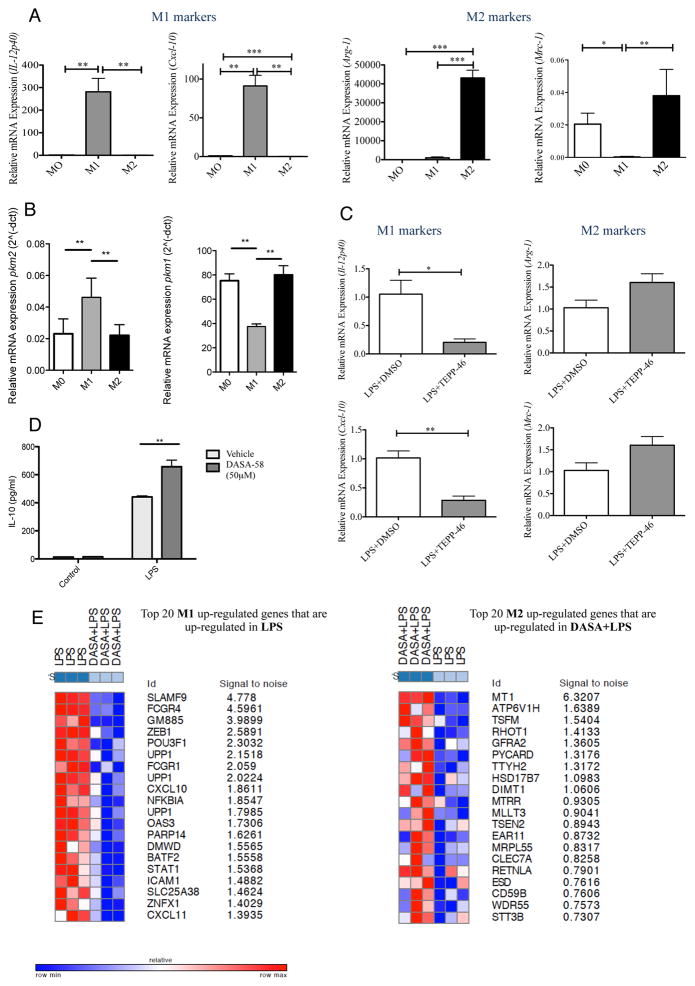
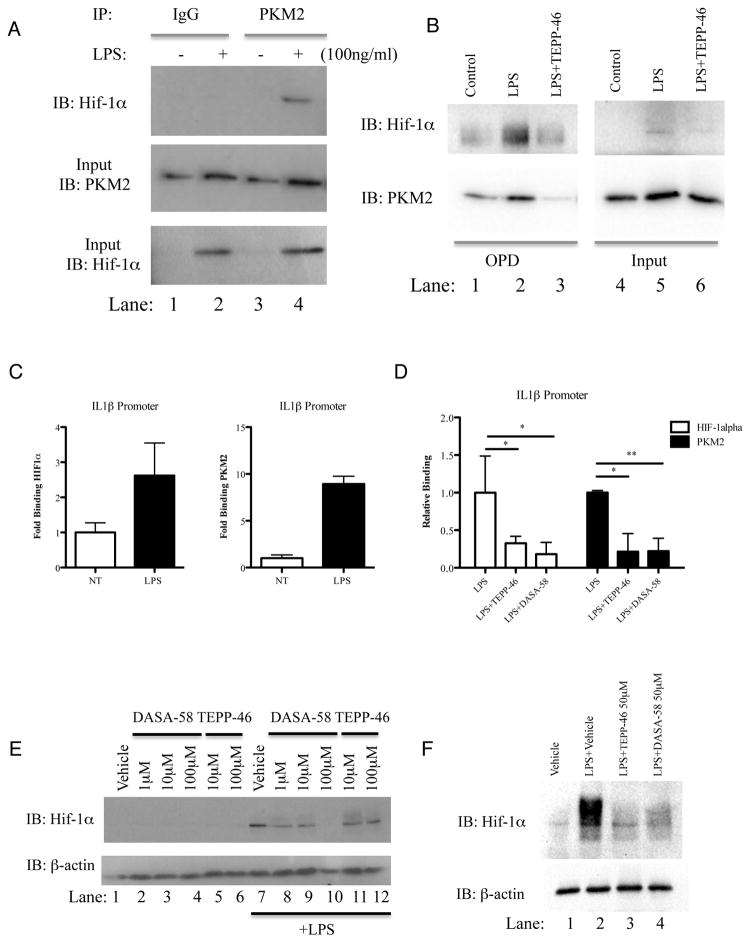
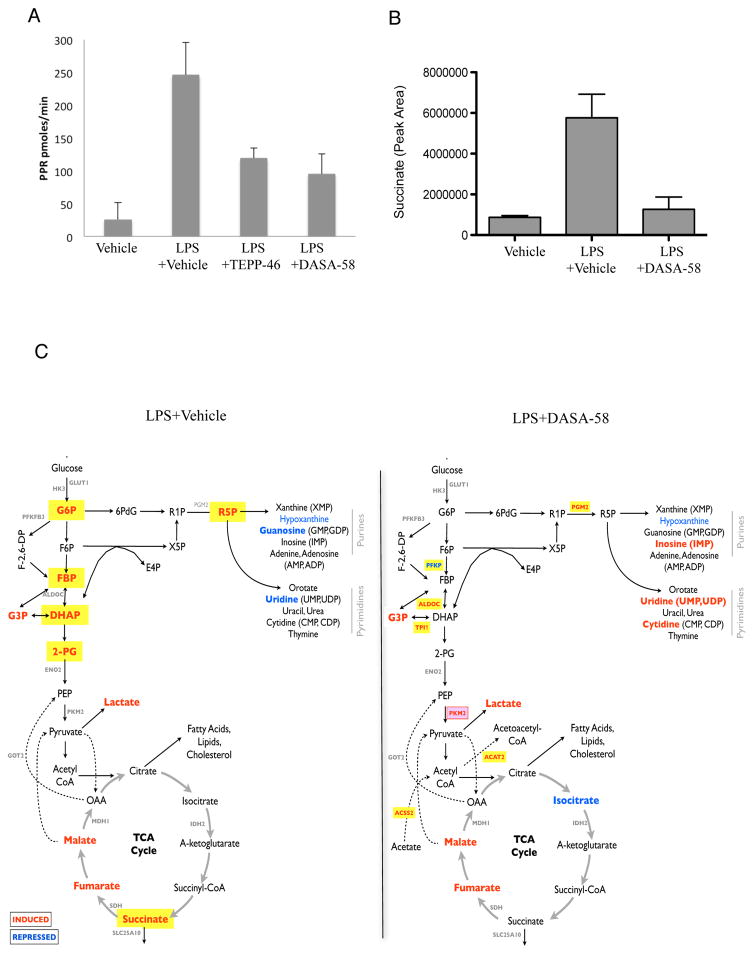
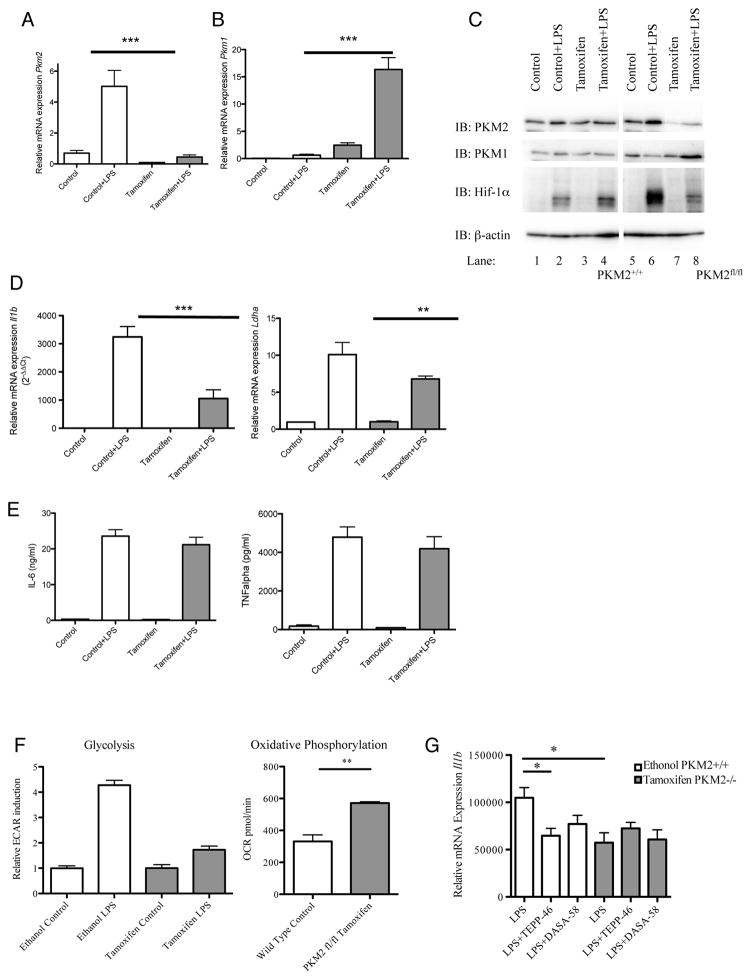
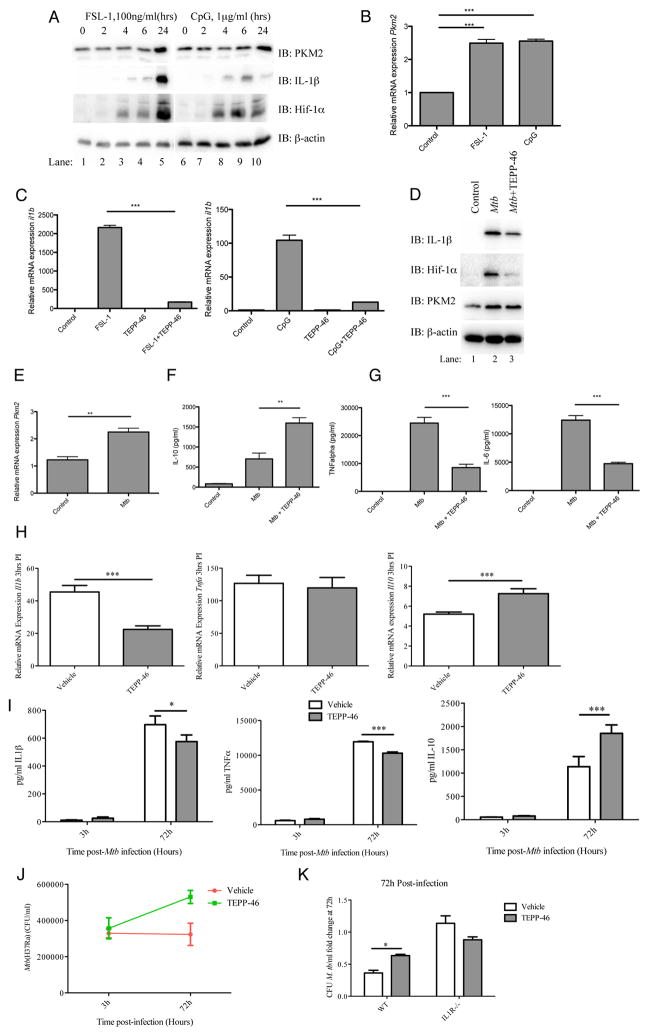
Macrophages activated by the TLR4 agonist LPS undergo dramatic changes in their metabolic activity. We here show that LPS induces expression of the key metabolic regulator Pyruvate Kinase M2 (PKM2). Activation of PKM2 using two well-characterized small molecules, DASA-58 and TEPP-46, inhibited LPS-induced Hif-1α and IL-1β, as well as the expression of a range of other Hif-1α-dependent genes. Activation of PKM2 attenuated an LPS-induced proinflammatory M1 macrophage phenotype while promoting traits typical of an M2 macrophage. We show that LPS-induced PKM2 enters into a complex with Hif-1α, which can directly bind to the IL-1β promoter, an event that is inhibited by activation of PKM2. Both compounds inhibited LPS-induced glycolytic reprogramming and succinate production. Finally, activation of PKM2 by TEPP-46 in vivo inhibited LPS and Salmonella typhimurium-induced IL-1β production, while boosting production of IL-10. PKM2 is therefore a critical determinant of macrophage activation by LPS, promoting the inflammatory response.
由Toll样受体4(TLR4)激动剂脂多糖(LPS)激活的巨噬细胞,其代谢活性会发生显著变化。我们在此表明,LPS可诱导关键代谢调节因子丙酮酸激酶M2(PKM2)的表达。使用两种特性明确的小分子DASA-58和TEPP-46激活PKM2,可抑制LPS诱导的低氧诱导因子-1α(Hif-1α)和白细胞介素-1β(IL-1β),以及一系列其他Hif-1α依赖性基因的表达。PKM2的激活减弱了LPS诱导的促炎M1巨噬细胞表型,同时促进了M2巨噬细胞的典型特征。我们发现,LPS诱导的PKM2与Hif-1α形成复合物,后者可直接结合至IL-1β启动子,而这一事件会被PKM2的激活所抑制。这两种化合物均抑制了LPS诱导的糖酵解重编程和琥珀酸生成。最后,在体内,TEPP-46激活PKM2可抑制LPS和鼠伤寒沙门氏菌诱导的IL-1β生成,同时增加IL-10的生成。因此,PKM2是LPS激活巨噬细胞的关键决定因素,可促进炎症反应。