Jin Jin, Xiao Yichuan, Hu Hongbo, Zou Qiang, Li Yanchuan, Gao Yanpan, Ge Wei, Cheng Xuhong, Sun Shao-Cong
Department of Immunology, The University of Texas MD Anderson Cancer Center, 7455 Fannin Street, Box 902, Houston, Texas 77030, USA.
National Key Laboratory of Medical Molecular Biology, Institute of Basic Medical Sciences, Chinese Academy of Medical Sciences, Dongdan Santiao 5#, Beijing 100005, China.
Nat Commun. 2015 Jan 7;6:5930. doi: 10.1038/ncomms6930.
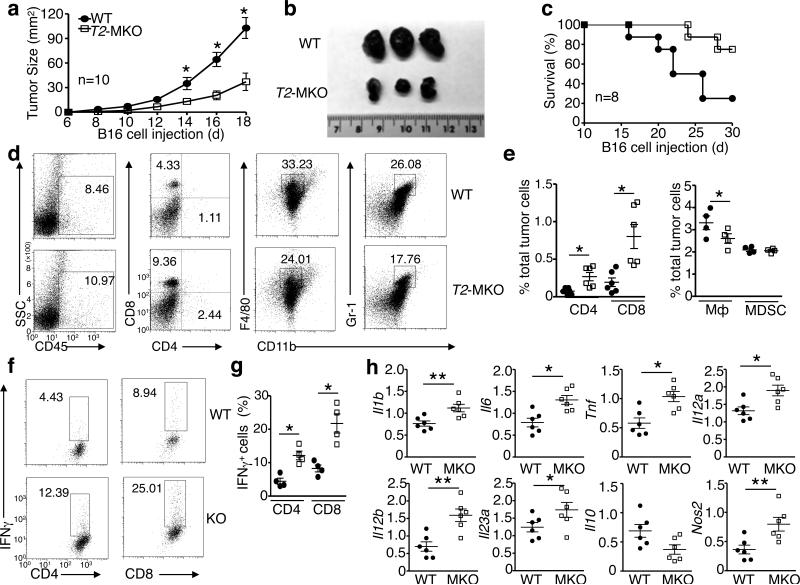
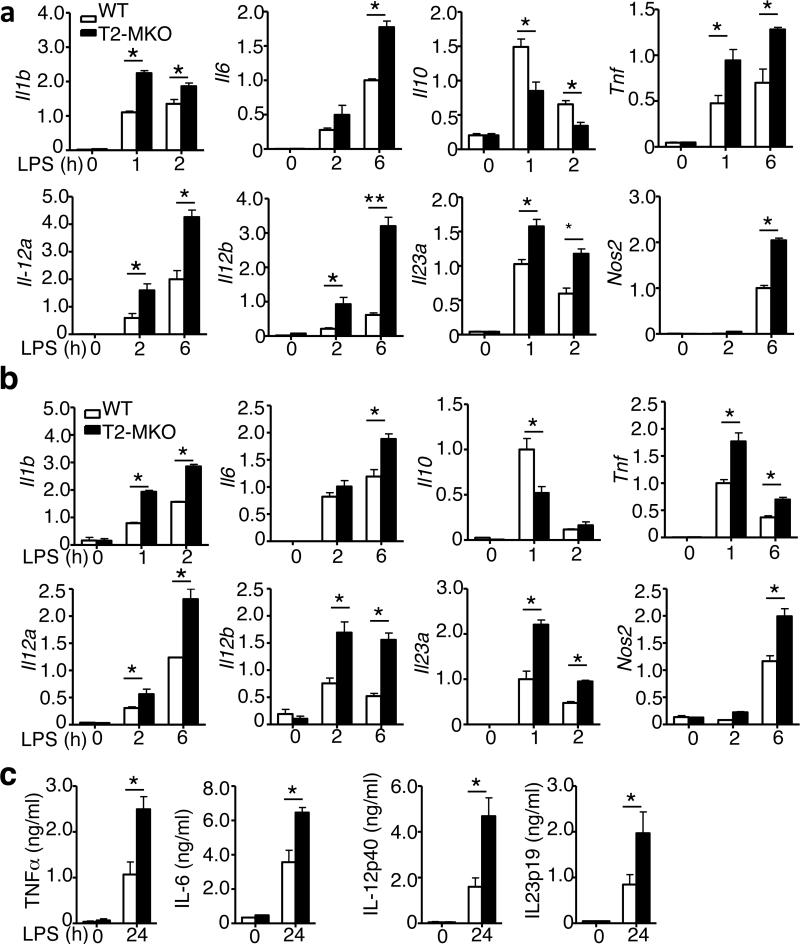
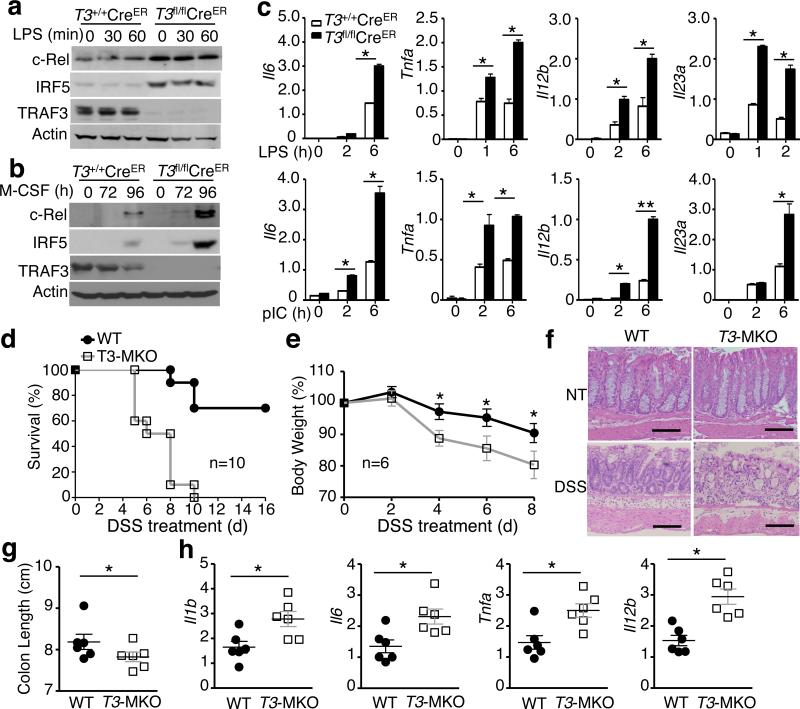
Signal transduction from toll-like receptors (TLRs) is important for innate immunity against infections, but deregulated TLR signalling contributes to inflammatory disorders. Here we show that myeloid cell-specific ablation of TRAF2 greatly promotes TLR-stimulated proinflammatory cytokine expression in macrophages and exacerbates colitis in an animal model of inflammatory bowel disease. TRAF2 deficiency does not enhance upstream signalling events, but it causes accumulation of two transcription factors, c-Rel and IRF5, known to mediate proinflammatory cytokine induction. Interestingly, TRAF2 controls the fate of c-Rel and IRF5 via a proteasome-dependent mechanism that also requires TRAF3 and the E3 ubiquitin ligase cIAP. We further show that TRAF2 also regulates inflammatory cytokine production in tumour-associated macrophages and facilitates tumour growth. These findings demonstrate an unexpected anti-inflammatory function of TRAF2 and suggest a proteasome-dependent mechanism that limits the proinflammatory TLR signalling.
来自 Toll 样受体(TLRs)的信号转导对于抵抗感染的天然免疫很重要,但 TLR 信号失调会导致炎症性疾病。在此我们表明,髓样细胞特异性敲除 TRAF2 极大地促进了巨噬细胞中 TLR 刺激的促炎细胞因子表达,并在炎症性肠病动物模型中加剧了结肠炎。TRAF2 缺陷并未增强上游信号事件,但它导致了两种已知可介导促炎细胞因子诱导的转录因子 c-Rel 和 IRF5 的积累。有趣的是,TRAF2 通过一种蛋白酶体依赖性机制控制 c-Rel 和 IRF5 的命运,该机制还需要 TRAF3 和 E3 泛素连接酶 cIAP。我们进一步表明,TRAF2 还调节肿瘤相关巨噬细胞中炎性细胞因子的产生并促进肿瘤生长。这些发现证明了 TRAF2 出人意料的抗炎功能,并提示了一种限制促炎性 TLR 信号的蛋白酶体依赖性机制。