Zhang Lian, Tian Wei, Kim Sungkyoung, Ding Wenping, Tong Yingying, Chen Siyu
Department of Oncology, Xin Hua Hospital Affiliated to Shanghai Jiao Tong University School of Medicine, Shanghai, People's Republic of China.
Department of Oncology, Xin Hua Hospital Affiliated to Shanghai Jiao Tong University School of Medicine, Shanghai, People's Republic of China ; Department of Oncology, Central Hospital of Zibo, Shandong, People's Republic of China.
Drug Des Devel Ther. 2014 Dec 16;9:79-92. doi: 10.2147/DDDT.S74379. eCollection 2015.
Arsenic sulfide (As4S4), the main component of realgar, a traditional Chinese medicine, has shown antitumor efficacy in several tumor types, especially for acute promyelocytic leukemia. In this study, we aimed to explore the efficacy and mechanism of As4S4 in gastric cancer.
The effect of As4S4 on cell proliferation and apoptosis of gastric cancer cells was investigated by MTT assay, 4',6-diamidino-2-phenylindole (DAPI) staining, and annexin V-fluorescein isothiocyanate/propidium iodide staining using gastric cancer cell lines AGS (harboring wild-type p53) and MGC803 (harboring mutant p53) in vitro. The expression of apoptosis-related proteins was measured by Western blotting, real-time polymerase chain reaction, and immunohistochemistry analysis. Mouse xenograft models were established by inoculation with MGC803 cells, and the morphology and the proportion of apoptotic cells in tumor tissues were detected by hematoxylin and eosin staining and TdT-mediated dUTP nick end labeling (TUNEL) assay, respectively.
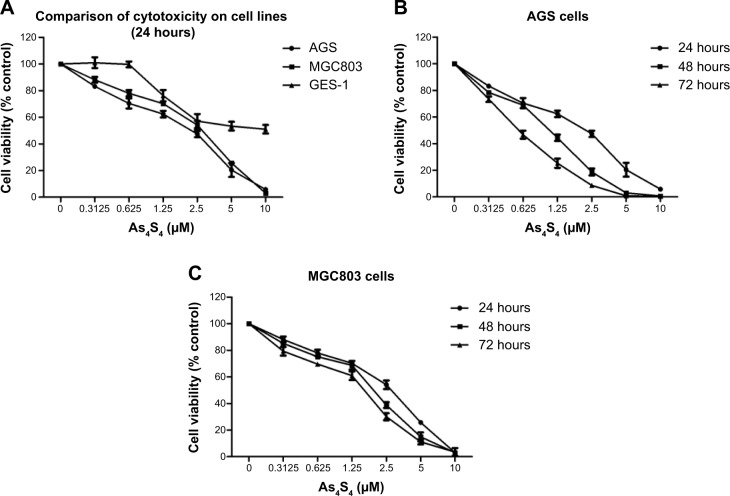
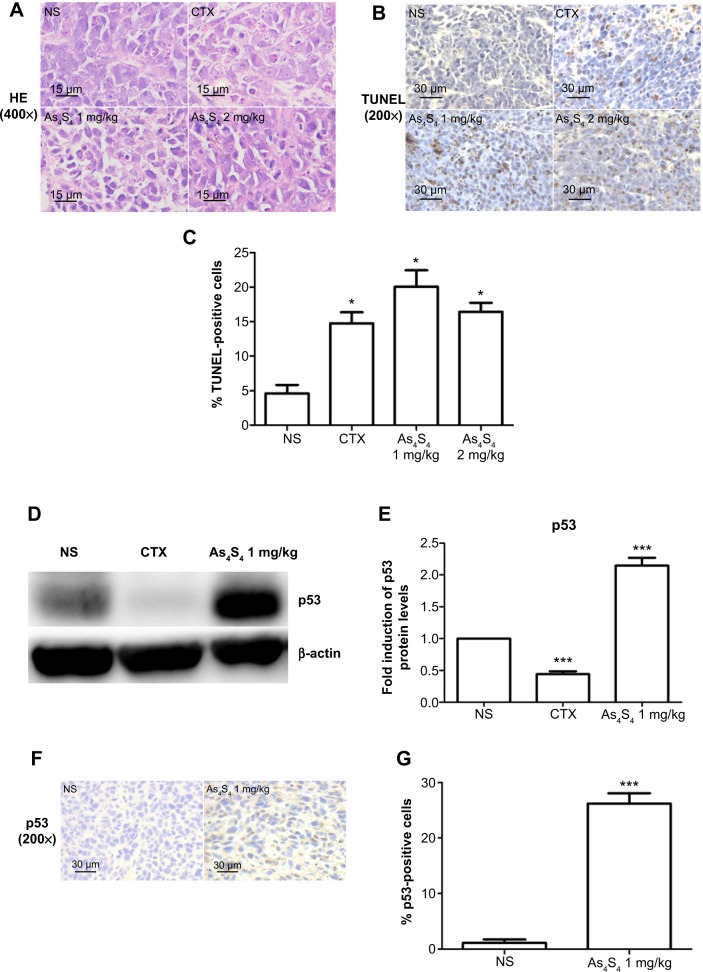
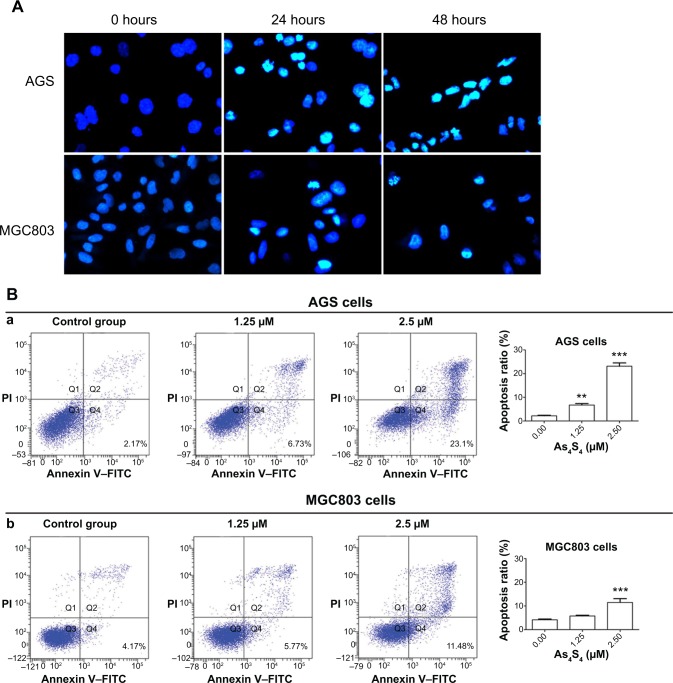
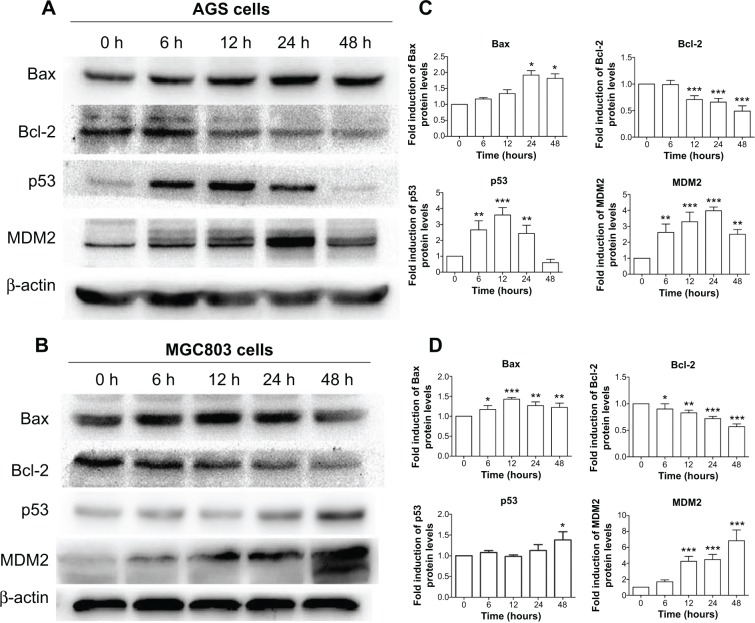
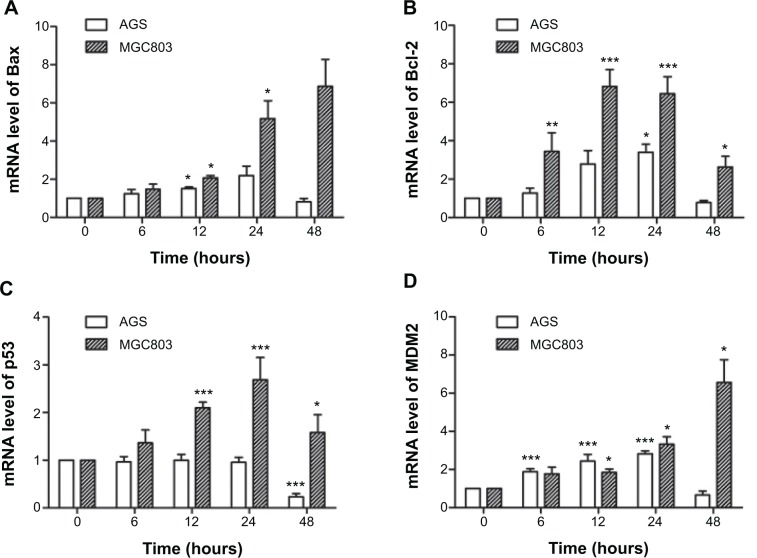
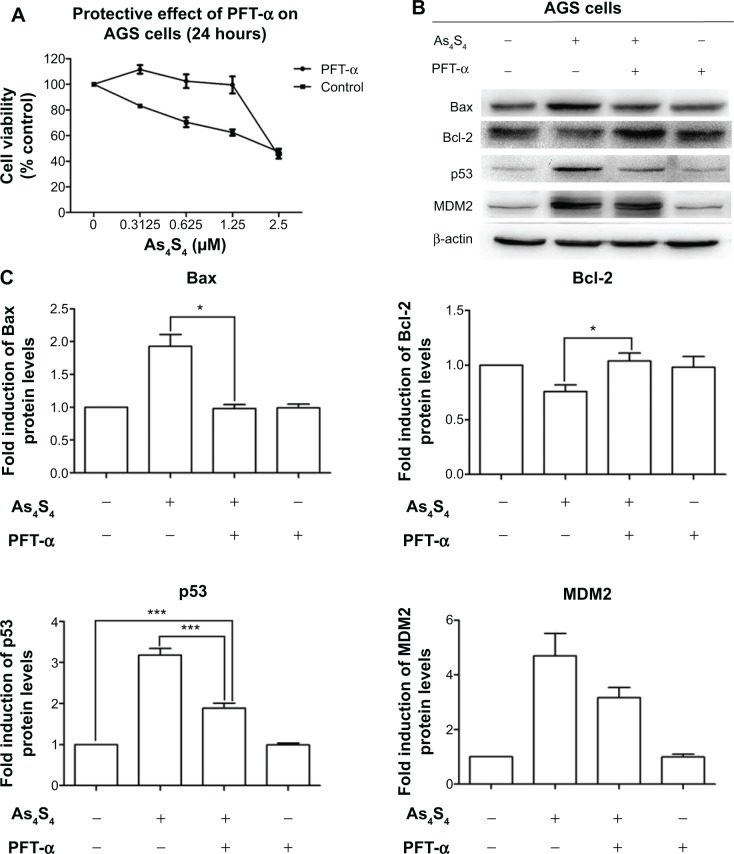
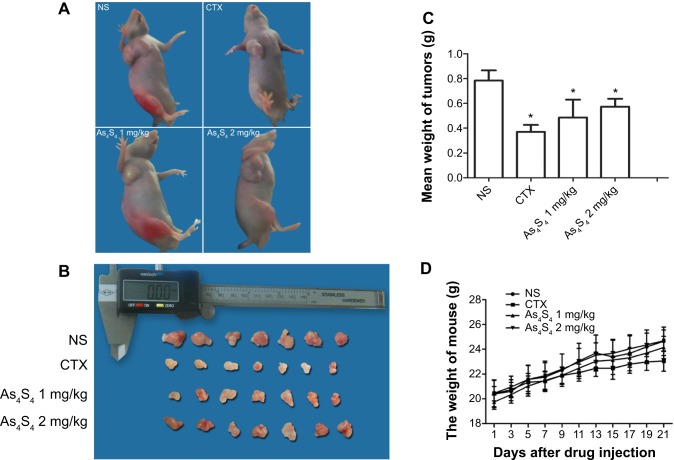
As4S4 inhibited the proliferation and induced apoptosis of AGS and MGC803 cells in a time- and dose-dependent manner. As4S4 upregulated the expression of Bax and MDM2 while downregulated the expression of Bcl-2. The expression of p53 increased significantly in the AGS cells but did not readily increase in the MGC803 cells, which harbored mutant p53. Pifithrin-α, a p53 inhibitor, blocked the modulation of As4S4 on AGS cells, but not on MGC803 cells. Using xenograft as a model, we showed that As4S4 suppressed tumor growth and induced apoptosis in vivo and that the expression of p53 increased accordingly.
As4S4 is a potent cytotoxic agent for gastric cancer cells, as it induced apoptosis both in vitro and in vivo through a p53-dependent pathway. Our data indicate that As4S4 may have therapeutic potential in gastric cancer.
硫化砷(As4S4)是中药雄黄的主要成分,已在多种肿瘤类型中显示出抗肿瘤功效,尤其是对急性早幼粒细胞白血病。在本研究中,我们旨在探讨As4S4在胃癌中的疗效及作用机制。
使用胃癌细胞系AGS(携带野生型p53)和MGC803(携带突变型p53),通过MTT法、4',6-二脒基-2-苯基吲哚(DAPI)染色以及膜联蛋白V-异硫氰酸荧光素/碘化丙啶染色,在体外研究As4S4对胃癌细胞增殖和凋亡的影响。通过蛋白质免疫印迹法、实时聚合酶链反应和免疫组织化学分析来检测凋亡相关蛋白的表达。通过接种MGC803细胞建立小鼠异种移植模型,分别通过苏木精-伊红染色和TdT介导的dUTP缺口末端标记(TUNEL)法检测肿瘤组织中凋亡细胞的形态和比例。
As4S4以时间和剂量依赖性方式抑制AGS和MGC803细胞的增殖并诱导其凋亡。As4S4上调Bax和MDM2的表达,同时下调Bcl-2的表达。p53的表达在AGS细胞中显著增加,但在携带突变型p53的MGC803细胞中未明显增加。p53抑制剂Pifithrin-α可阻断As4S4对AGS细胞的调节作用,但对MGC803细胞无效。以异种移植为模型,我们发现As4S4在体内可抑制肿瘤生长并诱导凋亡,且p53表达相应增加。
As4S4是一种对胃癌细胞有效的细胞毒性剂,因为它在体外和体内均通过p53依赖性途径诱导凋亡。我们的数据表明As4S4在胃癌中可能具有治疗潜力。