
情商、社交能力、认知能力以及GMAT对职业和生活满意度与职业成功的长期影响。
Long term impact of emotional, social and cognitive intelligence competencies and GMAT on career and life satisfaction and career success.
作者信息
Amdurer Emily, Boyatzis Richard E, Saatcioglu Argun, Smith Melvin L, Taylor Scott N
机构信息
Department of Organizational Behavior, Case Western Reserve University Cleveland, OH, USA ; YSC Ltd New York, NY, USA.
Department of Organizational Behavior, Case Western Reserve University Cleveland, OH, USA.
出版信息
Front Psychol. 2014 Dec 16;5:1447. doi: 10.3389/fpsyg.2014.01447. eCollection 2014.
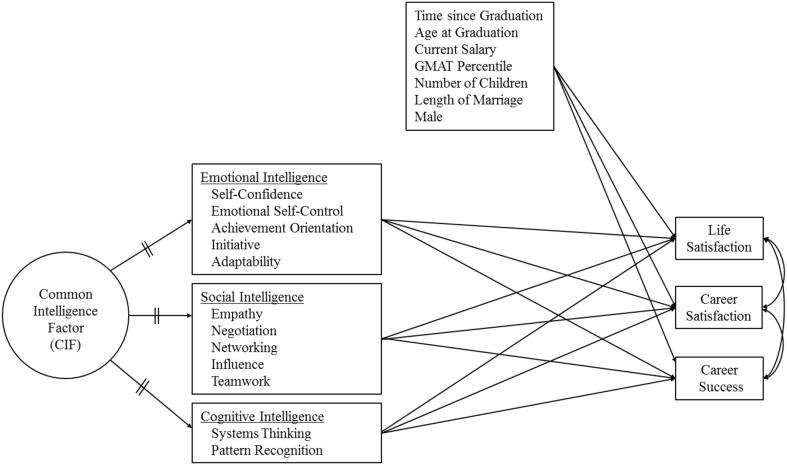
Career scholars have called for a broader definition of career success by inviting greater exploration of its antecedents. While success in various jobs has been predicted by intelligence and in other studies by competencies, especially in management, long term impact of having intelligence and using competencies has not been examined. Even in collegiate outcome studies, few have examined the longer term impact on graduates' careers or lives. This study assesses the impact of demonstrated emotional, social, and cognitive intelligence competencies assessed at graduation and g measured through GMAT at entry from an MBA program on career and life satisfaction, and career success assessed 5 to 19 years after graduation. Using behavioral measures of competencies (i.e., as assessed by others), we found that emotional intelligence competencies predict career satisfaction and success. Adaptability had a positive impact, but influence had the opposite effect on these career measures and life satisfaction. Life satisfaction was negatively affected by achievement orientation and positively affected by teamwork. Current salary, length of marriage, and being younger at time of graduation positively affect all three measures of life and career satisfaction and career success. GMAT (as a measure of g) predicted life satisfaction and career success to a slight but significant degree in the final model analyzed. Meanwhile, being female and number of children positively affected life satisfaction but cognitive intelligence competencies negatively affected it, and in particular demonstrated systems thinking was negative.
职业学者呼吁通过更广泛地探索职业成功的前因来对其进行更宽泛的定义。虽然在各种工作中的成功已被智力所预测,在其他研究中则被能力所预测,尤其是在管理领域,但拥有智力和运用能力的长期影响尚未得到研究。即使在大学成果研究中,也很少有人考察对毕业生职业或生活的长期影响。本研究评估了在毕业时评估的已证明的情绪、社交和认知智力能力,以及通过入学时的GMAT考试测量的一般智力(g)对职业和生活满意度以及毕业后5至19年评估的职业成功的影响。使用能力的行为测量方法(即由他人评估),我们发现情绪智力能力可以预测职业满意度和成功。适应性有积极影响,但影响力对这些职业指标和生活满意度有相反的影响。成就导向对生活满意度有负面影响,团队合作对生活满意度有正面影响。当前工资、婚姻时长和毕业时更年轻对生活和职业满意度以及职业成功的所有三项指标都有积极影响。在最终分析的模型中,GMAT(作为g的一种测量)对生活满意度和职业成功有轻微但显著的预测作用。同时,女性身份和子女数量对生活满意度有积极影响,但认知智力能力对其有负面影响,特别是已证明的系统思维能力有负面影响。

 Zotero 插件