Näther-Schindler Daniela J, Schopf Simone, Bellack Annett, Rachel Reinhard, Wirth Reinhard
Institute of Microbiology and Archaea Center, University of Regensburg Regensburg, Germany ; Plant Development, Department of Biology I, Biocenter of the Ludwig Maximilian University of Munich Planegg-Martinsried, Germany.
Institute of Microbiology and Archaea Center, University of Regensburg Regensburg, Germany ; Department of Biology - Section Environmental Microbiology, Technical University Freiberg Freiberg, Germany.
Front Microbiol. 2014 Dec 11;5:695. doi: 10.3389/fmicb.2014.00695. eCollection 2014.
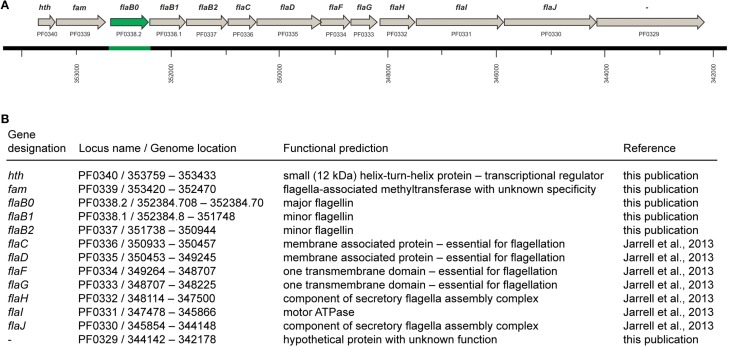
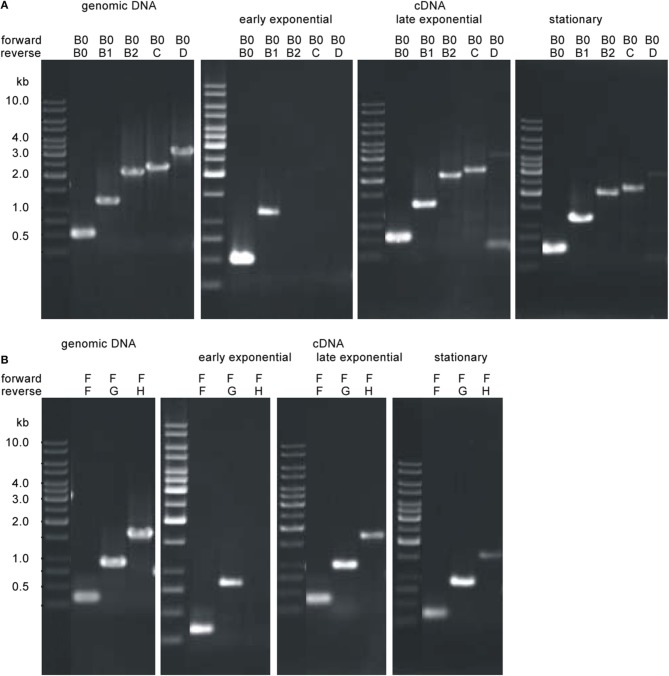
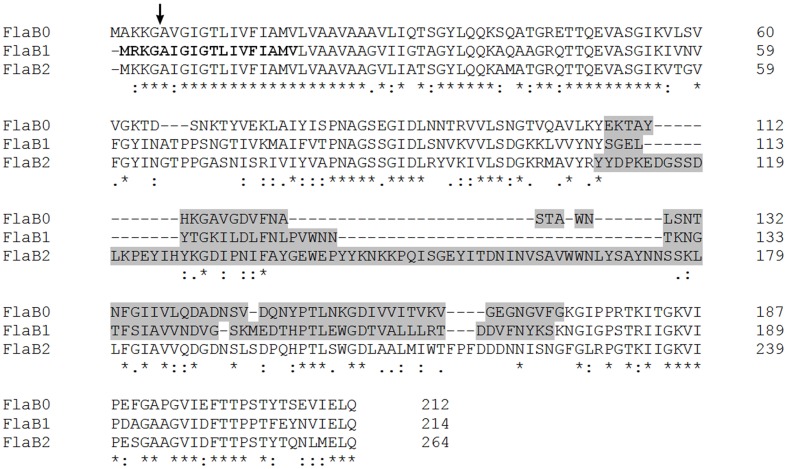
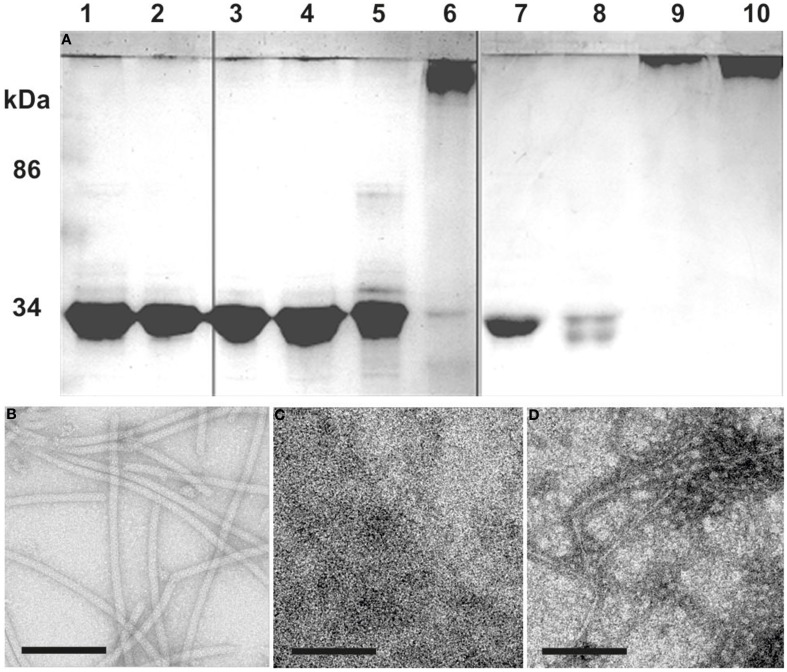
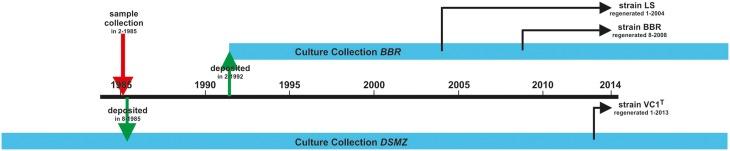
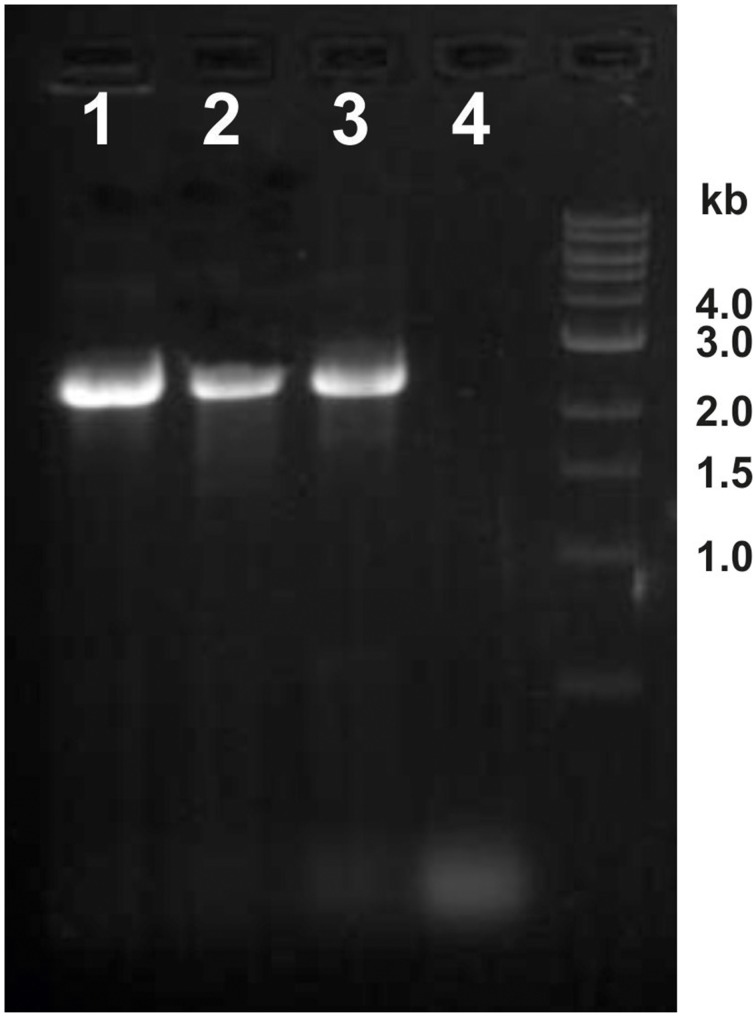
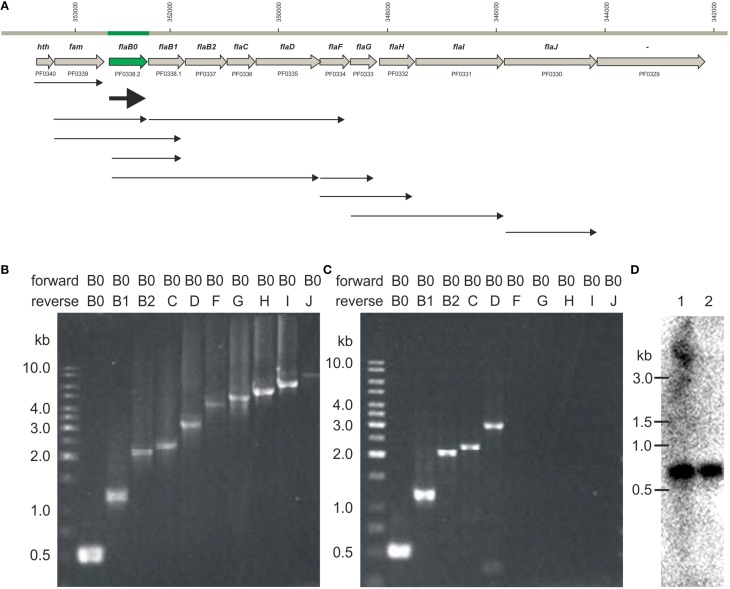
We have described previously that the flagella of the Euryarchaeon Pyrococcus furiosus are multifunctional cell appendages used for swimming, adhesion to surfaces and formation of cell-cell connections. Here, we characterize these organelles with respect to their biochemistry and transcription. Flagella were purified by shearing from cells followed by CsCl-gradient centrifugation and were found to consist mainly of a ca. 30 kDa glycoprotein. Polymerization studies of denatured flagella resulted in an ATP-independent formation of flagella-like filaments. The N-terminal sequence of the main flagellin was determined by Edman degradation, but none of the genes in the complete genome code for a protein with that N-terminus. Therefore, we resequenced the respective region of the genome, thereby discovering that the published genome sequence is not correct. A total of 771 bp are missing in the data base, resulting in the correction of the previously unusual N-terminal sequence of flagellin FlaB1 and in the identification of a third flagellin. To keep in line with the earlier nomenclature we call this flaB0. Very interestingly, the previously not identified flaB0 codes for the major flagellin. Transcriptional analyses of the revised flagellar operon identified various different cotranscripts encoding only a single protein in case of FlaB0 and FlaJ or up to five proteins (FlaB0-FlaD). Analysing the RNA of cells from different growth phases, we found that the length and number of detected cotranscript increased over time suggesting that the flagellar operon is transcribed mostly in late exponential and stationary growth phase.
我们之前已经描述过,嗜热栖热菌(Pyrococcus furiosus)这种广古菌的鞭毛是多功能的细胞附属物,用于游动、附着于表面以及形成细胞间连接。在此,我们从生物化学和转录方面对这些细胞器进行了表征。通过从细胞中剪切,随后进行氯化铯梯度离心来纯化鞭毛,发现其主要由一种约30 kDa的糖蛋白组成。对变性鞭毛的聚合研究导致了不依赖ATP形成鞭毛样细丝。通过埃德曼降解法确定了主要鞭毛蛋白的N端序列,但完整基因组中的基因均未编码具有该N端的蛋白质。因此,我们对基因组的相应区域重新测序,从而发现已发表的基因组序列不正确。数据库中总共缺失了771 bp,这导致了对先前异常的鞭毛蛋白FlaB1的N端序列进行校正,并鉴定出了第三种鞭毛蛋白。为了与早期的命名法保持一致,我们将其称为flaB0。非常有趣的是,先前未鉴定的flaB0编码主要鞭毛蛋白。对修订后的鞭毛操纵子进行转录分析,发现各种不同的共转录本,在FlaB0和FlaJ的情况下仅编码一种蛋白质,或者最多编码五种蛋白质(FlaB0 - FlaD)。分析来自不同生长阶段细胞的RNA,我们发现检测到的共转录本的长度和数量随时间增加,这表明鞭毛操纵子主要在指数生长后期和稳定期进行转录。