Rinaldi S F, Catalano R D, Wade J, Rossi A G, Norman J E
MRC Centre for Reproductive Health and Tommy's Centre for Maternal and Fetal Health, University of Edinburgh, Queen's Medical Research Institute, 47 Little France Crescent, Edinburgh EH16 4TJ, UK
MRC Centre for Reproductive Health and Tommy's Centre for Maternal and Fetal Health, University of Edinburgh, Queen's Medical Research Institute, 47 Little France Crescent, Edinburgh EH16 4TJ, UK.
Mol Hum Reprod. 2015 Apr;21(4):359-68. doi: 10.1093/molehr/gau117. Epub 2015 Jan 7.
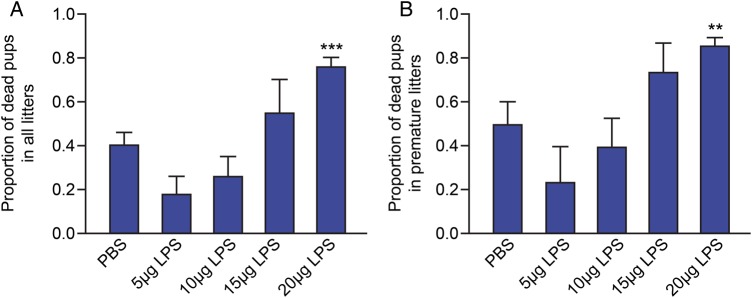
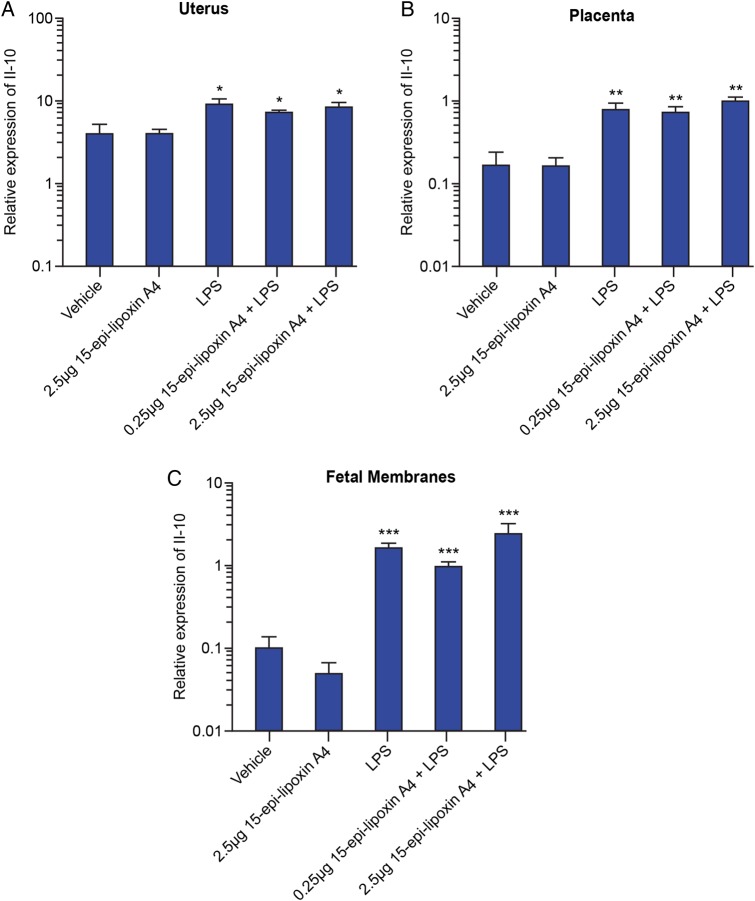
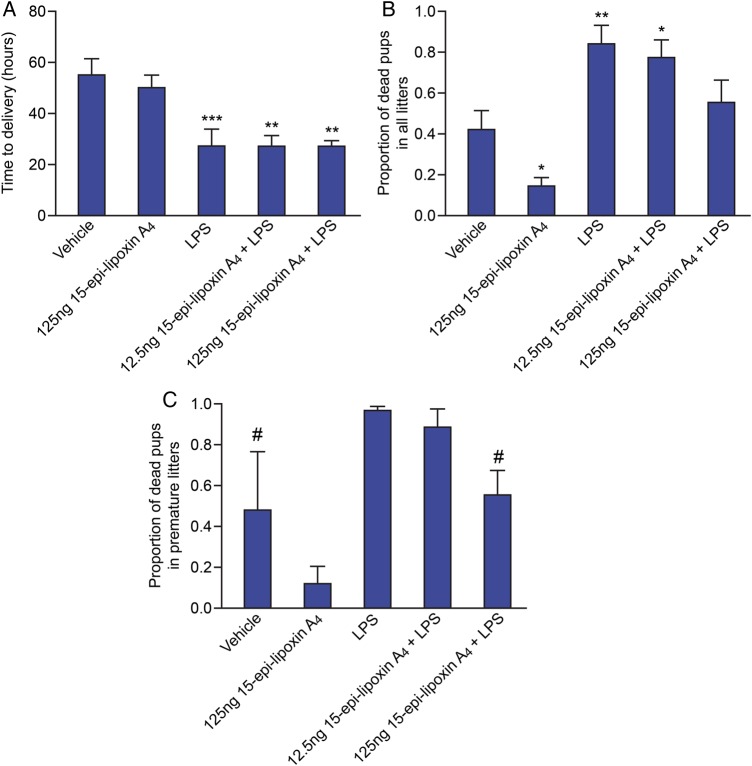
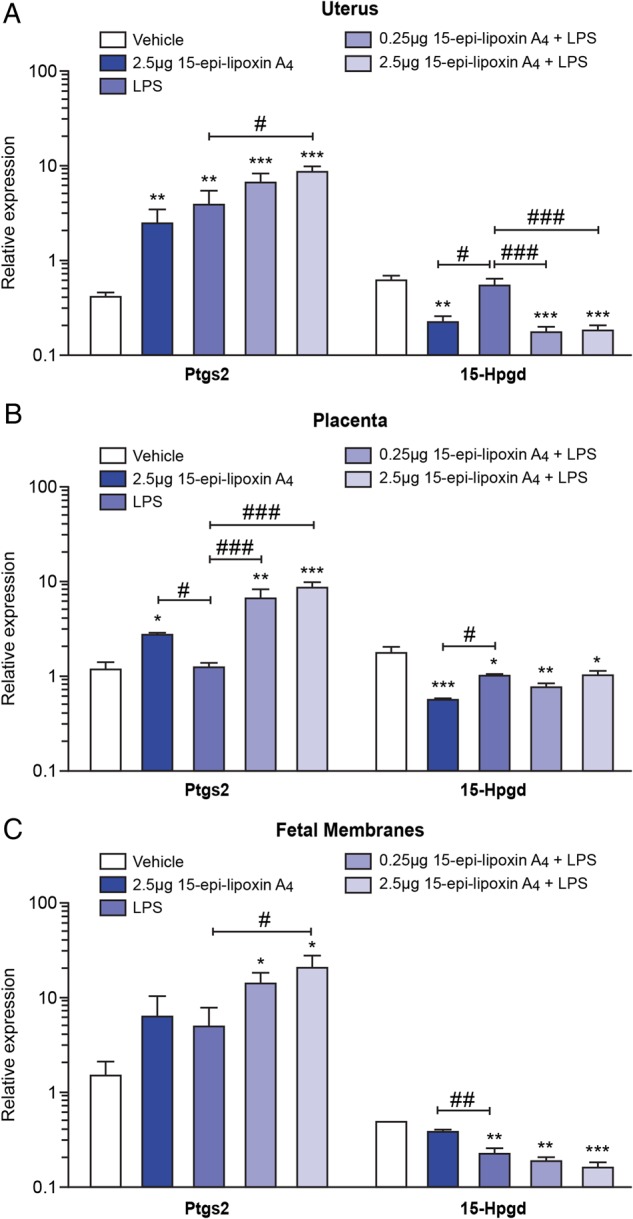
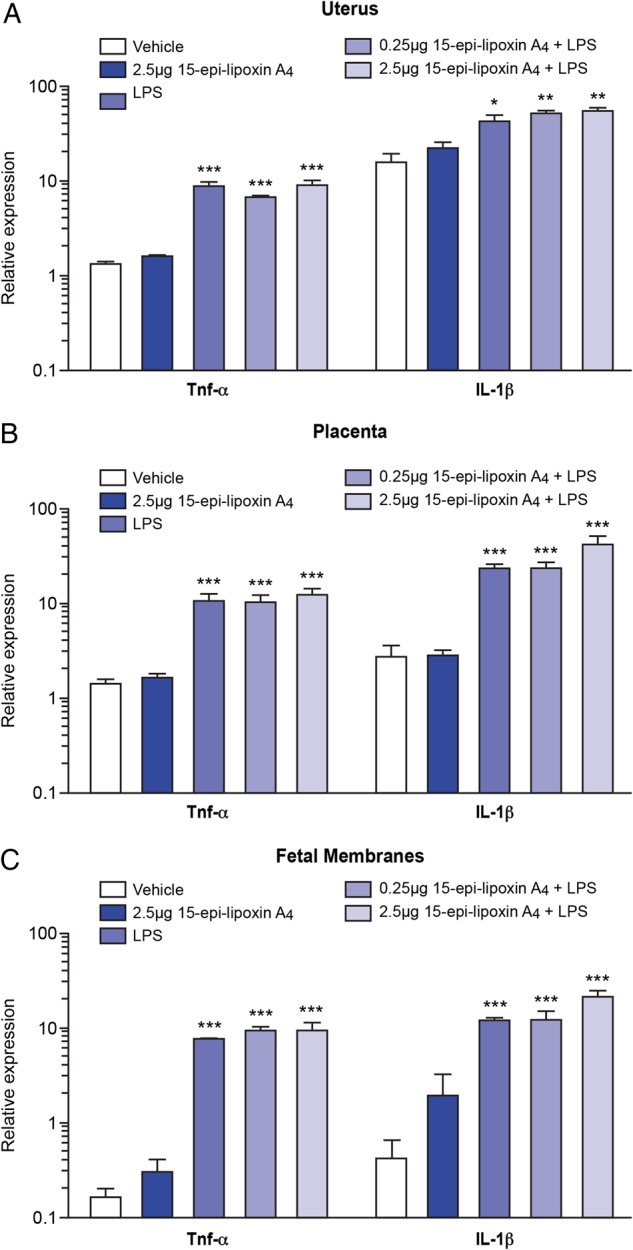
Preterm birth remains the leading cause of neonatal mortality and morbidity worldwide. There are currently few effective therapies and therefore an urgent need for novel treatments. Although there is much focus on trying to alter gestation of delivery, the primary aim of preterm birth prevention therapies should be to reduce prematurity related mortality and morbidity. Given the link between intrauterine infection and inflammation and preterm labour (PTL), we hypothesized that administration of lipoxins, key anti-inflammatory and pro-resolution mediators, could be a useful novel treatment for PTL. Using a mouse model of infection-induced PTL, we investigated whether 15-epi-lipoxin A4 could delay lipopolysaccharide (LPS)-induced PTL and reduce pup mortality. On D17 of gestation mice (n = 9-12) were pretreated with vehicle or 15-epi-lipoxin A4 prior to intrauterine administration of LPS or PBS. Although pretreatment with 15-epi-lipoxin A4 did not delay LPS-induced PTL, there was a significant reduction in the mortality amongst prematurely delivered pups (defined as delivery within 36 h of surgery) in mice treated with 15-epi-lipoxin A4 prior to LPS treatment, compared with those receiving LPS alone (P < 0.05). Quantitative real-time (QRT)-PCR analysis of utero-placental tissues harvested 6 h post-treatment demonstrated that 15-epi-lipoxin A4 treatment increased Ptgs2 expression in the uterus, placenta and fetal membranes (P < 0.05) and decreased 15-Hpgd expression (P < 0.05) in the placenta and uterus, suggesting that 15-epi-lipoxin A4 may regulate the local production and activity of prostaglandins. These data suggest that augmenting lipoxin levels could be a useful novel therapeutic option in the treatment of PTL, protecting the fetus from the adverse effects of infection-induced preterm birth.
早产仍然是全球新生儿死亡和发病的主要原因。目前有效的治疗方法很少,因此迫切需要新的治疗方法。尽管人们非常关注试图改变分娩孕周,但早产预防治疗的主要目标应该是降低与早产相关的死亡率和发病率。鉴于宫内感染和炎症与早产之间的联系,我们假设给予脂氧素(关键的抗炎和促消退介质)可能是一种治疗早产的有用新方法。我们使用感染诱导的早产小鼠模型,研究15-表-脂氧素A4是否能延迟脂多糖(LPS)诱导的早产并降低幼崽死亡率。在妊娠第17天,对小鼠(n = 9 - 12)在宫内注射LPS或PBS之前,用载体或15-表-脂氧素A4进行预处理。尽管用15-表-脂氧素A4预处理并没有延迟LPS诱导的早产,但与仅接受LPS治疗的小鼠相比,在LPS治疗前用15-表-脂氧素A4治疗的小鼠中,早产幼崽(定义为在手术36小时内分娩)的死亡率显著降低(P < 0.05)。治疗后6小时收集的子宫胎盘组织的定量实时(QRT)-PCR分析表明,15-表-脂氧素A4治疗增加了子宫、胎盘和胎膜中Ptgs2的表达(P < 0.05),并降低了胎盘和子宫中15-Hpgd的表达(P < 0.05),这表明15-表-脂氧素A4可能调节前列腺素的局部产生和活性。这些数据表明,提高脂氧素水平可能是治疗早产的一种有用的新治疗选择,可保护胎儿免受感染诱导的早产的不利影响。