Okamoto Kenichi W, Whitlock Rebecca, Magnan Pierre, Dieckmann Ulf
Department of Ecology and Evolutionary Biology, University of California Los Angeles, CA, USA.
Evolution and Ecology Program, International Institute for Applied Systems Analysis Laxenburg, Austria.
Evol Appl. 2009 Aug;2(3):415-37. doi: 10.1111/j.1752-4571.2009.00095.x.
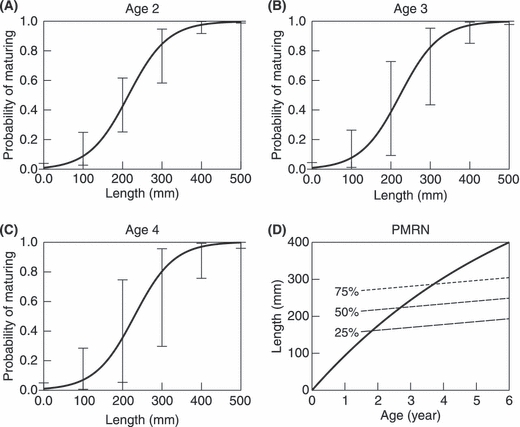
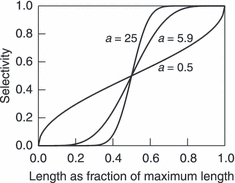
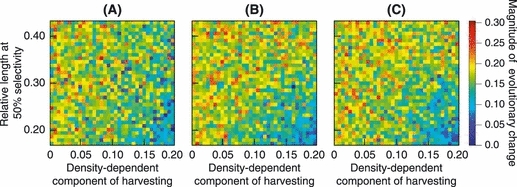
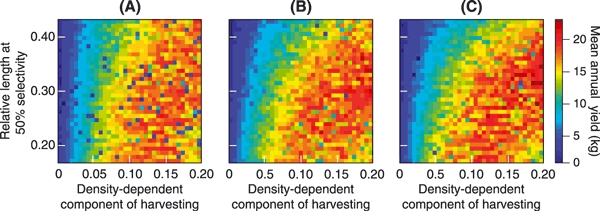
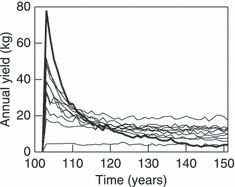
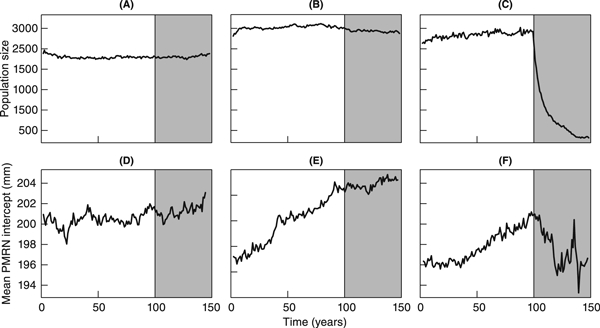
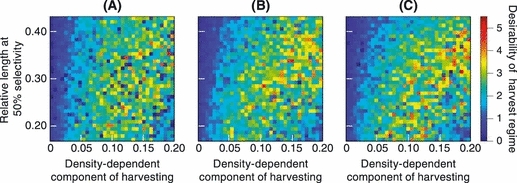
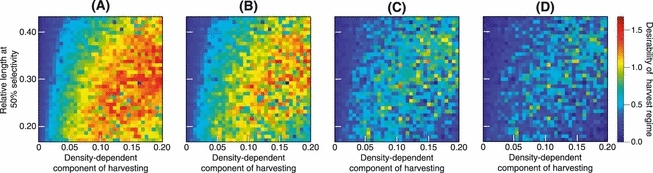
Size-selective mortality caused by fishing can impose strong selection on harvested fish populations, causing evolution in important life-history traits. Understanding and predicting harvest-induced evolutionary change can help maintain sustainable fisheries. We investigate the evolutionary sustainability of alternative management regimes for lacustrine brook charr (Salvelinus fontinalis) fisheries in southern Canada and aim to optimize these regimes with respect to the competing objectives of maximizing mean annual yield and minimizing evolutionary change in maturation schedules. Using a stochastic simulation model of brook charr populations consuming a dynamic resource, we investigate how harvesting affects brook charr maturation schedules. We show that when approximately 5% to 15% of the brook charr biomass is harvested, yields are high, and harvest-induced evolutionary changes remain small. Intensive harvesting (at approximately >15% of brook charr biomass) results in high average yields and little evolutionary change only when harvesting is restricted to brook charr larger than the size at 50% maturation probability at the age of 2 years. Otherwise, intensive harvesting lowers average yield and causes evolutionary change in the maturation schedule of brook charr. Our results indicate that intermediate harvesting efforts offer an acceptable compromise between avoiding harvest-induced evolutionary change and securing high average yields.
捕鱼导致的大小选择性死亡会对被捕捞的鱼类种群施加强烈的选择压力,从而导致重要生活史特征的进化。理解和预测捕捞引起的进化变化有助于维持可持续渔业。我们研究了加拿大南部湖泊溪红点鲑(Salvelinus fontinalis)渔业替代管理制度的进化可持续性,旨在针对最大化年均产量和最小化成熟时间表中的进化变化这两个相互竞争的目标来优化这些制度。利用一个消耗动态资源的溪红点鲑种群的随机模拟模型,我们研究了捕捞如何影响溪红点鲑的成熟时间表。我们发现,当捕捞约5%至15%的溪红点鲑生物量时,产量较高,且捕捞引起的进化变化仍然较小。只有当捕捞限于2岁时成熟概率达到50%时的大小以上的溪红点鲑时,高强度捕捞(约>15%的溪红点鲑生物量)才会带来高平均产量且进化变化较小。否则,高强度捕捞会降低平均产量,并导致溪红点鲑成熟时间表的进化变化。我们的结果表明,中等捕捞强度在避免捕捞引起的进化变化和确保高平均产量之间提供了一个可接受的折衷方案。