Dunlop Erin S, Baskett Marissa L, Heino Mikko, Dieckmann Ulf
Institute of Marine Research Bergen, Norway ; Department of Biology, University of Bergen Bergen, Norway ; Evolution and Ecology Program, International Institute for Applied Systems Analysis Laxenburg, Austria ; Ontario Ministry of Natural Resources Peterborough, ON, Canada.
Department of Environmental Science and Policy, University of California Davis, Davis, CA, USA.
Evol Appl. 2009 Aug;2(3):371-93. doi: 10.1111/j.1752-4571.2009.00089.x.
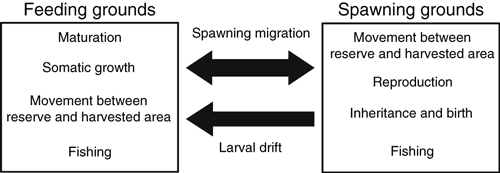
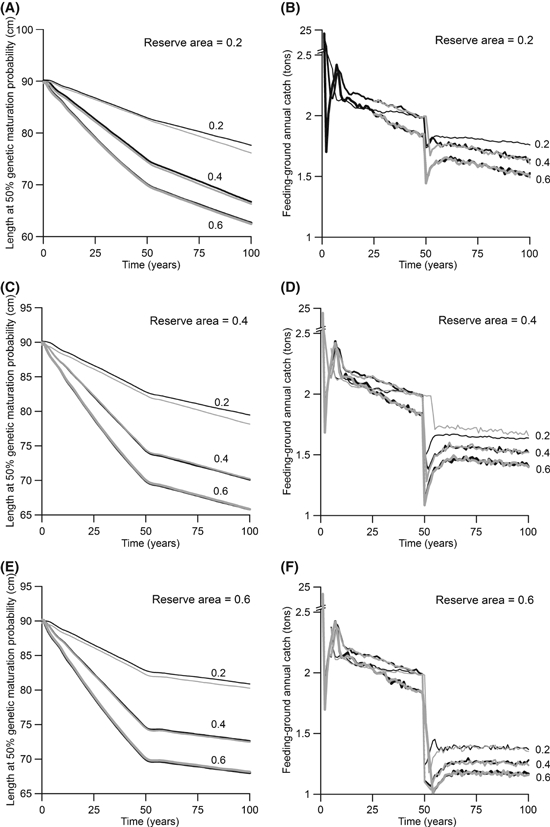
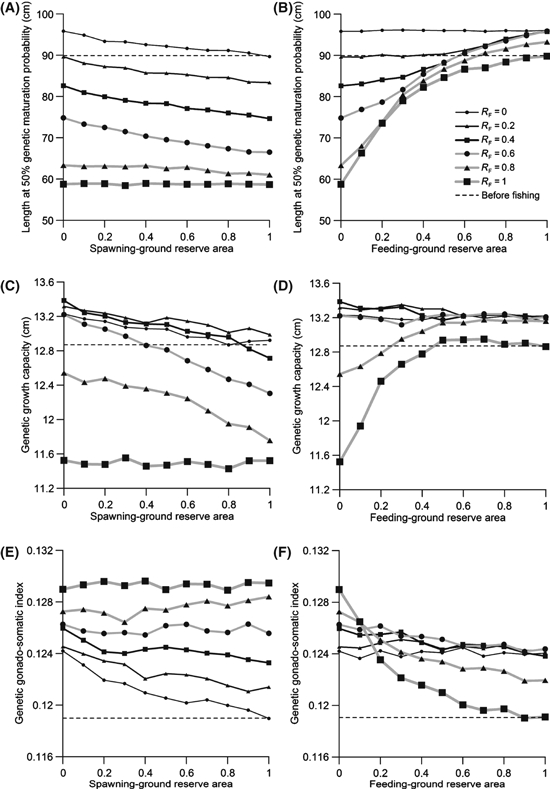
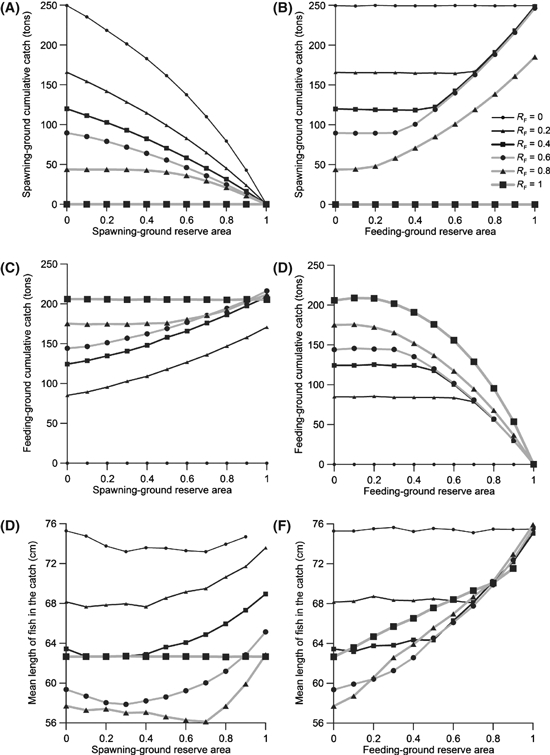
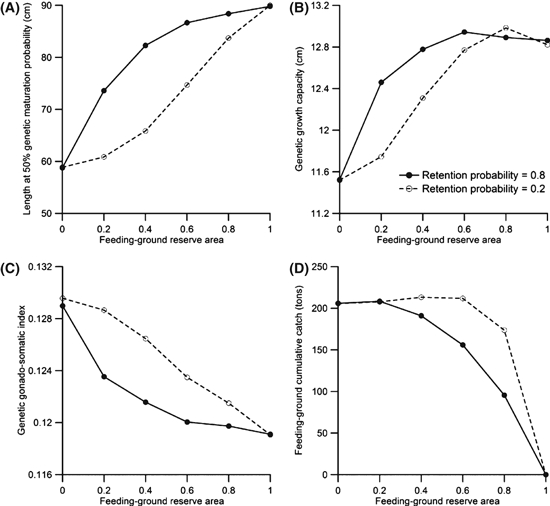
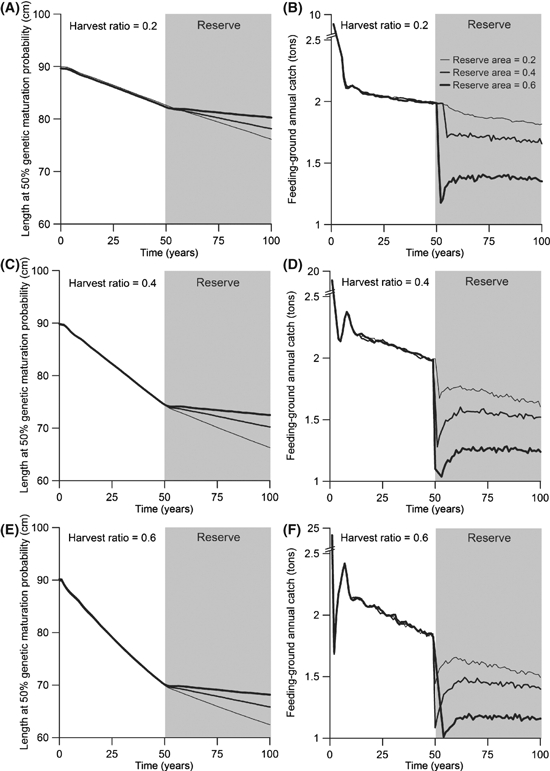
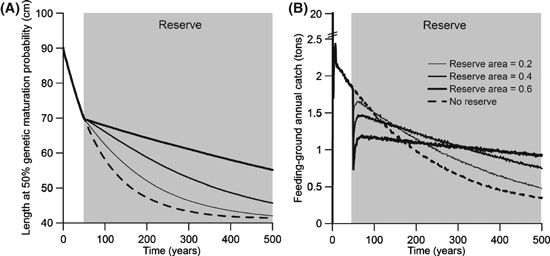
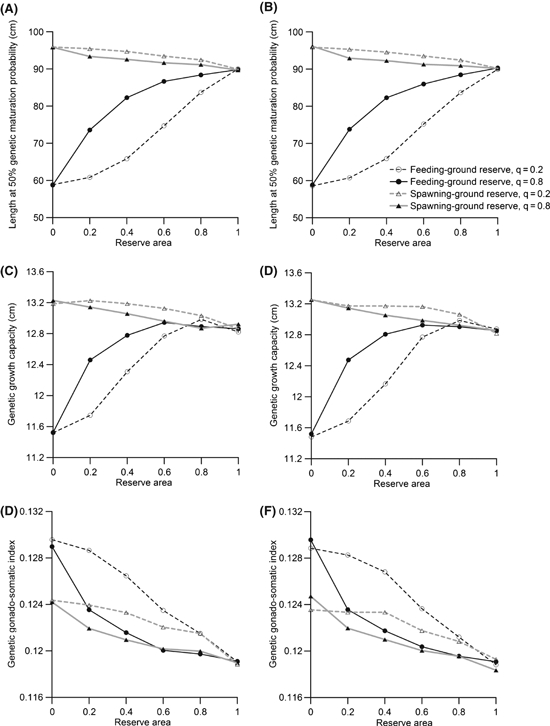
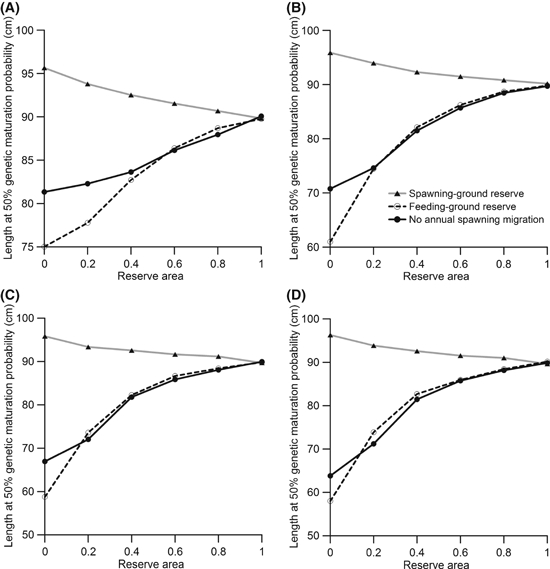
Evolutionary effects of fishing can have unwanted consequences diminishing a fishery's value and sustainability. Reserves, or no-take areas, have been proposed as a management tool for reducing fisheries-induced selection, but their effectiveness for migratory species has remained unexplored. Here we develop an eco-genetic model to predict the effects of marine reserves on fisheries-induced evolution under migration. To represent a stock that undergoes an annual migration between feeding and spawning grounds, we draw model parameters from Atlantic cod (Gadus morhua) in the northern part of its range. Our analysis leads to the following conclusions: (i) a reserve in a stock's feeding grounds, protecting immature and mature fish alike, reduces fisheries-induced evolution, even though protected and unprotected population components mix on the spawning grounds; (ii) in contrast, a reserve in a stock's spawning grounds, protecting only mature fish, has little mitigating effects on fisheries-induced evolution and can sometimes even exacerbate its magnitude; (iii) evolutionary changes that are already underway may be difficult to reverse with a reserve; (iv) directly after a reserve is created or enlarged, most reserve scenarios result in yield losses; and (v) timescale is very important: short-term yield losses immediately after a reserve's creation can give way to long-term gains.
捕鱼的进化效应可能会产生不良后果,降低渔业的价值和可持续性。保护区或禁捕区已被提议作为一种管理工具,用于减少渔业诱导的选择,但它们对洄游物种的有效性仍未得到探索。在这里,我们开发了一个生态遗传模型,以预测海洋保护区对洄游过程中渔业诱导进化的影响。为了代表一个在觅食地和产卵地之间进行年度洄游的种群,我们从其分布范围北部的大西洋鳕鱼(Gadus morhua)中提取模型参数。我们的分析得出以下结论:(i)在种群的觅食地设立保护区,保护未成熟和成熟的鱼类,即使受保护和未受保护的种群成分在产卵地混合,也能减少渔业诱导的进化;(ii)相比之下,在种群的产卵地设立保护区,只保护成熟鱼类,对渔业诱导的进化几乎没有缓解作用,有时甚至会加剧其程度;(iii)已经发生的进化变化可能很难通过设立保护区来逆转;(iv)在保护区创建或扩大后不久,大多数保护区方案都会导致产量损失;(v)时间尺度非常重要:保护区创建后立即出现的短期产量损失可能会被长期收益所取代。