Junuzovic Dzelaludin, Prstojevic Jelena Kovacevic, Hasanbegovic Munira, Lepara Zahid
Urology clinic, Clinical center of Sarajevo University, Bosnia and Herzegovina.
Acta Inform Med. 2014 Oct;22(5):309-14. doi: 10.5455/aim.2014.22.309-314. Epub 2014 Oct 29.
Elimination of stone is determined by size and its localization. Stone from the ureter in 80% of cases can be eliminated spontaneously. If the stone by its characteristics is not spontaneously eliminated, taken are further steps and therapeutic protocols to solve this problem.
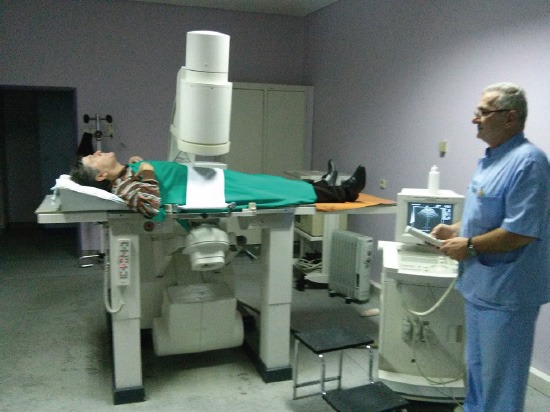
The study was prospective, open and comparative. It was conducted at the Urology Clinic Clinical Center of Sarajevo University in the period from 2007 to 2013. The study included 404 patients with urinary tract lithiasis treated by ESWL. ESWL treatment is performed on the machine Siemens Model Lithostar Multiline, which has a combined ultrasonographic and fluoroscopic display, large energy density in order to obtain optimum focus (without damaging surrounding tissue) and minimal pain that on rare occasions requires for mild sedation-sedation.
From a total of 404 patients included in the study there were 234 (57.92%) male and 170 (42.08%) female patients. The most common type of stone both in female and male patients was calcium type. From a total of 262 calcium stones, 105 of them (40.07%) was present in female patients and 157 (59.92%) in male. Share of infectious type of stone in female patients was 63 (49.60%) and 64 among males (50.39%). Other stones were less abundant in both the gender groups and their total number was only 17. In women their frequency was 2 (13.33%) and 13 among males (86.67%). There was a significant difference in the frequency of different types of stones by gender (x2 = 11.47, p = 0.009).
There was no statistically significant correlation between the number of treatments and localization of stones in the ureter, as well as a statistically significant correlation between the size of the stone and the localization of calculus in the ureter.
结石的排出取决于其大小及所在位置。80%的输尿管结石病例可自行排出。若结石因其特性无法自行排出,则需采取进一步措施及治疗方案来解决该问题。
本研究为前瞻性、开放性且具有对比性。于2007年至2013年期间在萨拉热窝大学临床中心泌尿外科诊所开展。该研究纳入了404例接受体外冲击波碎石术(ESWL)治疗的尿路结石患者。ESWL治疗在西门子Lithostar Multiline型机器上进行,该机器具有超声和荧光透视联合显示屏,能量密度大,以便获得最佳聚焦(不损伤周围组织),且疼痛轻微,极少数情况下仅需轻度镇静。
在纳入研究的404例患者中,男性234例(57.92%),女性170例(42.08%)。男性和女性患者中最常见的结石类型均为钙结石。在总共262例钙结石中,女性患者有105例(40.07%),男性患者有157例(59.92%)。女性患者中感染性结石的占比为63例(49.60%),男性患者中为64例(50.39%)。其他类型的结石在两个性别组中占比均较少,总数仅为17例。女性患者中其发生率为2例(13.33%),男性患者中为13例(86.67%)。不同类型结石的发生率在性别上存在显著差异(x2 = 11.47,p = 0.009)。
治疗次数与输尿管结石位置之间无统计学显著相关性,结石大小与输尿管结石位置之间也无统计学显著相关性。