Pasciak Alexander S, Bourgeois Austin C, Jones A Kyle
Department of Radiology, University of Tennessee Medical Center, Knoxville, Tennessee , USA.
Department of Imaging Physics, The University of Texas MD Anderson Cancer Center , Houston, Texas , USA.
Open Heart. 2014 Dec 23;1(1):e000141. doi: 10.1136/openhrt-2014-000141. eCollection 2014.
Prolonged interventional cardiology (IC) procedures may result in radiation-induced skin injury, a potentially preventable cause of patient morbidity. Rotating the C-arm during an IC procedure may reduce this risk, although the methods by which the technique can be practically applied remains unexplored. A previous study demonstrated that C-arm rotation often increases peak skin dose (PSD) in interventional radiology procedures. The purpose of this study was to determine whether C-arm rotation reduces the PSD in IC procedures and, if so, under what circumstances.
Simulations were performed using a numerical ray-tracing algorithm to analyse the effect of C-arm rotation on PSD across a range of patient sizes, C-arm configurations and procedure types. Specific data from modern fluoroscopes and patient dimensions were used as inputs to the simulations.
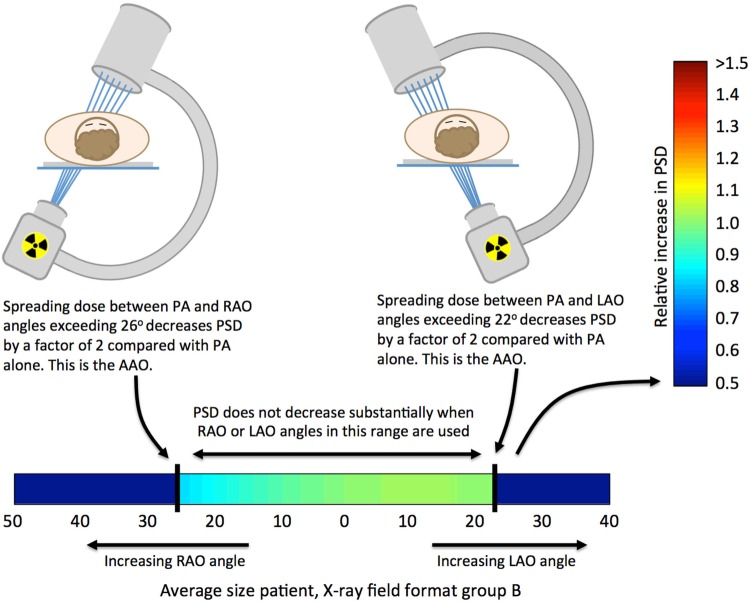
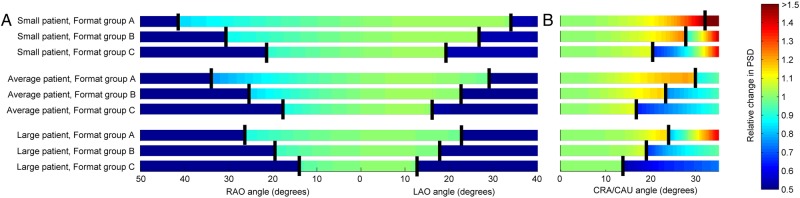
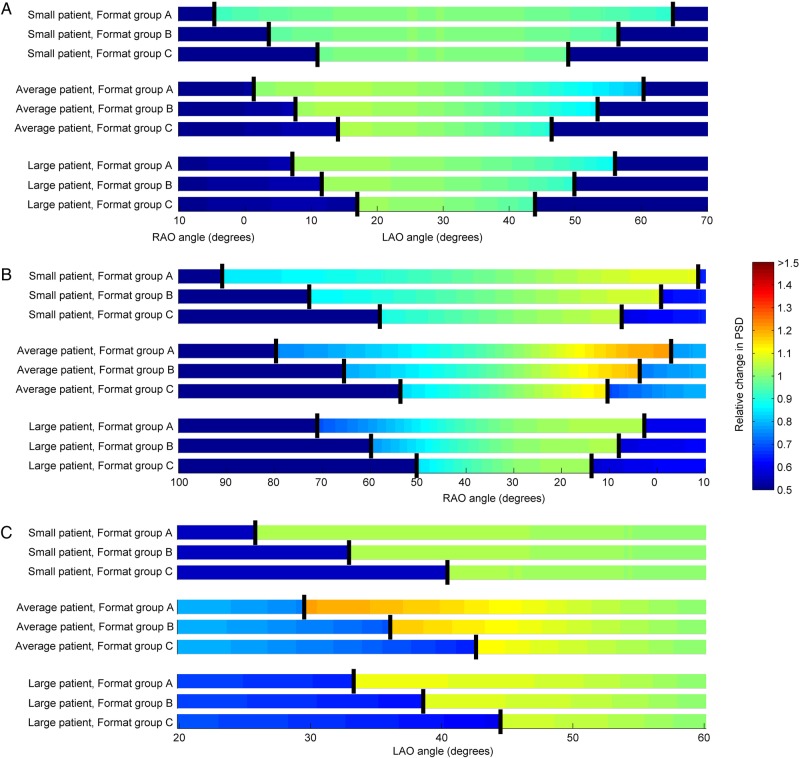
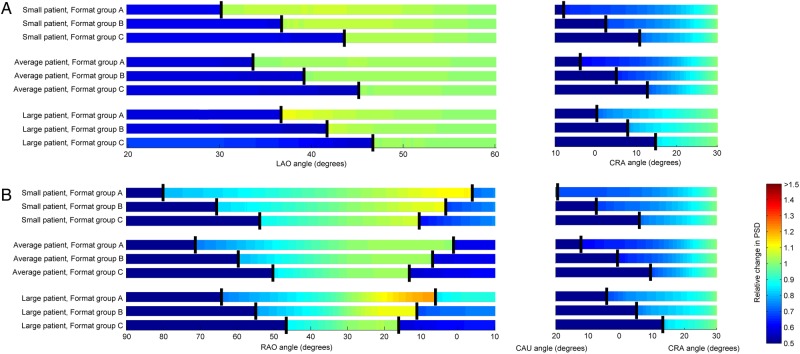
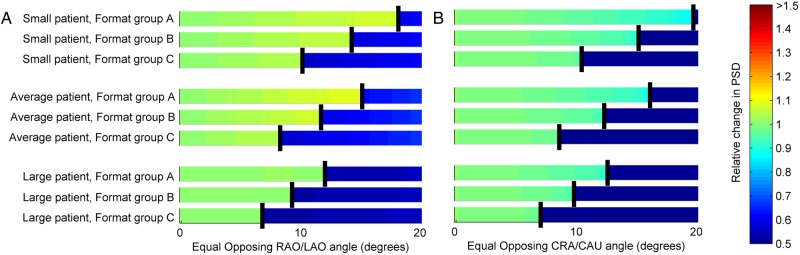
In many cases, modest C-arm rotation angles completely eliminated overlap between X-ray field sites on the skin. When overlap remained, PSD increases were generally small. One exception was craniocaudal rotation, which tended to increase PSD. C-arm rotation was most effective for large patients and small X-ray field sizes. Small patients may not benefit from C-arm rotation as a procedural modification. The use of a prophylactic method where the C-arm was rotated between small opposing oblique angles was effective in reducing PSD.
With the exception of rotation to steep craniocaudal angles, rotating the C-arm reduces PSD in IC procedures when used as either a procedural modification or a prophylactic strategy. Tight collimation increases the benefit of C-arm rotation.
长时间的介入心脏病学(IC)手术可能导致辐射性皮肤损伤,这是一种潜在可预防的患者发病原因。在IC手术过程中旋转C形臂可能会降低这种风险,尽管该技术的实际应用方法仍未得到探索。先前的一项研究表明,在介入放射学手术中,C形臂旋转通常会增加皮肤峰值剂量(PSD)。本研究的目的是确定C形臂旋转是否能降低IC手术中的PSD,如果可以,在何种情况下可以降低。
使用数值射线追踪算法进行模拟,以分析C形臂旋转对一系列患者体型、C形臂配置和手术类型的PSD的影响。现代荧光透视仪的具体数据和患者尺寸被用作模拟的输入。
在许多情况下,适度的C形臂旋转角度完全消除了皮肤上X射线场部位之间的重叠。当仍存在重叠时,PSD的增加通常较小。一个例外是头尾方向旋转,它往往会增加PSD。C形臂旋转对体型较大的患者和较小的X射线场尺寸最为有效。体型较小的患者可能无法从将C形臂旋转作为一种手术改进措施中获益。采用在小的相反倾斜角度之间旋转C形臂的预防方法可有效降低PSD。
除了旋转到陡峭的头尾角度外,将C形臂旋转用作手术改进措施或预防策略时,可降低IC手术中的PSD。严格的准直增加了C形臂旋转的益处。