Bhat Akshay, Heinzel Andreas, Mayer Bernd, Perco Paul, Mühlberger Irmgard, Husi Holger, Merseburger Axel S, Zoidakis Jerome, Vlahou Antonia, Schanstra Joost P, Mischak Harald, Jankowski Vera
Charité-Universitätsmedizin Berlin, Med. Klinik IV, Berlin, Germany; Mosaiques diagnostics GmbH, Hannover, Germany.
emergentec biodevelopment GmbH, Vienna, Austria.
PLoS One. 2015 Jan 8;10(1):e0116404. doi: 10.1371/journal.pone.0116404. eCollection 2015.
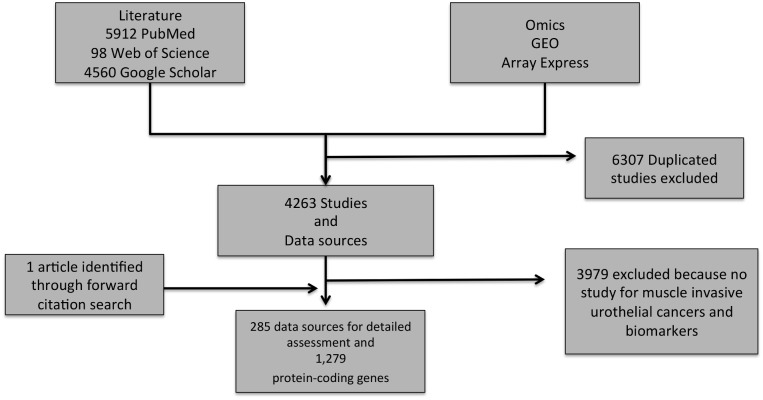
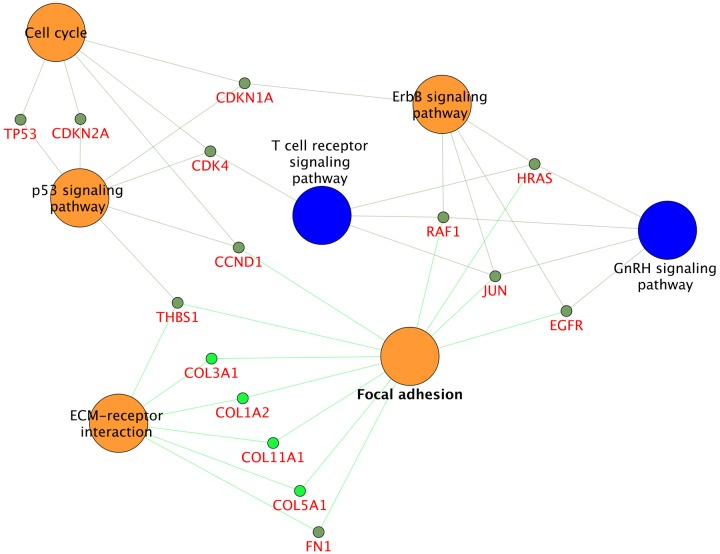
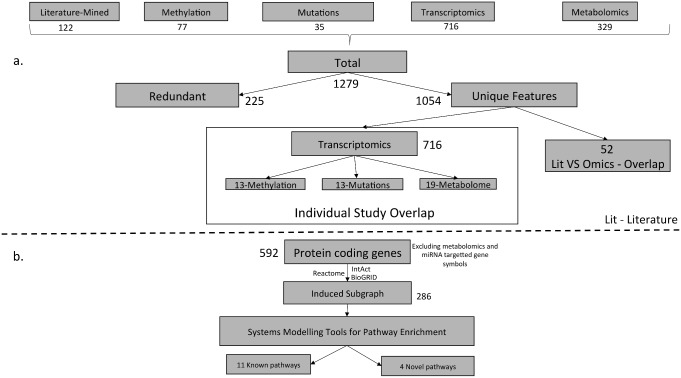
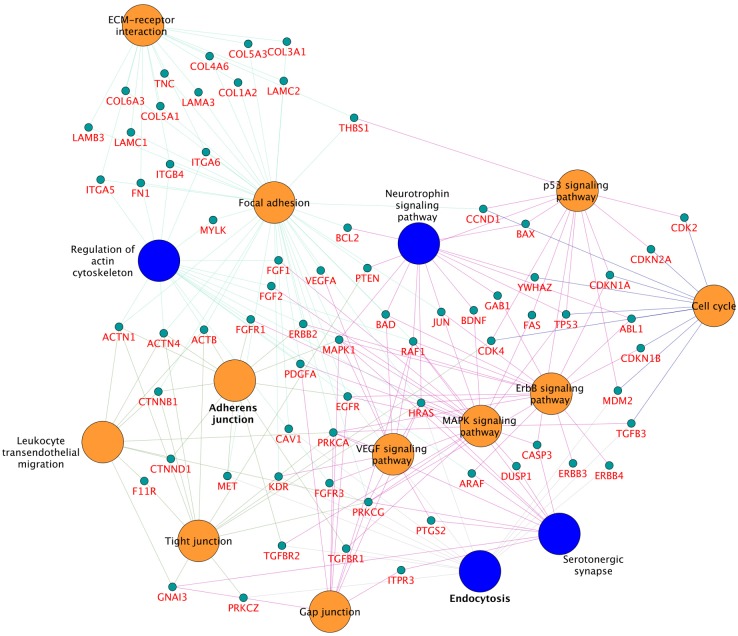
Muscle invasive bladder carcinoma is a complex, multifactorial disease caused by disruptions and alterations of several molecular pathways that result in heterogeneous phenotypes and variable disease outcome. Combining this disparate knowledge may offer insights for deciphering relevant molecular processes regarding targeted therapeutic approaches guided by molecular signatures allowing improved phenotype profiling. The aim of the study is to characterize muscle invasive bladder carcinoma on a molecular level by incorporating scientific literature screening and signatures from omics profiling. Public domain omics signatures together with molecular features associated with muscle invasive bladder cancer were derived from literature mining to provide 286 unique protein-coding genes. These were integrated in a protein-interaction network to obtain a molecular functional map of the phenotype. This feature map educated on three novel disease-associated pathways with plausible involvement in bladder cancer, namely Regulation of actin cytoskeleton, Neurotrophin signalling pathway and Endocytosis. Systematic integration approaches allow to study the molecular context of individual features reported as associated with a clinical phenotype and could potentially help to improve the molecular mechanistic description of the disorder.
肌肉浸润性膀胱癌是一种复杂的多因素疾病,由多种分子途径的破坏和改变引起,导致异质性表型和可变的疾病结局。整合这些不同的知识可能为解读与分子特征指导的靶向治疗方法相关的分子过程提供见解,从而改善表型分析。本研究的目的是通过纳入科学文献筛选和组学分析特征,在分子水平上对肌肉浸润性膀胱癌进行表征。通过文献挖掘获得了公共领域的组学特征以及与肌肉浸润性膀胱癌相关的分子特征,从而提供了286个独特的蛋白质编码基因。这些基因被整合到一个蛋白质相互作用网络中,以获得该表型的分子功能图谱。该特征图谱基于三条可能与膀胱癌相关的新疾病相关途径构建,即肌动蛋白细胞骨架调节、神经营养因子信号通路和内吞作用。系统整合方法有助于研究报告为与临床表型相关的个体特征的分子背景,并可能有助于改善对该疾病分子机制的描述。