Jia Jing, Ren Juan, Yan Dongmei, Xiao Long, Sun Ruifen
From the Center for Molecular Medicine, Zhejiang Academy of Medical Sciences, Hangzhou, Zhejiang 310013, P.R. China (JJ, JR, DY); Department of Urology, the First People's Hospital of Yunnan Province, KunMing University of Science and Technology, Kunming 650041, Yunnan, P.R. China (LX); Central Laboratory, Yunnan University of Chinese Traditional Medicine, Kunming 650500, Yunnan, P.R. China (RS); and Department of Immunology, West China School of Preclinical and Forensic Medicine, Sichuan University, Chengdu, Sichuan 610041, P.R. China (RS).
Medicine (Baltimore). 2015 Jan;94(1):e283. doi: 10.1097/MD.0000000000000283.
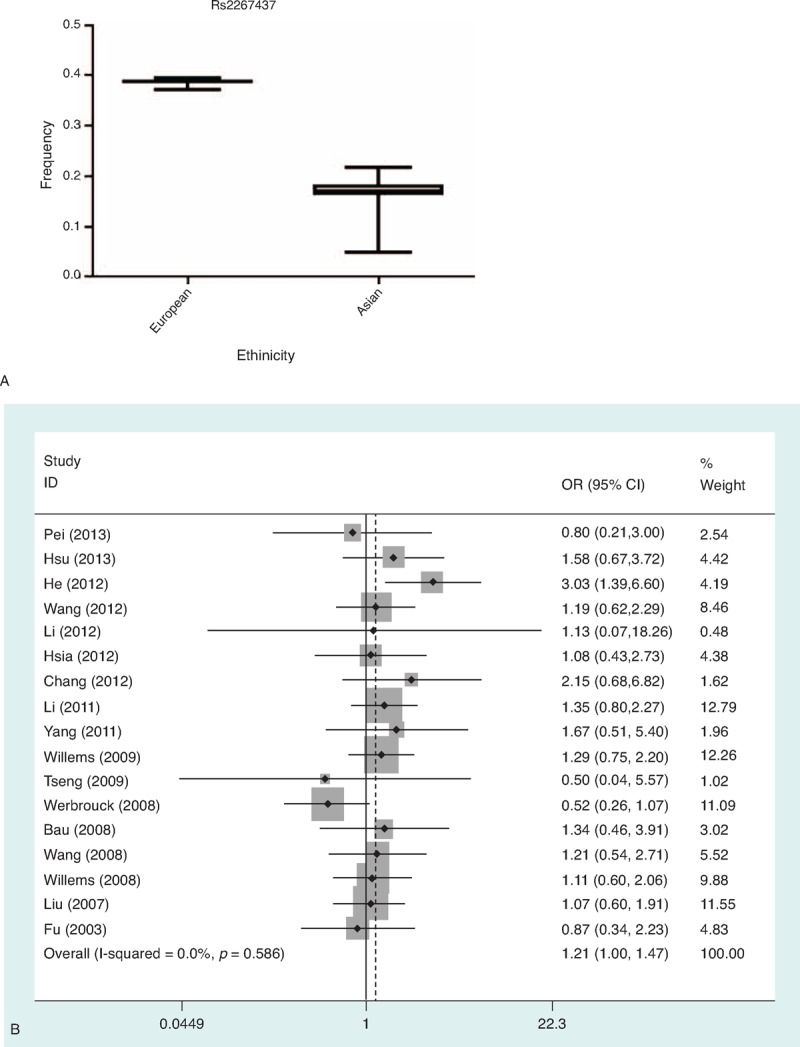
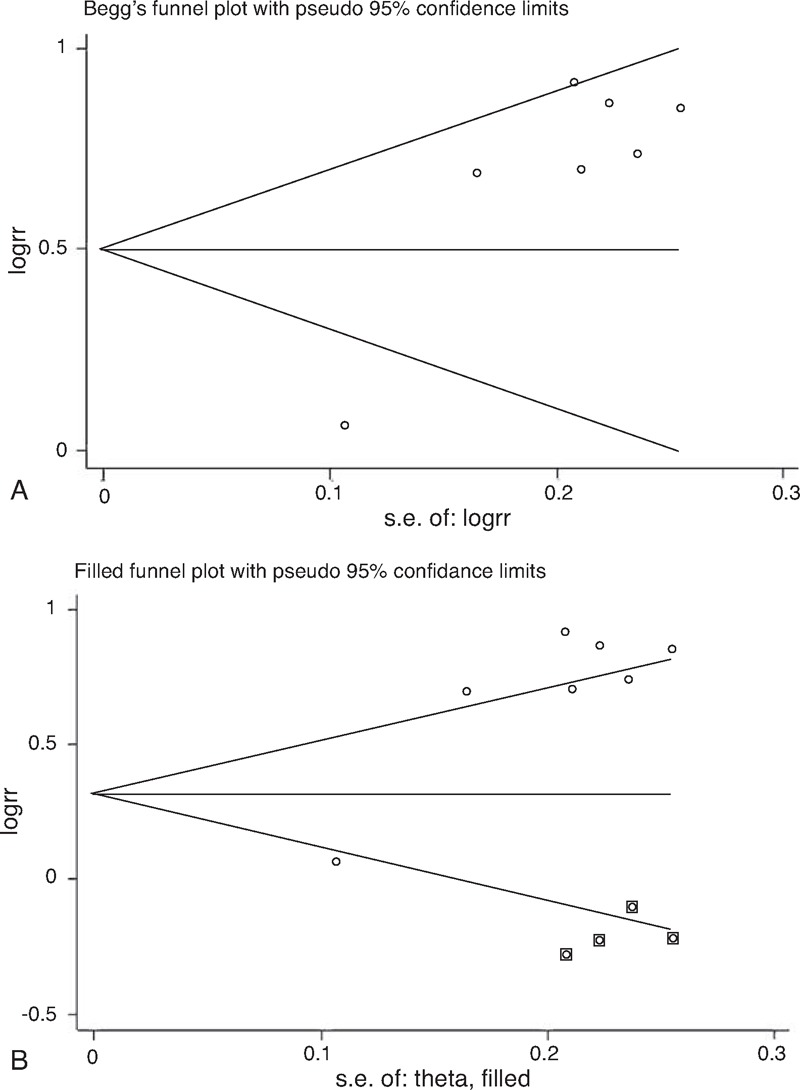
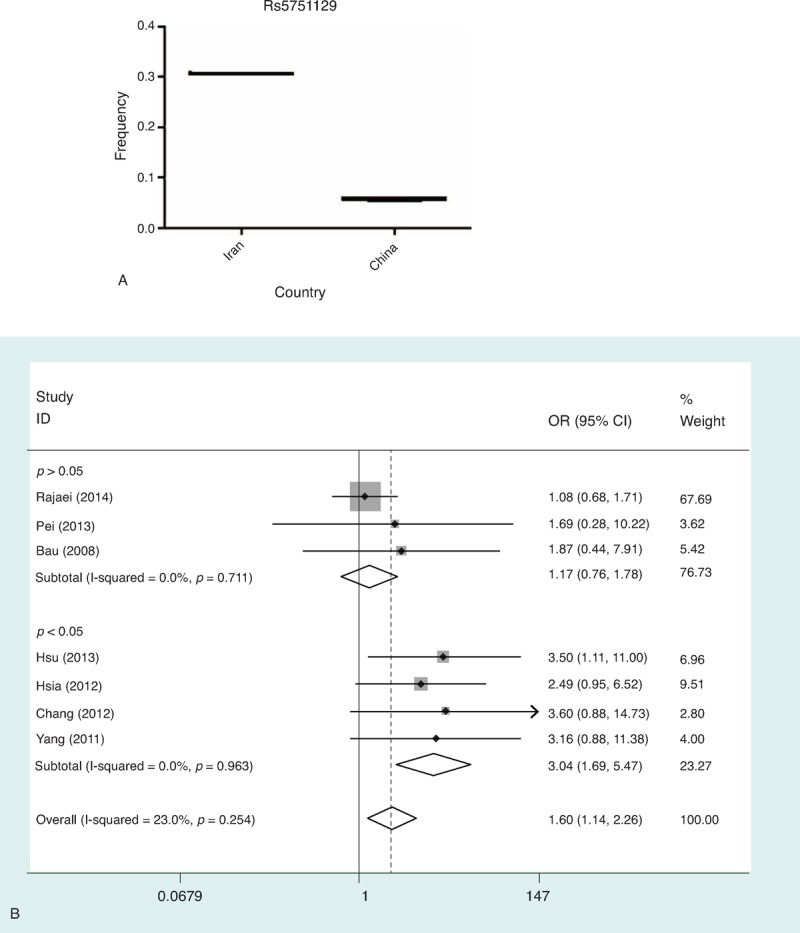
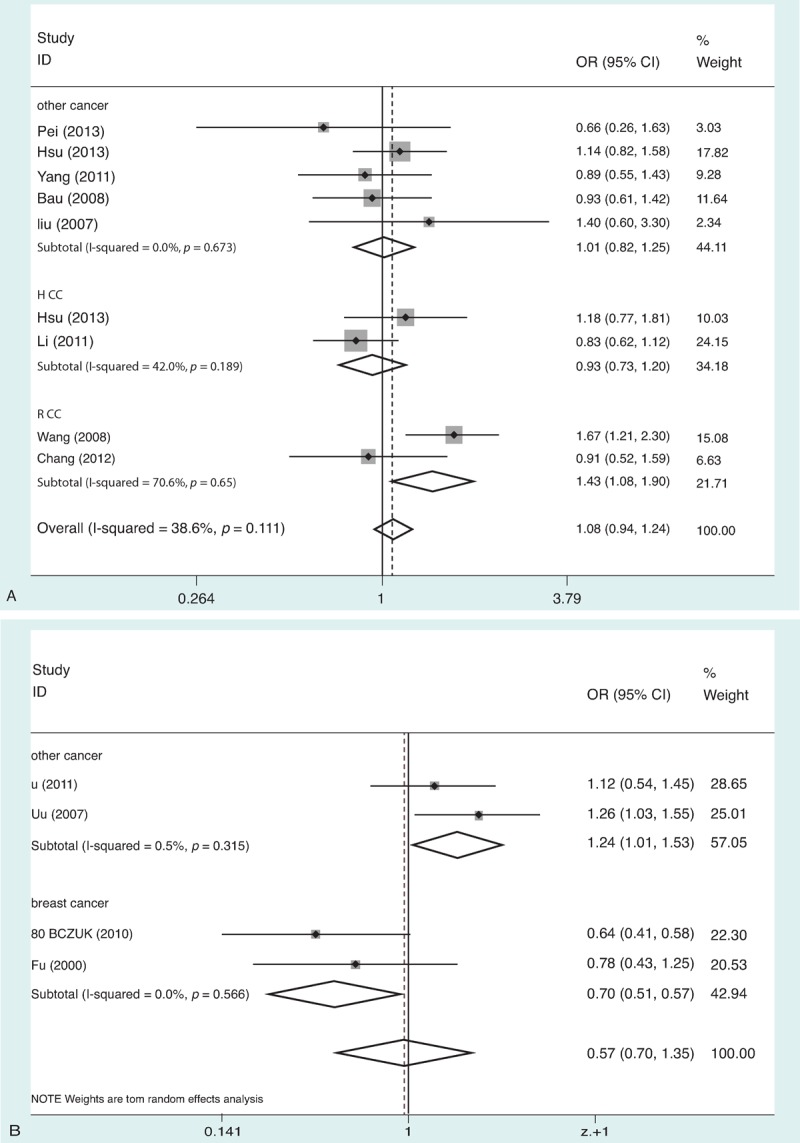
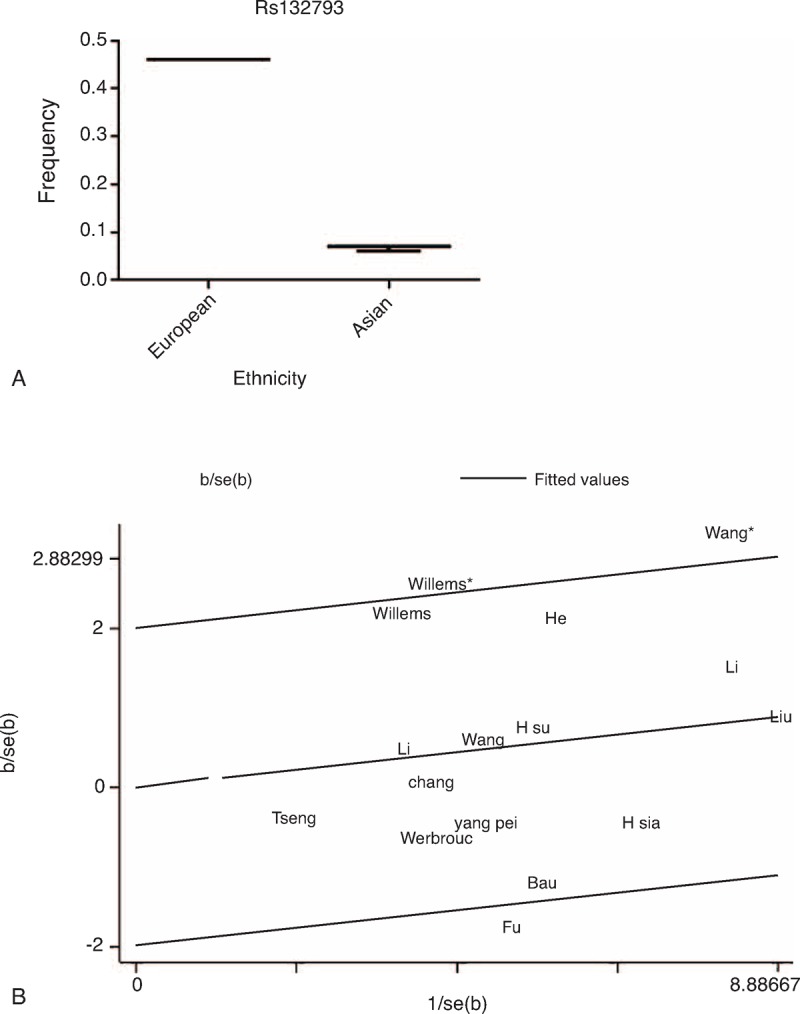
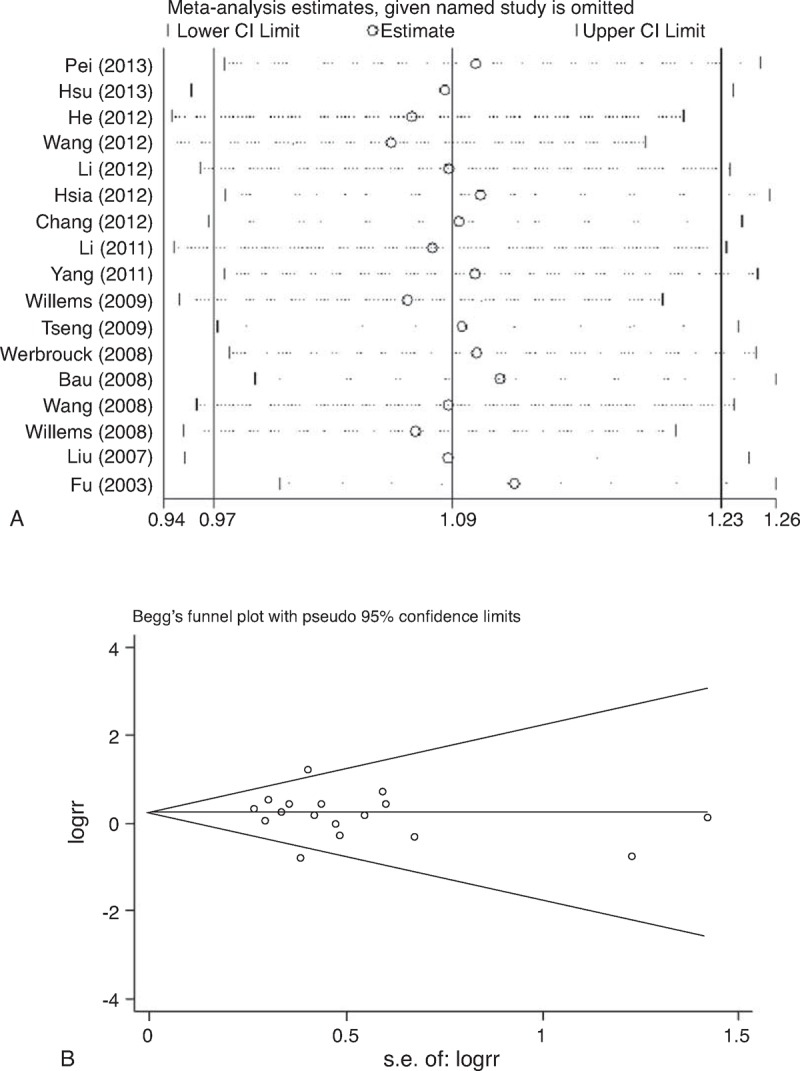
A number of studies have been carried out to investigate the association of X-ray repair complementing defective repair in Chinese hamster cells 6 (XRCC6) polymorphisms and cancer risks, and the results remained inconsistent and inconclusive.To assess the effect of XRCC6 polymorphisms on cancer susceptibility, we conducted a meta-analysis, up to May 23rd 2014, 6267 cases with different types of tumor and 7536 controls from 20 published case-control studies. Summary odds ratios and corresponding 95% confidence intervals for XRCC6 polymorphism and cancer risk were estimated using fixed- or random-effects models when appropriate. Heterogeneity was assessed by chi-squared-based Q-statistic test, and the sources of heterogeneity were explored by subgroup analyses, logistic meta-regression analyses and Galbraith plot. Publication bias was evaluated by Begg funnel plot and Egger test. Sensitivity analyses were also performed.The rs2267437 polymorphism was associated with a significant increase in risks of overall cancers, breast cancer, renal cell carcinoma and hepatocellular carcinoma, and it could increase the cancer risk in Asian population; the rs5751129 polymorphism could increase the cancer risk in overall cancers; the rs132770 polymorphism was associated with the increased renal cell carcinoma risk; furthermore, the rs132793 polymorphism could decrease breast cancer risk and increase risks in "other cancers".Overall, the results provided evidences that the single nucleotide polymorphisms in XRCC6 promoter region might play different roles in various cancers, indicating different cancers have different tumorigenesis mechanisms. Our studies may perhaps supplement for the disease monitoring of cancers in the future, and additional studies to determine the exact molecular mechanism might provide us with interventions to protect the susceptible subgroups.
已经开展了多项研究来调查中国仓鼠细胞6(XRCC6)基因多态性与癌症风险之间的关联,结果仍不一致且尚无定论。为了评估XRCC6基因多态性对癌症易感性的影响,我们进行了一项荟萃分析,截至2014年5月23日,纳入了来自20项已发表病例对照研究的6267例不同类型肿瘤患者和7536例对照。在适当情况下,使用固定效应或随机效应模型估计XRCC6基因多态性与癌症风险的汇总比值比及相应的95%置信区间。通过基于卡方的Q统计检验评估异质性,并通过亚组分析、逻辑回归荟萃分析和Galbraith图探索异质性来源。通过Begg漏斗图和Egger检验评估发表偏倚。还进行了敏感性分析。rs2267437基因多态性与总体癌症、乳腺癌、肾细胞癌和肝细胞癌风险的显著增加相关,并且可能增加亚洲人群的癌症风险;rs5751129基因多态性可增加总体癌症的风险;rs132770基因多态性与肾细胞癌风险增加相关;此外,rs132793基因多态性可降低乳腺癌风险并增加“其他癌症”的风险。总体而言,结果表明XRCC6启动子区域的单核苷酸多态性可能在各种癌症中发挥不同作用,这表明不同癌症具有不同的肿瘤发生机制。我们的研究可能为未来癌症的疾病监测提供补充,进一步确定确切分子机制的研究可能为我们提供保护易感亚组的干预措施。