Adolfi Mateus C, Carreira Ana Co, Jesus Lázaro Wo, Bogerd Jan, Funes Rejane M, Schartl Manfred, Sogayar Mari C, Borella Maria I
Department of Cell and Developmental Biology, Institute of Biomedical Science, University de São Paulo, São Paulo, SP, Brazil.
Reprod Biol Endocrinol. 2015 Jan 11;13:2. doi: 10.1186/1477-7827-13-2.
The dmrt1 and sox9 genes have a well conserved function related to testis formation in vertebrates, and the group of fish presents a great diversity of species and reproductive mechanisms. The lambari fish (Astyanax altiparanae) is an important Neotropical species, where studies on molecular level of sex determination and gonad maturation are scarce.
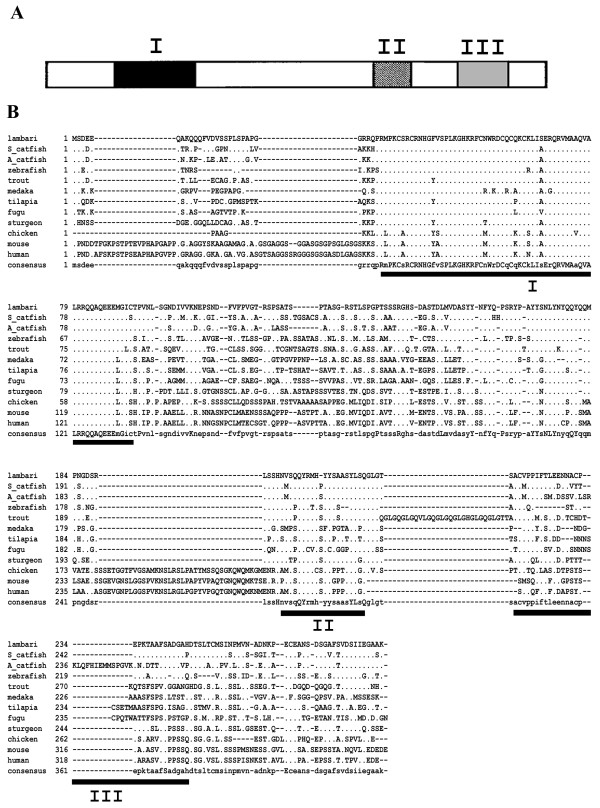
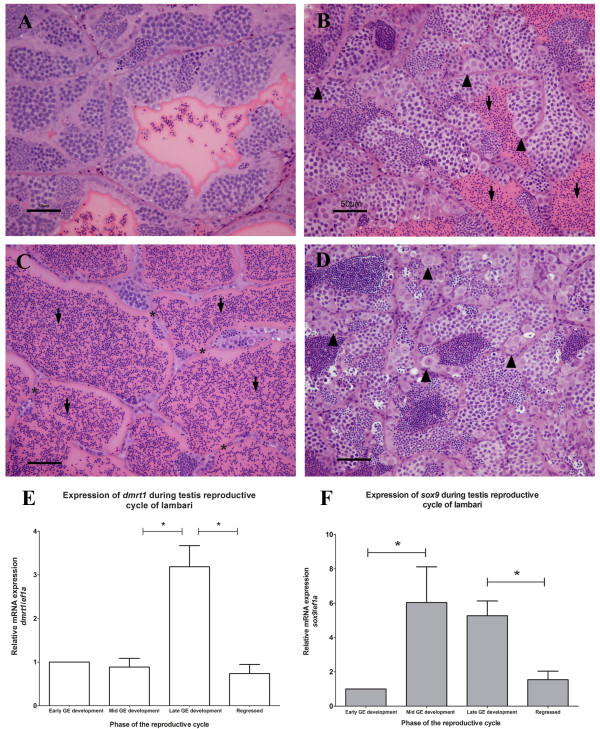
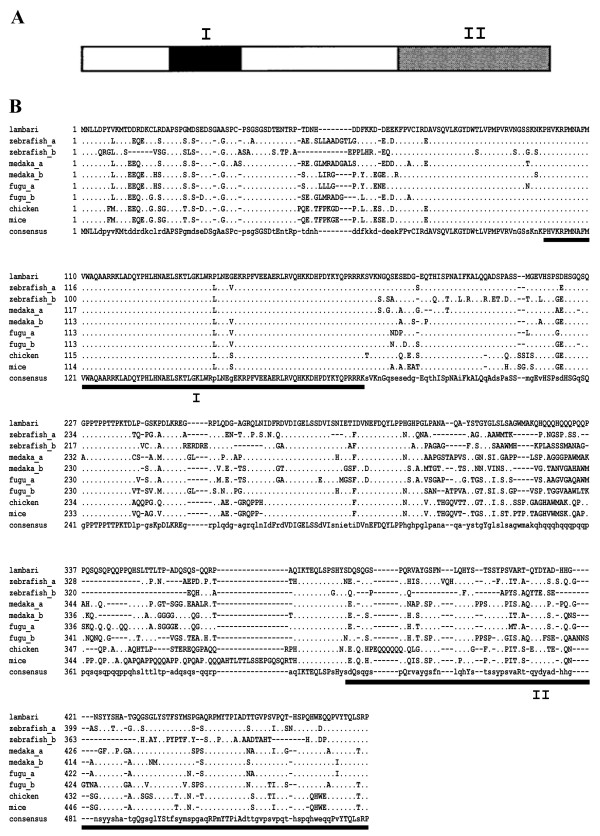
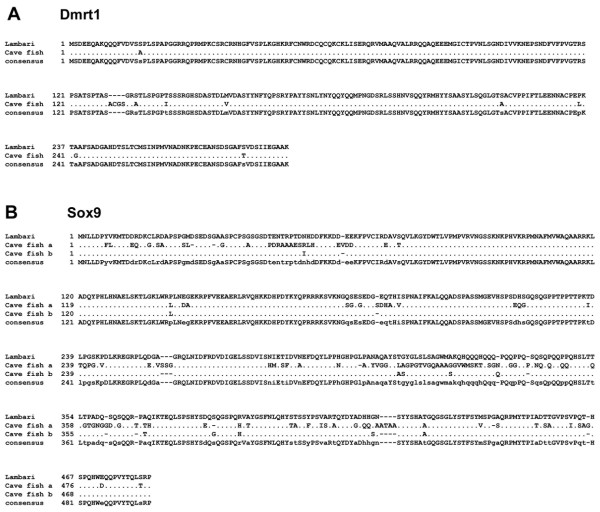
Here, we employed molecular cloning techniques to analyze the cDNA sequences of the dmrt1 and sox9 genes, and describe the expression pattern of those genes during development and the male reproductive cycle by qRT-PCR, and related to histology of the gonad.
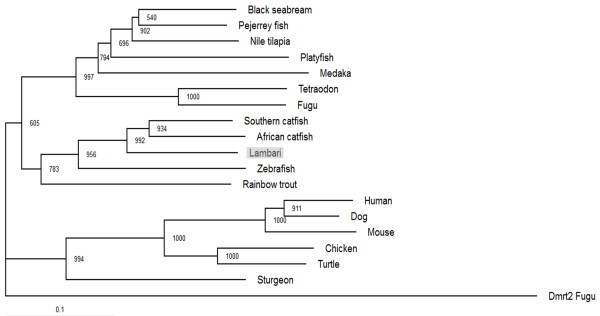
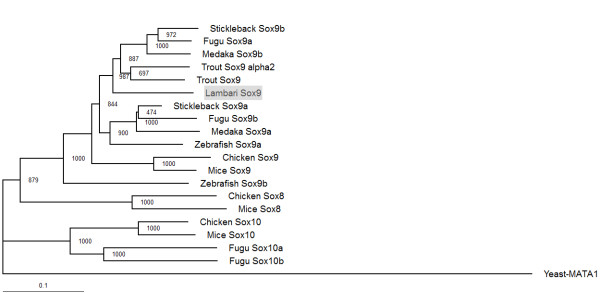
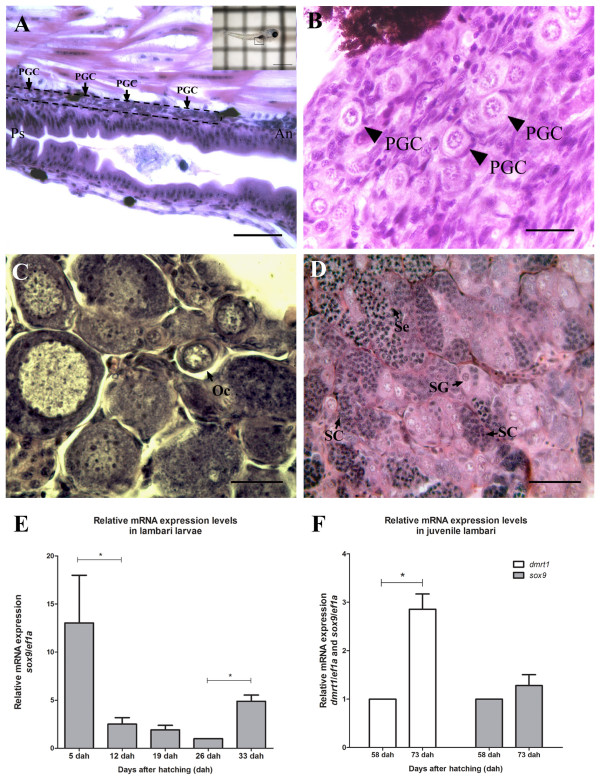
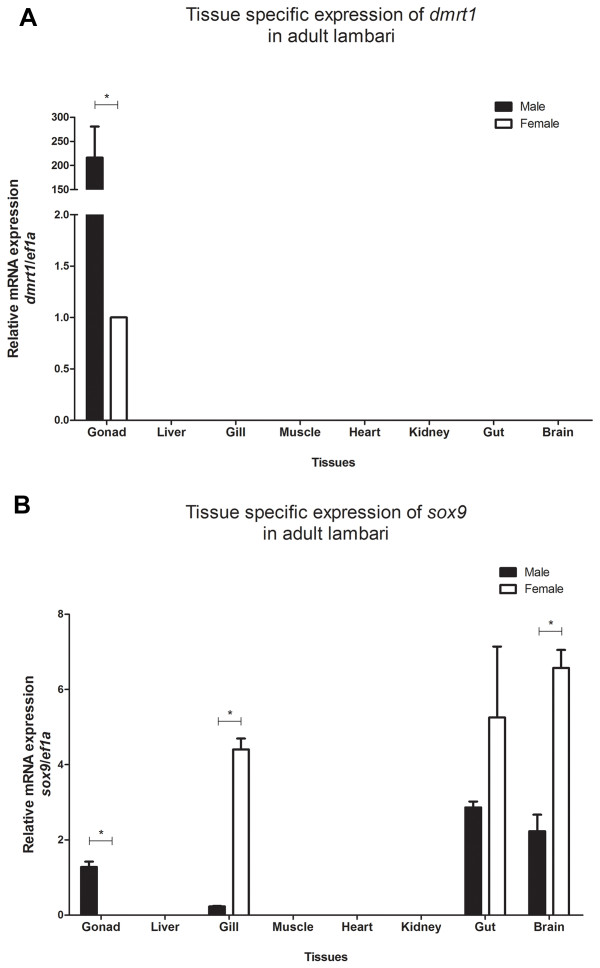
Phylogenetic analyses of predicted amino acid sequences of dmrt1 and sox9 clustered A. altiparanae in the Ostariophysi group, which is consistent with the morphological phylogeny of this species. Studies of the gonad development revealed that ovary formation occurred at 58 days after hatching (dah), 2 weeks earlier than testis formation. Expression studies of sox9 and dmrt1 in different tissues of adult males and females and during development revealed specific expression in the testis, indicating that both genes also have a male-specific role in the adult. During the period of gonad sex differentiation, dmrt1 seems to have a more significant role than sox9. During the male reproductive cycle dmrt1 and sox9 are down-regulated after spermiation, indicating a role of these genes in spermatogenesis.
For the first time the dmrt1 and sox9 were cloned in a Characiformes species. We show that both genes have a conserved structure and expression, evidencing their role in sex determination, sex differentiation and the male reproductive cycle in A. altiparanae. These findings contribute to a better understanding of the molecular mechanisms of sex determination and differentiation in fish.
dmrt1和sox9基因在脊椎动物睾丸形成方面具有保守功能,鱼类群体呈现出丰富的物种多样性和繁殖机制。拉氏丽脂鲤(Astyanax altiparanae)是新热带区的重要物种,目前关于其性别决定和性腺成熟的分子水平研究较少。
在此,我们采用分子克隆技术分析dmrt1和sox9基因的cDNA序列,并通过qRT-PCR描述这些基因在发育过程和雄性生殖周期中的表达模式,同时关联性腺组织学情况。
对dmrt1和sox9预测氨基酸序列的系统发育分析将拉氏丽脂鲤聚类到骨鳔总目群体中,这与该物种的形态系统发育一致。性腺发育研究表明,卵巢在孵化后58天(dah)形成,比睾丸形成早2周。对成年雄性和雌性不同组织以及发育过程中sox9和dmrt1的表达研究显示,它们在睾丸中特异性表达,表明这两个基因在成年个体中也具有雄性特异性作用。在性腺性别分化期间,dmrt1的作用似乎比sox9更为显著。在雄性生殖周期中,dmrt1和sox9在排精后下调,表明这些基因在精子发生中发挥作用。
首次在脂鲤科物种中克隆了dmrt1和sox9。我们表明这两个基因具有保守的结构和表达,证明了它们在拉氏丽脂鲤性别决定、性别分化和雄性生殖周期中的作用。这些发现有助于更好地理解鱼类性别决定和分化的分子机制。