Chauhan Sunil K, Dohlman Thomas H, Dana Reza
Schepens Eye Research Institute and Massachusetts Eye and Ear Infirmary, Harvard Medical School, Boston, Massachusetts 02114, USA.
J Clin Cell Immunol. 2014;5. doi: 10.4172/2155-9899.1000256.
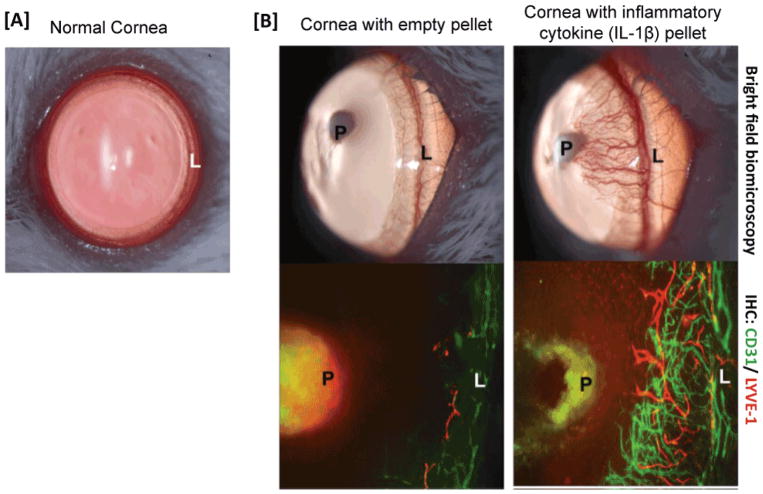
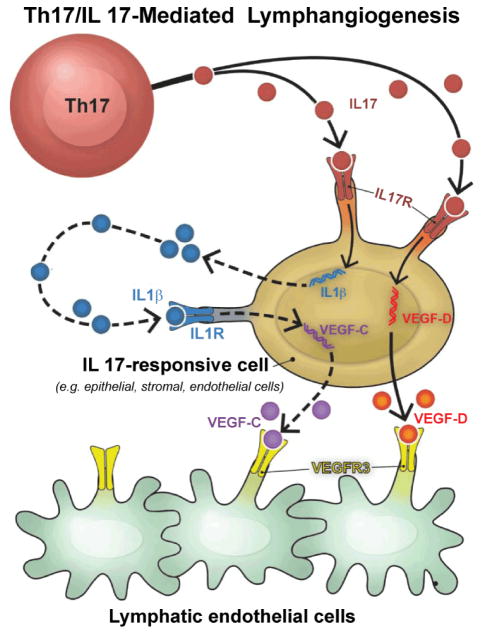
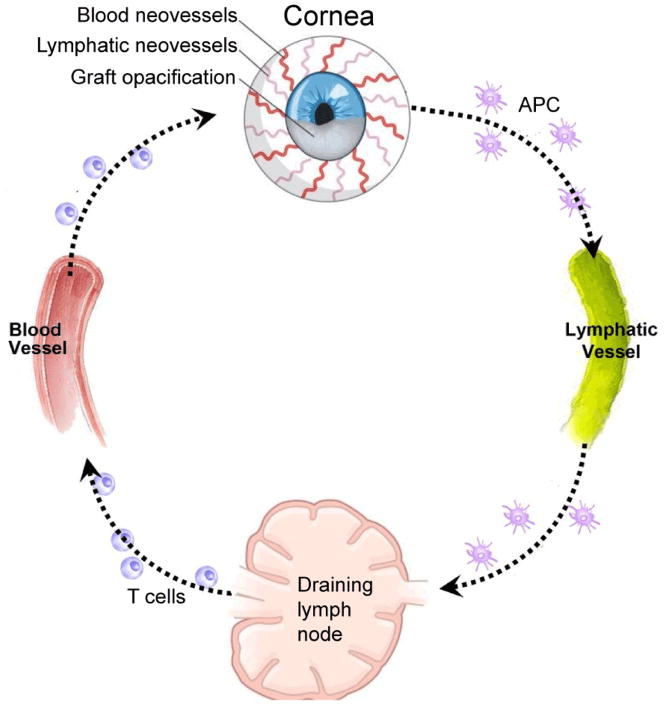
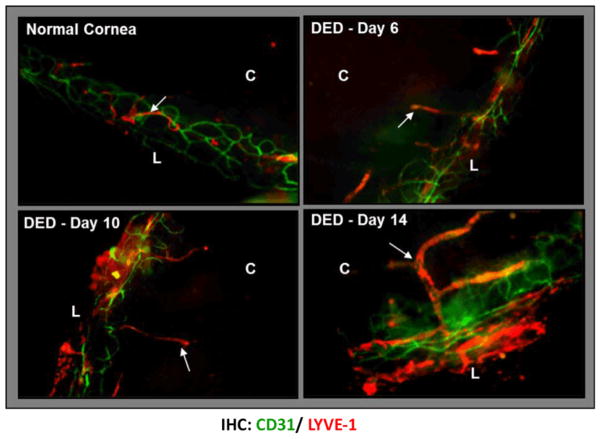
The normal cornea is devoid of lymphatic and blood vessels, thus suppressing both the afferent (lymphatic) and efferent (vascular) arms of the immune response-contributing to its 'immune privilege'. Inflammation, however, negates this unique 'immune' and 'angiogenic' privilege of the cornea. Abnormal blood vessel growth from pre-existing limbal vessels into the cornea has been studied for many years, but it is only recently that the significance of new lymphatic vessels (lymphangiogenesis) in ocular inflammatory diseases has been demonstrated. Whereas blood vessels in inflamed ocular surface provide a route of entry for immune effector cells to the cornea, lymphatics facilitate the exit of antigen-presenting cells and antigenic material from the cornea to regional lymph nodes, thus promoting induction of adaptive immune response. This review summarizes the current evidence for lymphangiogenesis in the cornea, and describes its molecular mediators; and discusses the interface between corneal lymphangiogenesis and adaptive immunity. Furthermore, the pathophysiologic implications of corneal lymphangiogenesis in the setting of allo- and autoimmune-mediated corneal inflammation are discussed.
正常角膜没有淋巴管和血管,因此抑制了免疫反应的传入(淋巴管)和传出(血管)途径,这有助于其“免疫赦免”。然而,炎症会消除角膜这种独特的“免疫”和“血管生成”特权。从现存的角膜缘血管向角膜异常生长血管的现象已经研究了很多年,但直到最近才证明新淋巴管(淋巴管生成)在眼部炎症性疾病中的重要性。炎症性眼表的血管为免疫效应细胞进入角膜提供了一条途径,而淋巴管则促进抗原呈递细胞和抗原物质从角膜排出到局部淋巴结,从而促进适应性免疫反应的诱导。这篇综述总结了目前角膜淋巴管生成的证据,描述了其分子介质,并讨论了角膜淋巴管生成与适应性免疫之间的界面。此外,还讨论了角膜淋巴管生成在同种异体和自身免疫介导的角膜炎症中的病理生理意义。