Vyakaranam Sapna, Vanaparthy Swati, Nori Srinivas, Palarapu Satyanarayana, Bhongir Aparna Varma
Department of Biochemistry, Mediciti Institute of Medical Sciences, Hyderabad, India.
Mediciti Institute of Medical Sciences, Hyderabad, India.
Int J Health Sci Res. 2014 Sep;4(9):147-153.
Thyroid hormones influences glucose homeostasis. The association of insulin resistance in overt hypothyroidism is well proven, but very less information is available about insulin action on subclinical hypothyroidism.
This study was done to evaluate the association between thyroid hormones and insulin resistance in subclinical hypothyroidism (SCH).
Thirty subjects diagnosed as SCH and 30 age matched euthyroids were included. Serum TSH, FT3, FT4, fasting plasma glucose and insulin were estimated. Homeostasis Model Assessment was used to assess insulin resistance (HOMA- IR).
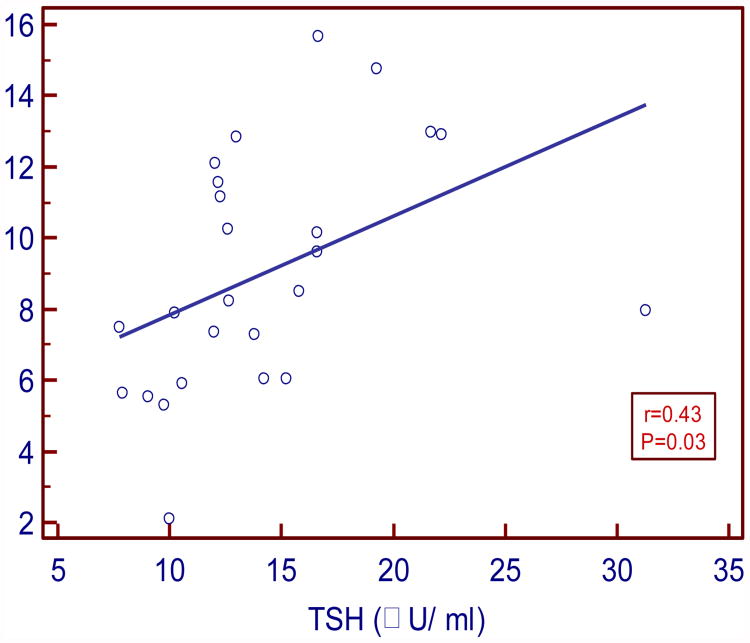
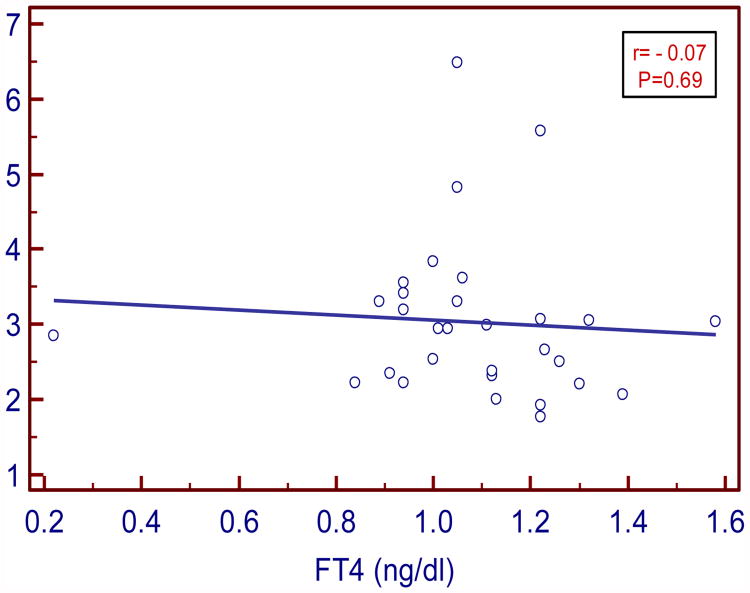
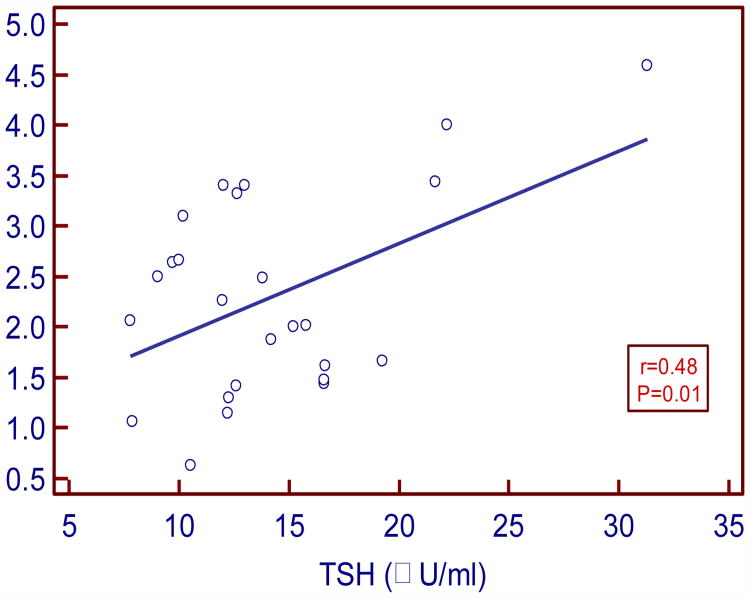
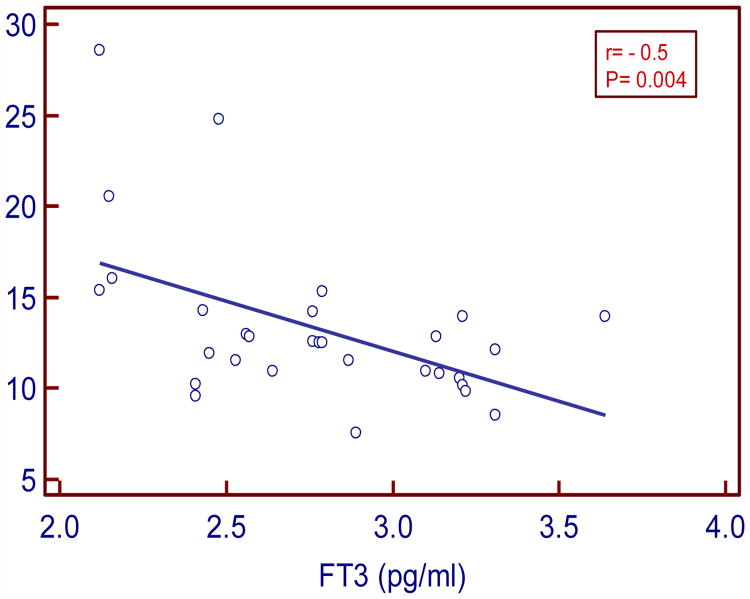
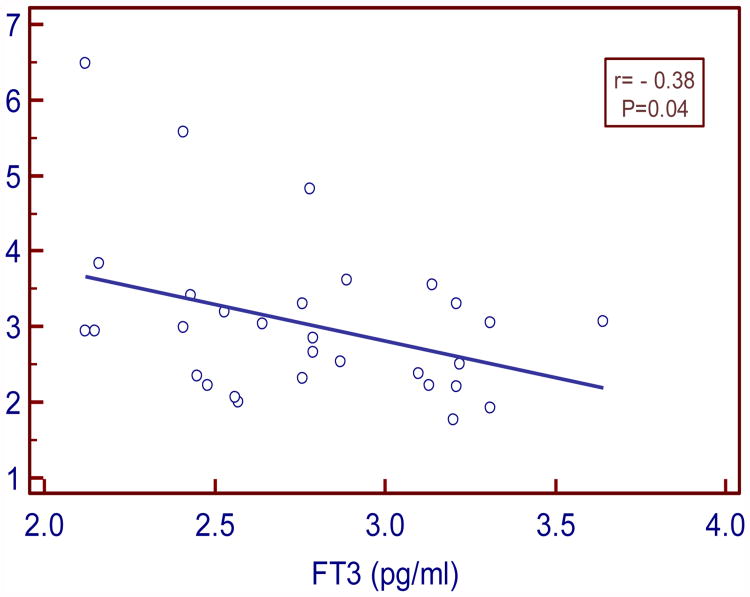
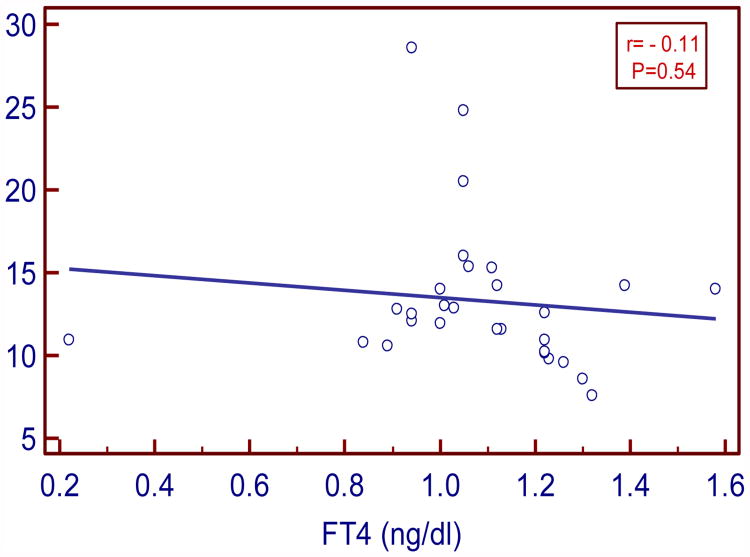
Serum TSH levels were significantly increased in SCH (14.20 ± 5.23 μU/ml) when compared with euthyroids (2.24 ±1.43μU/ml; P< 0.0001). Serum FT3, FT4 levels in SCH (2.96±0.80 pg/ml & 1.15 ± 0.52 ng/dl) were within the normal range. The mean insulin levels were significantly elevated in SCH (9.07±3.41 μU/ml) when compared with euthyroids (5.28± 2.18 μU/ml; P-value < 0.0001). The mean HOMA IR was significantly elevated in SCH (2.03 ± 0.95) when compared with euthyroids (1.05±0.45, P-value < 0.0001). TSH levels positively and moderately correlated with insulin (r= 0.43 P=0.03) and HOMA IR (r =0.48; P= 0.01). FT3 levels negatively and strongly correlated with insulin (r= -0.5, P=0.004) and moderately with HOMA IR (r= -0.38, P= 0.04). FT4 levels negatively and weakly correlated with insulin and IR (r= - 0.11, P=0.54; r= - 0.07, P=0.69 respectively). To conclude, SCH is associated with insulin resistance. Hence there is an increased risk of insulin resistance associated disorders such as metabolic syndrome, cardiovascular events in SCH.
甲状腺激素影响葡萄糖稳态。显性甲状腺功能减退中胰岛素抵抗的关联已得到充分证实,但关于亚临床甲状腺功能减退中胰岛素作用的信息却非常少。
本研究旨在评估亚临床甲状腺功能减退(SCH)中甲状腺激素与胰岛素抵抗之间的关联。
纳入30例诊断为SCH的受试者和30例年龄匹配的甲状腺功能正常者。检测血清促甲状腺激素(TSH)、游离三碘甲状腺原氨酸(FT3)、游离甲状腺素(FT4)、空腹血糖和胰岛素水平。采用稳态模型评估法评估胰岛素抵抗(HOMA-IR)。
与甲状腺功能正常者(2.24±1.43μU/ml)相比,SCH患者的血清TSH水平显著升高(14.20±5.23μU/ml;P<0.0001)。SCH患者的血清FT3、FT4水平(2.96±0.80 pg/ml和1.15±0.52 ng/dl)在正常范围内。与甲状腺功能正常者(5.28±2.18μU/ml)相比,SCH患者的平均胰岛素水平显著升高(9.07±3.41μU/ml;P值<0.0001)。与甲状腺功能正常者(1.05±0.45)相比,SCH患者的平均HOMA-IR显著升高(2.03±0.95;P值<0.0001)。TSH水平与胰岛素(r=0.43,P=0.03)和HOMA-IR(r=0.48;P=0.01)呈正相关且中等程度相关。FT3水平与胰岛素呈负相关且相关性强(r=-0.5,P=0.004),与HOMA-IR呈中等程度负相关(r=-0.38,P=0.04)。FT4水平与胰岛素和胰岛素抵抗呈负相关且相关性弱(分别为r=-0.11,P=0.54;r=-0.07,P=0.69)。总之,SCH与胰岛素抵抗相关。因此,SCH患者发生胰岛素抵抗相关疾病(如代谢综合征、心血管事件)的风险增加。