
A glucose carbonate apatite complex exhibits in vitro and in vivo anti-tumour effects.
作者信息
Yamamoto Hirofumi, Wu Xin, Nakanishi Hiroyuki, Yamamoto Yuki, Uemura Mamoru, Hata Taishi, Nishimura Junichi, Takemasa Ichiro, Mizushima Tsunekazu, Sasaki Jun-Ichi, Imazato Satoshi, Matsuura Nariaki, Doki Yuichiro, Mori Masaki
机构信息
Department of Surgery, Gastroenterological Surgery, Graduate School of Medicine, Osaka University, Japan.
1] Department of Surgery, Gastroenterological Surgery, Graduate School of Medicine, Osaka University, Japan [2] Research Fellow of Japan Society for the Promotion of Science.
出版信息
Sci Rep. 2015 Jan 13;5:7742. doi: 10.1038/srep07742.
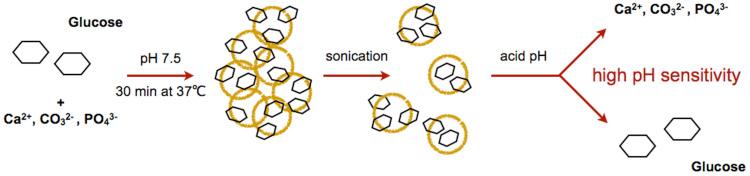
Tumour targeting nanotechnology has recently made therapeutic progress and several therapeutic nanoparticles have been approved for clinical application. However, an ideal nanotechnology based therapeutic for solid tumours, particularly for systemic administration, still remains a challenge in clinical cancer therapy. We previously reported a pH sensitive in vivo delivery system of doxorubicin, or microRNA, using carbonate apatite (CA) nanoparticles. To further explore utility of CA in cancer therapy, we attempted to transport excess glucose into tumour cells by conjugating glucose (Glc) to the nanoparticle. Despite the non-toxicity of CA and Glc, the complex (CA-[Glc]) exhibited an unexpected anti-cancer effect in vitro and in vivo. CA-[Glc] significantly reduced the growth of colon cancer cell lines. Intravenous injections successfully suppressed solid tumour growth. In mice and monkeys, intravenously injected CA-[Glc] complex resulted in no serious abnormalities in body weight or blood chemistry. Because cancer cells intensively metabolise glucose than normal cells, treatment of cancer using glucose seems paradoxical. However, with the aid of CA, this safe and 'sweet' complex may be a novel anti-cancer reagent.



 Zotero 插件