Department of Molecular Medicine, Sapienza University of Rome, Rome, Italy.
Int J Nanomedicine. 2012;7:3637-57. doi: 10.2147/IJN.S23696. Epub 2012 Jul 20.
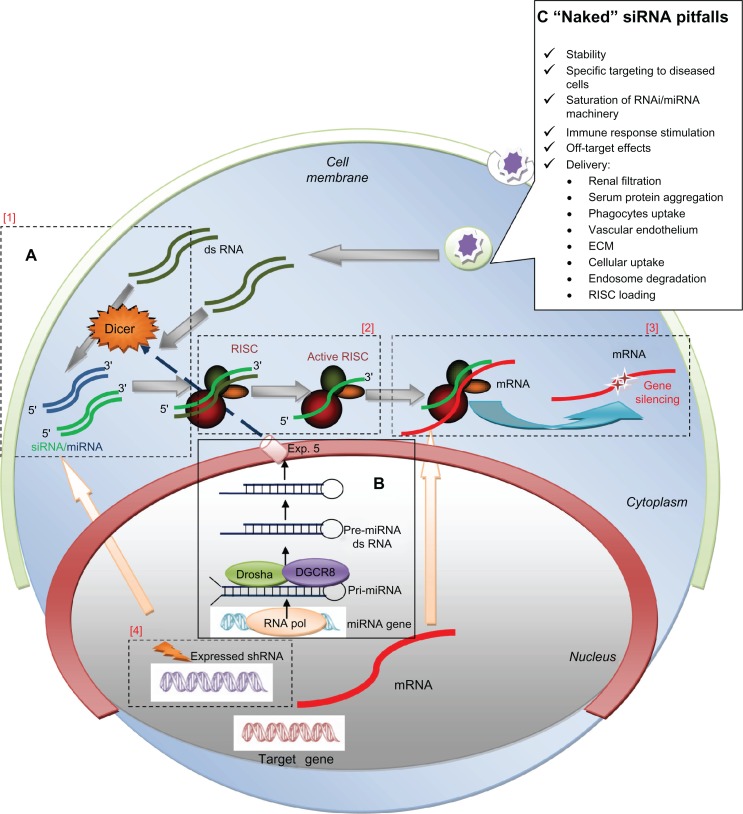
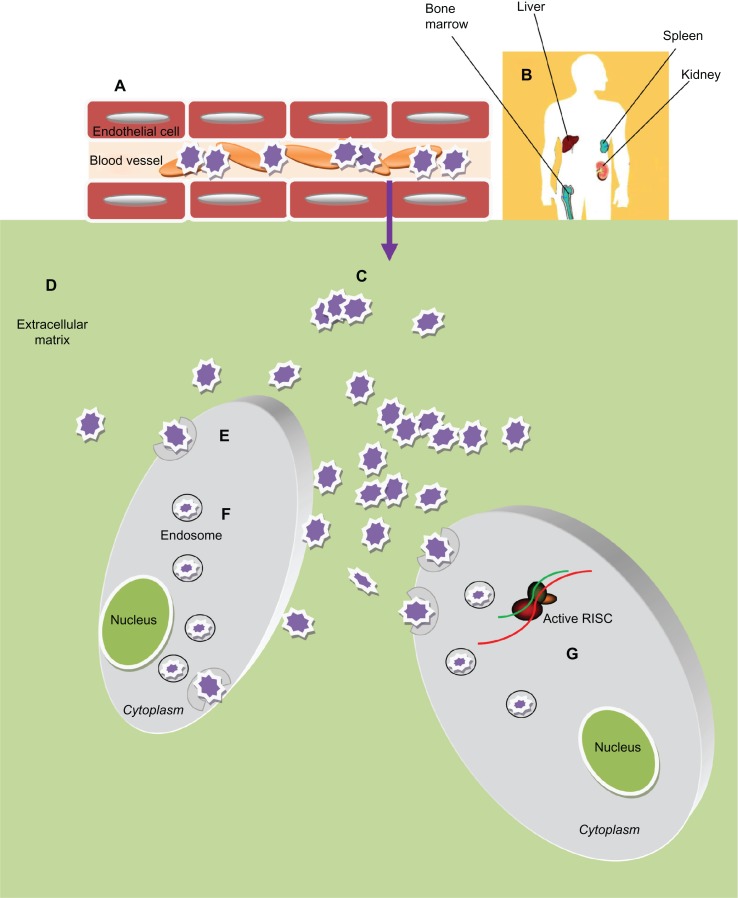
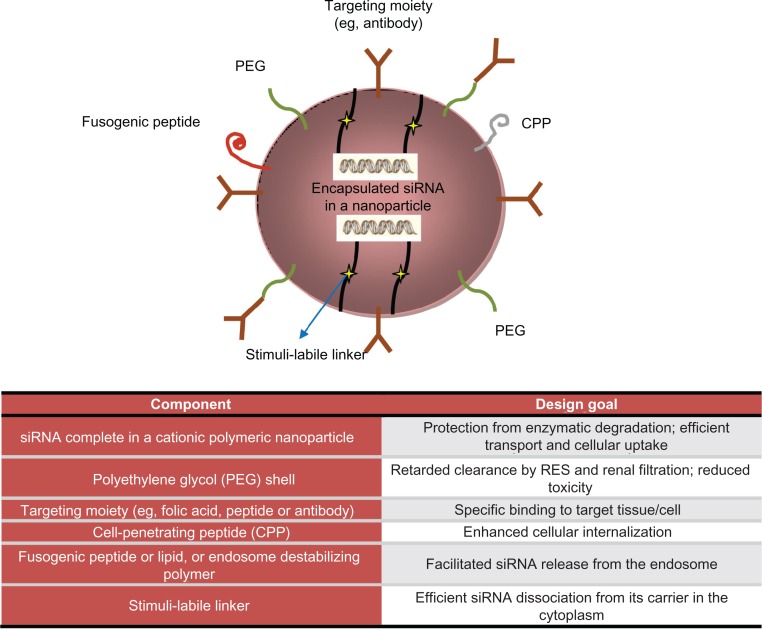
During recent decades there have been remarkable advances and profound changes in cancer therapy. Many therapeutic strategies learned at the bench, including monoclonal antibodies and small molecule inhibitors, have been used at the bedside, leading to important successes. One of the most important advances in biology has been the discovery that small interfering RNA (siRNA) is able to regulate the expression of genes, by a phenomenon known as RNA interference (RNAi). RNAi is one of the most rapidly growing fields of research in biology and therapeutics. Much research effort has gone into the application of this new discovery in the treatment of various diseases, including cancer. However, even though these molecules may have potential and strong utility, some limitations make their clinical application difficult, including delivery problems, side effects due to off-target actions, disturbance of physiological functions of the cellular machinery involved in gene silencing, and induction of the innate immune response. Many researchers have attempted to overcome these limitations and to improve the safety of potential RNAi-based therapeutics. Nanoparticles, which are nanostructured entities with tunable size, shape, and surface, as well as biological behavior, provide an ideal opportunity to modify current treatment regimens in a substantial way. These nanoparticles could be designed to surmount one or more of the barriers encountered by siRNA. Nanoparticle drug formulations afford the chance to improve drug bioavailability, exploiting superior tissue permeability, payload protection, and the "stealth" features of these entities. The main aims of this review are: to explain the siRNA mechanism with regard to potential applications in siRNA-based cancer therapy; to discuss the possible usefulness of nanoparticle-based delivery of certain molecules for overcoming present therapeutic limitations; to review the ongoing relevant clinical research with its pitfalls and promises; and to evaluate critically future perspectives and challenges in siRNA-based cancer therapy.
近几十年来,癌症治疗领域取得了显著的进展和深刻的变革。许多在实验室中获得的治疗策略,包括单克隆抗体和小分子抑制剂,已经在临床中得到应用,取得了重要的成功。生物学领域最重要的进展之一是发现小干扰 RNA(siRNA)能够通过一种称为 RNA 干扰(RNAi)的现象来调节基因的表达。RNAi 是生物学和治疗学中发展最快的领域之一。许多研究工作都致力于将这一新发现应用于各种疾病的治疗,包括癌症。然而,尽管这些分子具有潜在的强大效用,但由于一些局限性,它们的临床应用仍存在困难,包括递药问题、由于脱靶作用引起的副作用、干扰参与基因沉默的细胞机制的生理功能以及诱导固有免疫反应。许多研究人员试图克服这些局限性,提高潜在 RNAi 治疗药物的安全性。纳米颗粒是具有可调尺寸、形状和表面以及生物行为的纳米结构实体,为实质性地改进当前的治疗方案提供了理想的机会。这些纳米颗粒可以设计为克服 siRNA 遇到的一个或多个障碍。纳米颗粒药物制剂有机会通过提高药物的生物利用度来改善治疗效果,利用这些实体的优异组织通透性、有效负载保护和“隐形”特性。本文的主要目的是:解释 siRNA 机制,探讨基于纳米颗粒的某些分子递药用于克服当前治疗限制的可能用途;综述正在进行的相关临床研究及其陷阱和承诺;并批判性地评估未来基于 siRNA 的癌症治疗的前景和挑战。