Department of Emergency Medicine, E-Da Hospital, I-Shou University College of Medicine, Kaohsiung 82445, Taiwan.
Division of Cardiology, Department of Internal Medicine, Kaohsiung Chang Gung Memorial Hospital and Chang Gung University College of Medicine, Kaohsiung 83301, Taiwan.
Stem Cells Int. 2014;2014:316214. doi: 10.1155/2014/316214. Epub 2014 Dec 18.
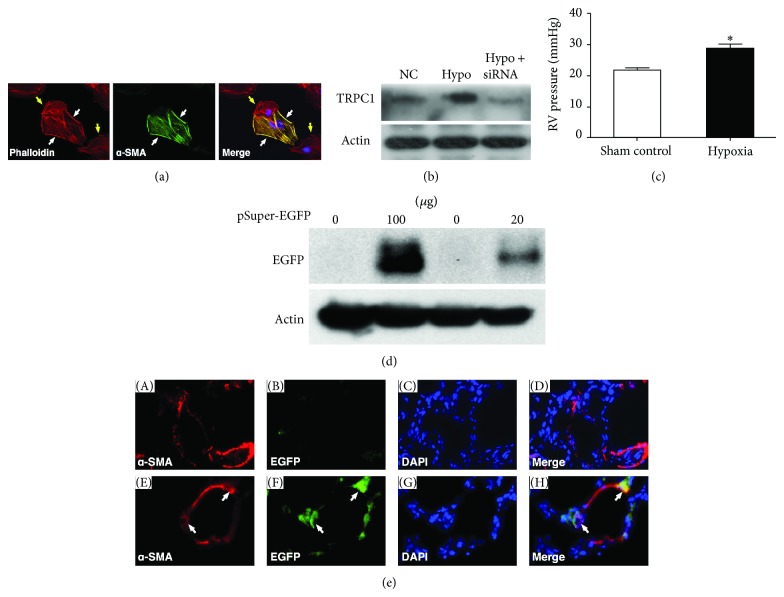
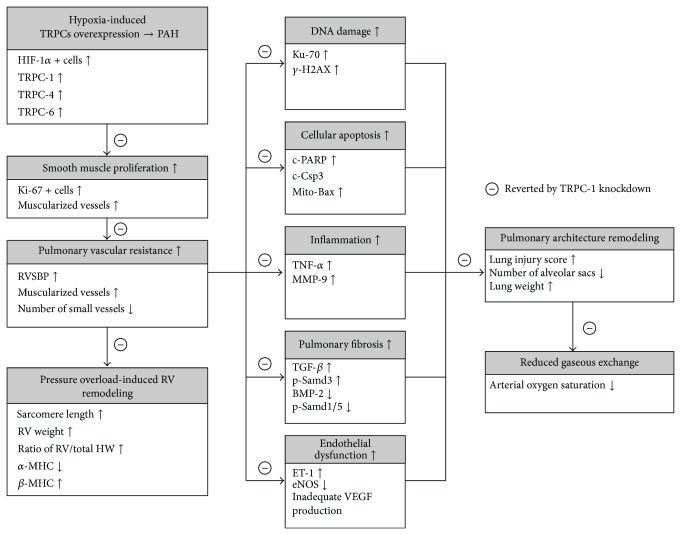
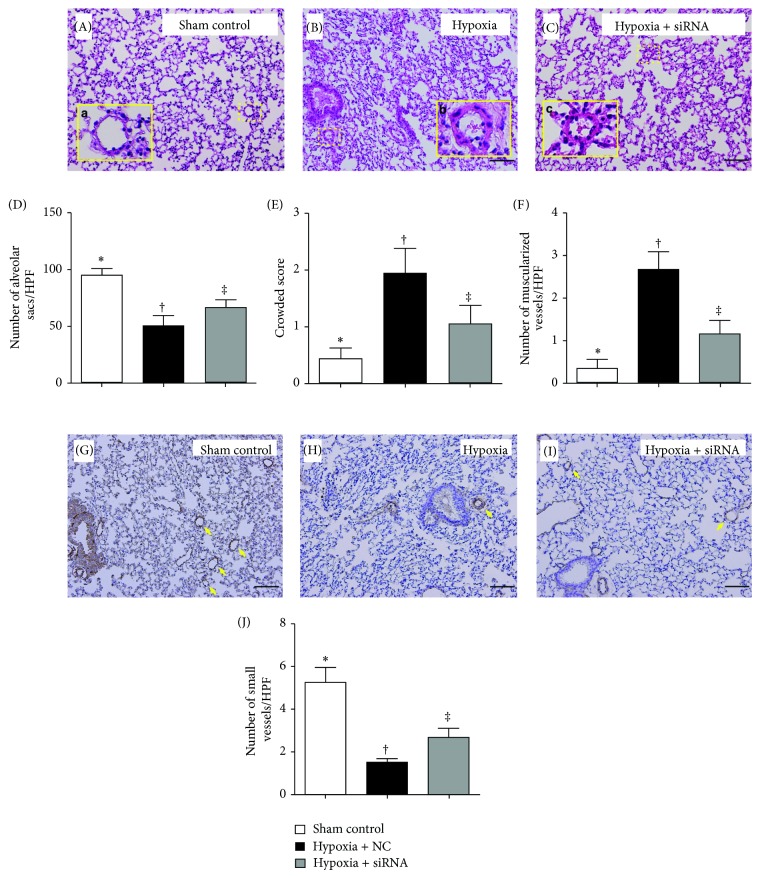
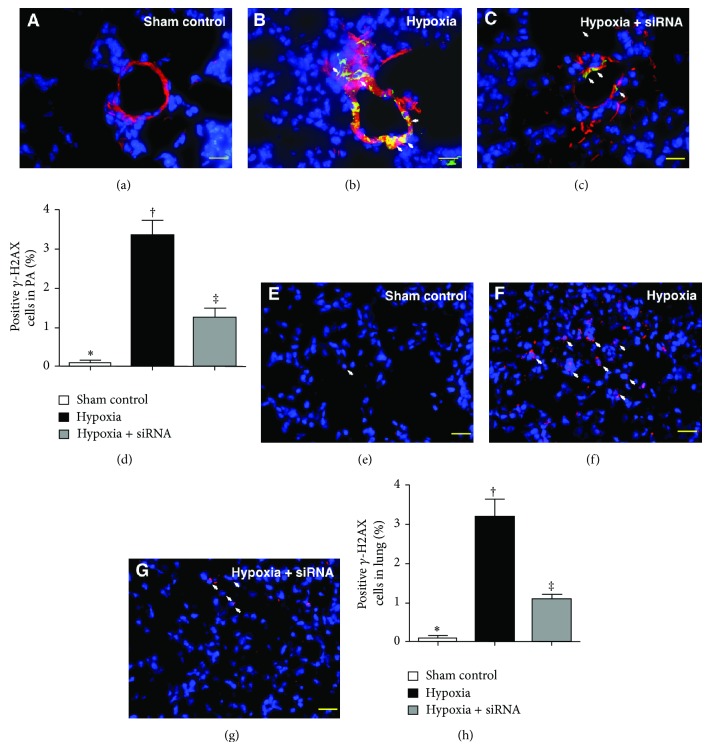
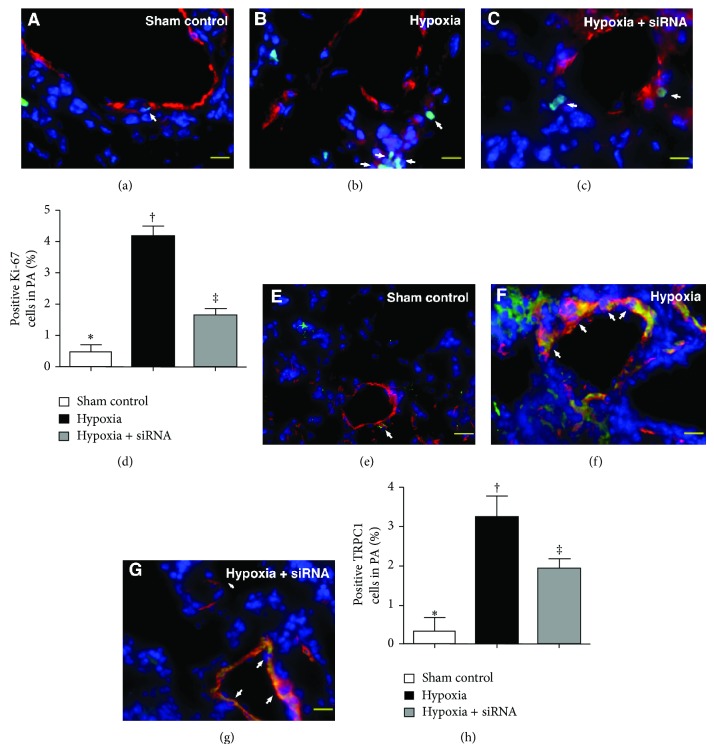
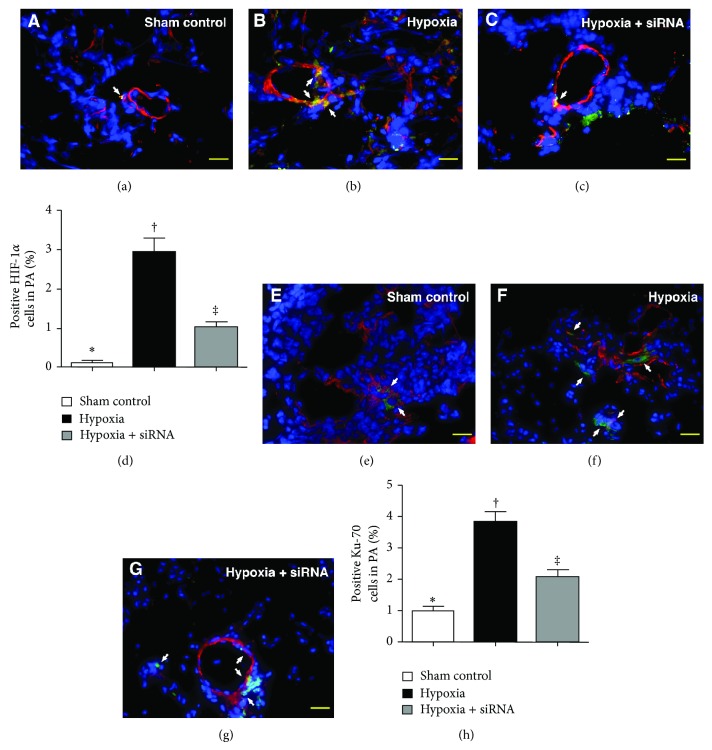
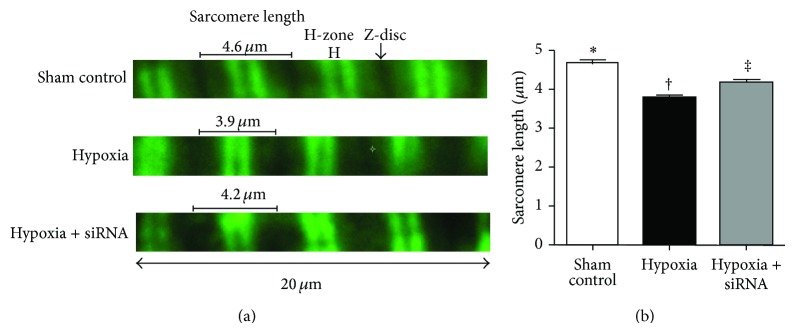
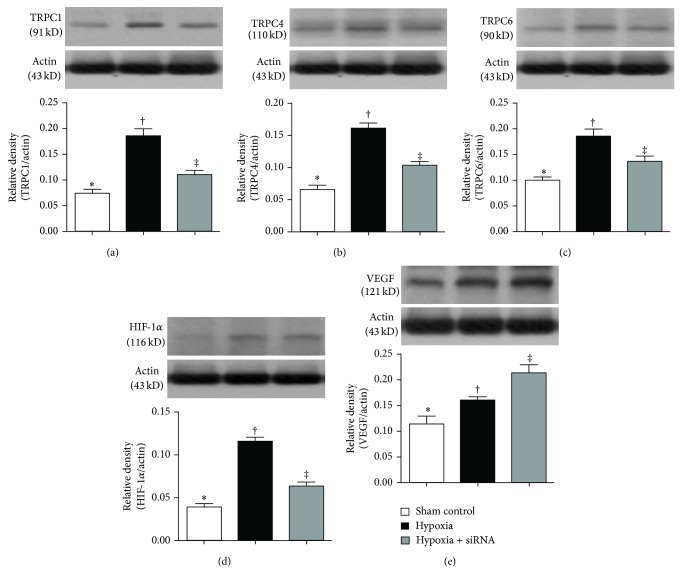
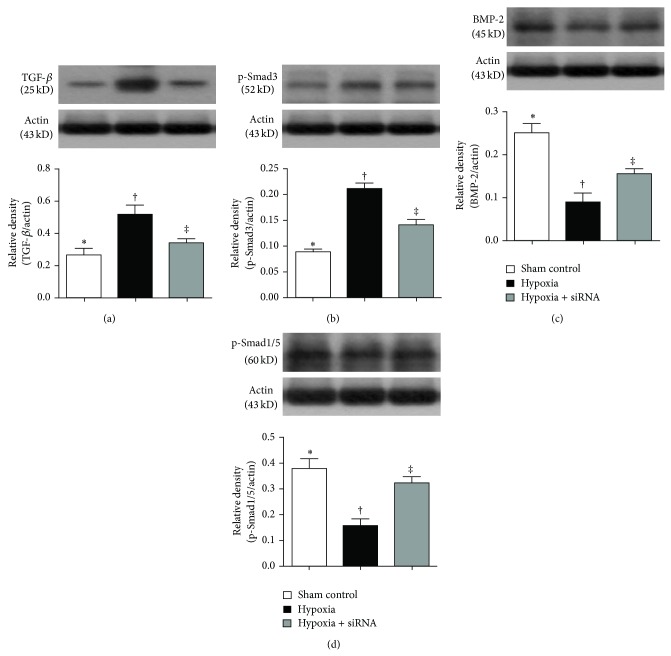
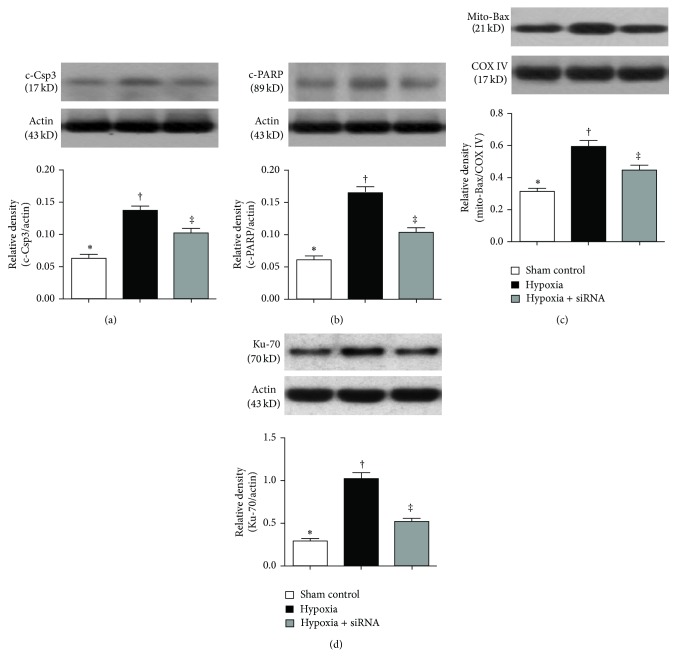
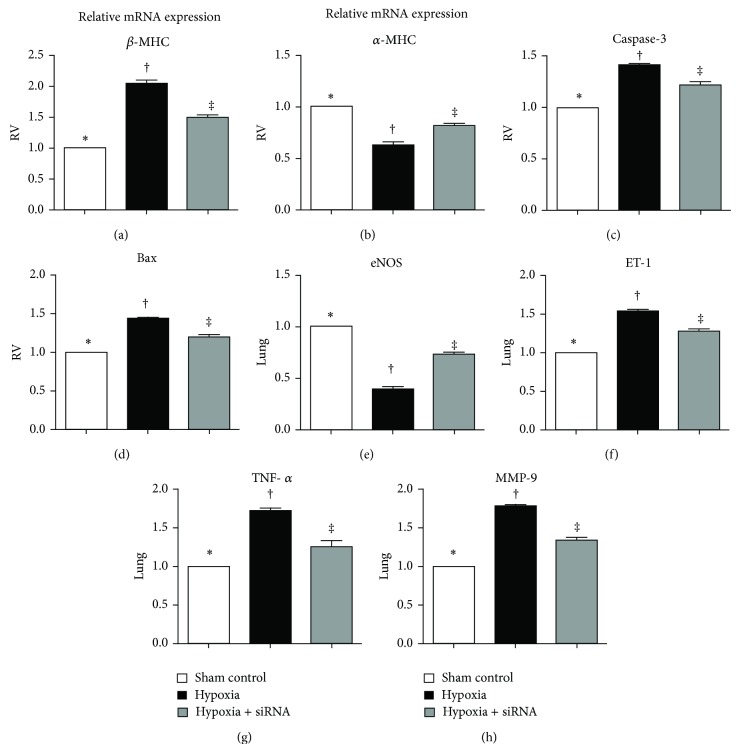
We tested the hypothesis that Lipofectamine siRNA delivery to deplete transient receptor potential cation channel (TRPC) 1 protein expression can suppress hypoxia-induced pulmonary arterial hypertension (PAH) in mice. Adult male C57BL/6 mice were equally divided into group 1 (normal controls), group 2 (hypoxia), and group 3 (hypoxia + siRNA TRPC1). By day 28, right ventricular systolic pressure (RVSP), number of muscularized arteries, right ventricle (RV), and lung weights were increased in group 2 than in group 1 and reduced in group 3 compared with group 2. Pulmonary crowded score showed similar pattern, whereas number of alveolar sacs exhibited an opposite pattern compared to that of RVSP in all groups. Protein expressions of TRPCs, HIF-1α, Ku-70, apoptosis, and fibrosis and pulmonary mRNA expressions of inflammatory markers were similar pattern, whereas protein expressions of antifibrosis and VEGF were opposite to the pattern of RVSP. Cellular markers of pulmonary DNA damage, repair, and smooth muscle proliferation exhibited a pattern similar to that of RVSP. The mRNA expressions of proapoptotic and hypertrophy biomarkers displayed a similar pattern, whereas sarcomere length showed an opposite pattern compared to that of RVSP in all groups. Lipofectamine siRNA delivery effectively reduced TRPC1 expression, thereby attenuating PAH-associated RV and pulmonary arteriolar remodeling.
我们验证了这样一个假设,即通过 Lipofectamine siRNA 递送来耗尽瞬时受体电位阳离子通道 (TRPC) 1 蛋白表达,可以抑制小鼠低氧诱导的肺动脉高压 (PAH)。成年雄性 C57BL/6 小鼠等分为三组:第 1 组(正常对照组)、第 2 组(缺氧组)和第 3 组(缺氧+siRNA TRPC1 组)。第 28 天,与第 1 组相比,第 2 组右心室收缩压 (RVSP)、肌化动脉数量、右心室 (RV) 和肺重增加,而第 3 组则低于第 2 组。肺动脉拥挤评分也呈现出类似的模式,而肺泡囊数量则与 RVSP 的模式相反。所有组中,TRPCs、HIF-1α、Ku-70、凋亡和纤维化的蛋白表达以及炎症标志物的肺 mRNA 表达均呈现相似的模式,而抗纤维化和 VEGF 的蛋白表达则与 RVSP 的模式相反。肺 DNA 损伤、修复和平滑肌增殖的细胞标志物的表达模式与 RVSP 相似。促凋亡和肥大生物标志物的 mRNA 表达呈现相似的模式,而肌节长度与 RVSP 的模式相反。Lipofectamine siRNA 递送可有效降低 TRPC1 表达,从而减轻与 PAH 相关的 RV 和肺小动脉重塑。