Uluçay Safiye, Çam Fethi Sırrı, Batır Muhammed Burak, Sütçü Recep, Bayturan Özgür, Demircan Kadir
Department of Medical Genetics, Faculty of Medicine, Celal Bayar University; Manisa Turkey.
Anatol J Cardiol. 2015 Oct;15(10):823-9. doi: 10.5152/akd.2014.5762. Epub 2014 Oct 31.
Coronary artery disease is characterized by atherosclerosis in the vessel wall. Recently, it has been thought that increasing LDL-binding capacity of subendothelial proteoglycan fragments that are formed by protease activity can be responsible for the initiation of atherosclerosis. ADAMTS4 is a member of the versican-degrading proteinases. In vitro studies demonstrated that TGFb inhibits the expression of ADAMTS4 in macrophages. In this study, we aimed to investigate the role and association between TGFb1 and ADAMTS4 in coronary artery disease.
A total of 84 cases with atheroma plaque and 72 controls without plaque were analyzed. The severity of disease was determined by Gensini score. TGFb1 gene polymorphisms were genotyped by the PCR-RFLP method. TGFb1 and ADAMTS4 serum levels were measured by ELISA method. Statistical analyses of genotypes and their relationship with serum levels were performed by chi-square, student t test and ANOVA.
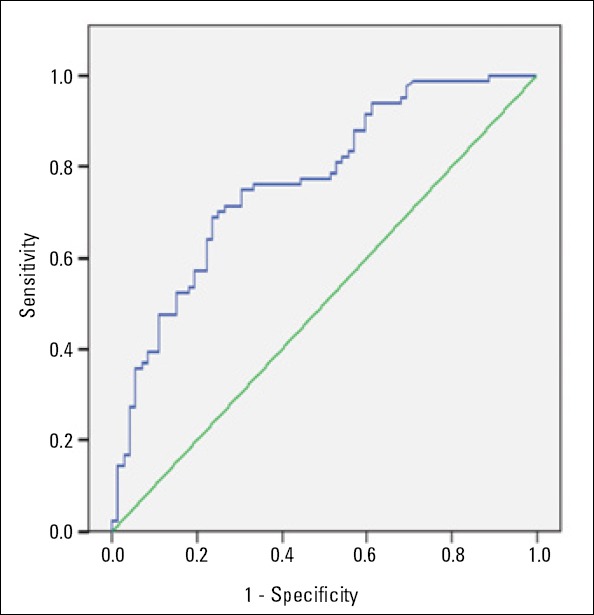
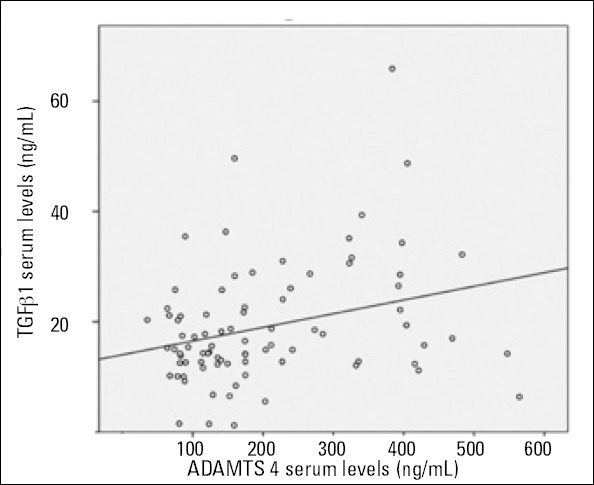
ADAMTS4 levels were higher in cases compared with controls (p<0.05). In the patient group, ADAMTS4 levels were higher than in controls and correlated with TGFb1 serum levels (r=0.29; p<0.05) and severity of disease (r=0.20; p<0.05). The TGFb1 gene CCA haplotype was associated with 3.3-fold increase in coronary artery disease (OR=3.26 95% CI 1.22-8.68; p<0.05). Unexpectedly, ADAMTS4 serum levels were also higher in diabetic cases (p=0.05).
This study has demonstrated that ADAMTS4 may be responsible for the pathogenesis of atherosclerosis. This is the first report about the association between ADAMTS4 and TGFb1 serum levels in the progression of atherosclerosis in CAD. Furthermore, it is seen that TGFb1 haplotype can cause a genetic susceptibility to CAD in the Turkish population. To our knowledge, this is also the first report suggesting higher serum ADAMTS4 levels in diabetic patients.
冠状动脉疾病的特征是血管壁动脉粥样硬化。最近,有人认为蛋白酶活性形成的内皮下蛋白聚糖片段的低密度脂蛋白结合能力增加可能是动脉粥样硬化起始的原因。ADAMTS4是多功能蛋白聚糖降解蛋白酶的成员。体外研究表明,转化生长因子β(TGFβ)抑制巨噬细胞中ADAMTS4的表达。在本研究中,我们旨在探讨TGFβ1与ADAMTS4在冠状动脉疾病中的作用及关联。
共分析了84例有动脉粥样斑块的病例和72例无斑块的对照。疾病严重程度由Gensini评分确定。通过PCR-RFLP方法对TGFβ1基因多态性进行基因分型。采用ELISA法检测TGFβ1和ADAMTS4血清水平。通过卡方检验、学生t检验和方差分析对基因型及其与血清水平的关系进行统计分析。
与对照组相比,病例组中ADAMTS4水平更高(p<0.05)。在患者组中,ADAMTS4水平高于对照组,且与TGFβ1血清水平(r=0.29;p<0.05)和疾病严重程度(r=0.20;p<0.05)相关。TGFβ1基因CCA单倍型与冠状动脉疾病增加3.3倍相关(OR=3.26;95%CI 1.22-8.68;p<0.05)。出乎意料的是,糖尿病病例中ADAMTS4血清水平也更高(p=0.05)。
本研究表明ADAMTS4可能是动脉粥样硬化发病机制的原因。这是关于ADAMTS4与TGFβ1血清水平在冠状动脉疾病动脉粥样硬化进展中关联的首次报道。此外,在土耳其人群中发现TGFβ1单倍型可导致冠状动脉疾病的遗传易感性。据我们所知,这也是首次报道糖尿病患者血清ADAMTS4水平更高。