Kochli Daniel E, Thompson Elaine C, Fricke Elizabeth A, Postle Abagail F, Quinn Jennifer J
Department of Psychology and Center for Neuroscience and Behavior, Miami University, Oxford, Ohio 45056, USA.
Department of Psychology and Center for Neuroscience and Behavior, Miami University, Oxford, Ohio 45056, USA
Learn Mem. 2015 Jan 15;22(2):92-100. doi: 10.1101/lm.034918.114. Print 2015 Feb.
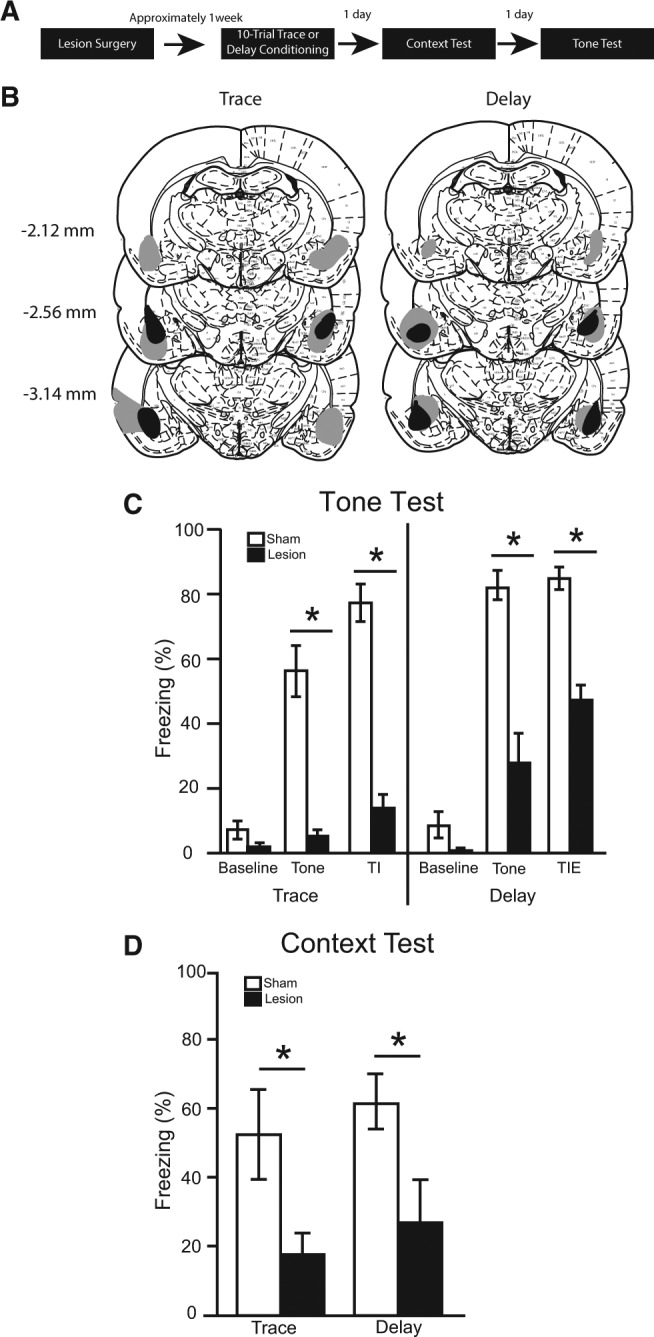
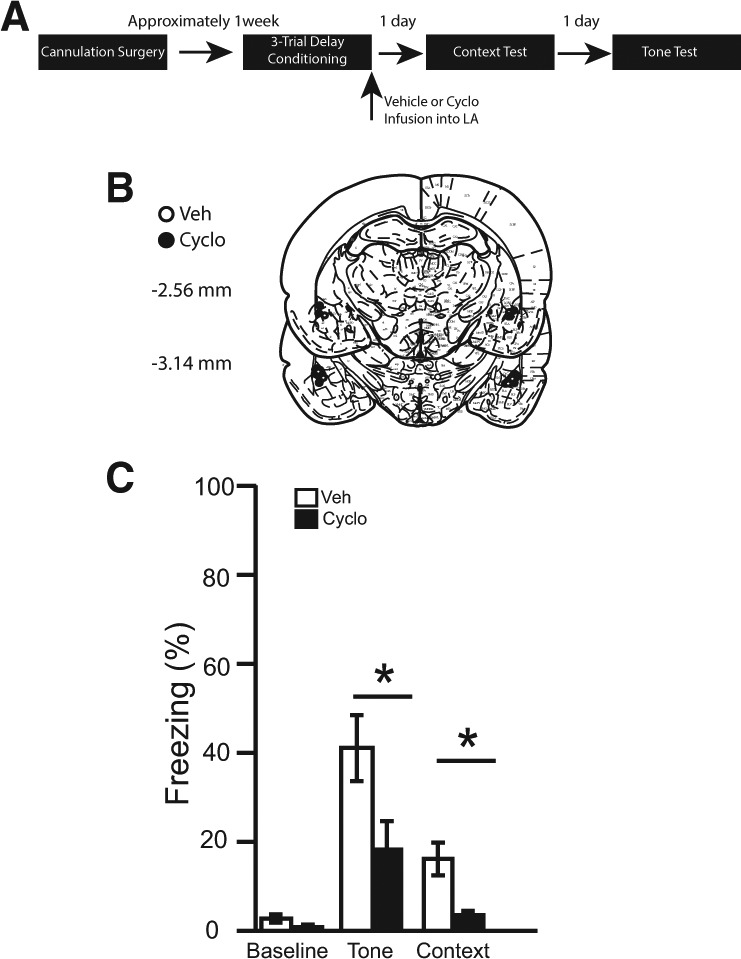
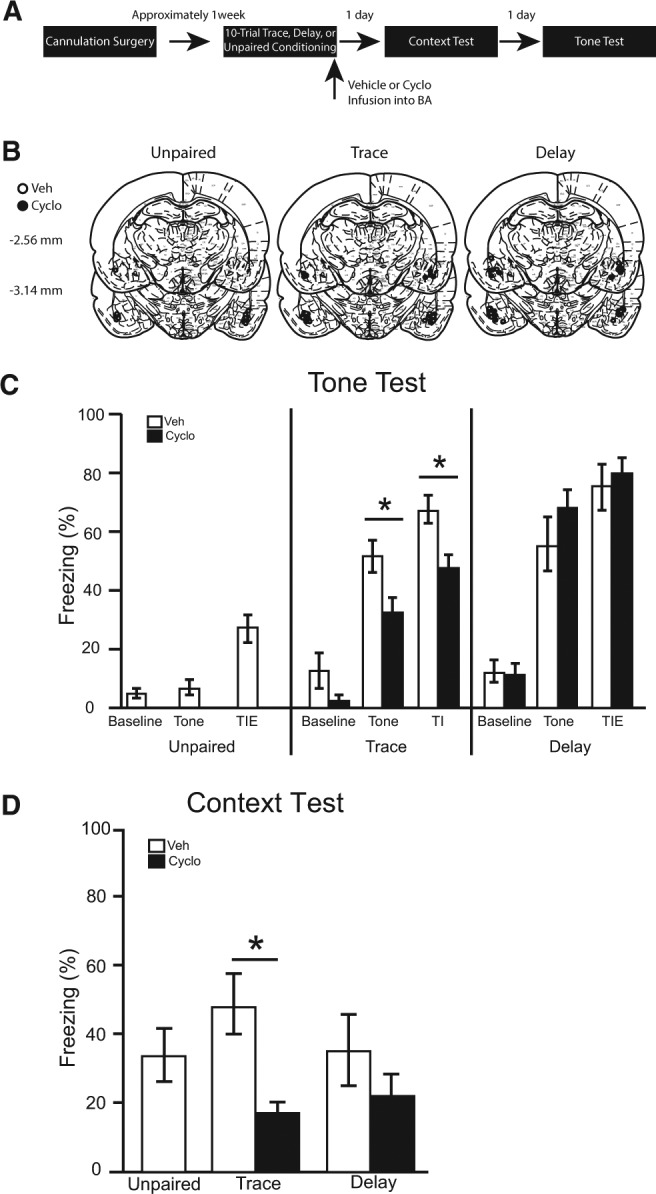
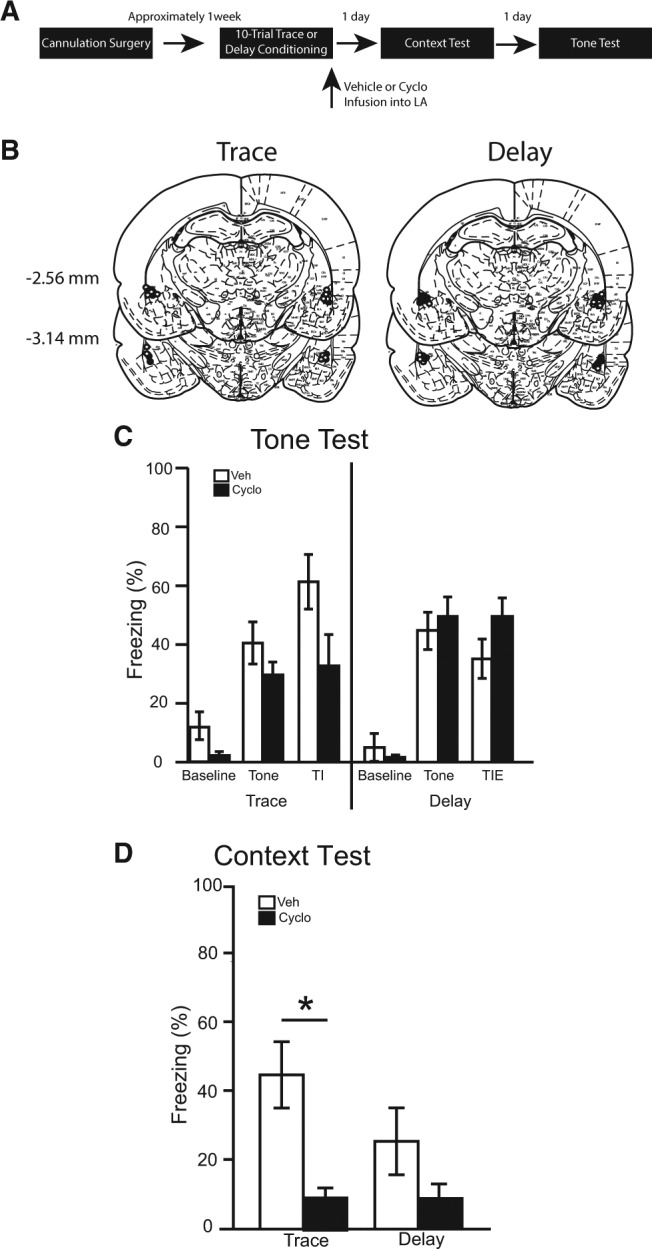
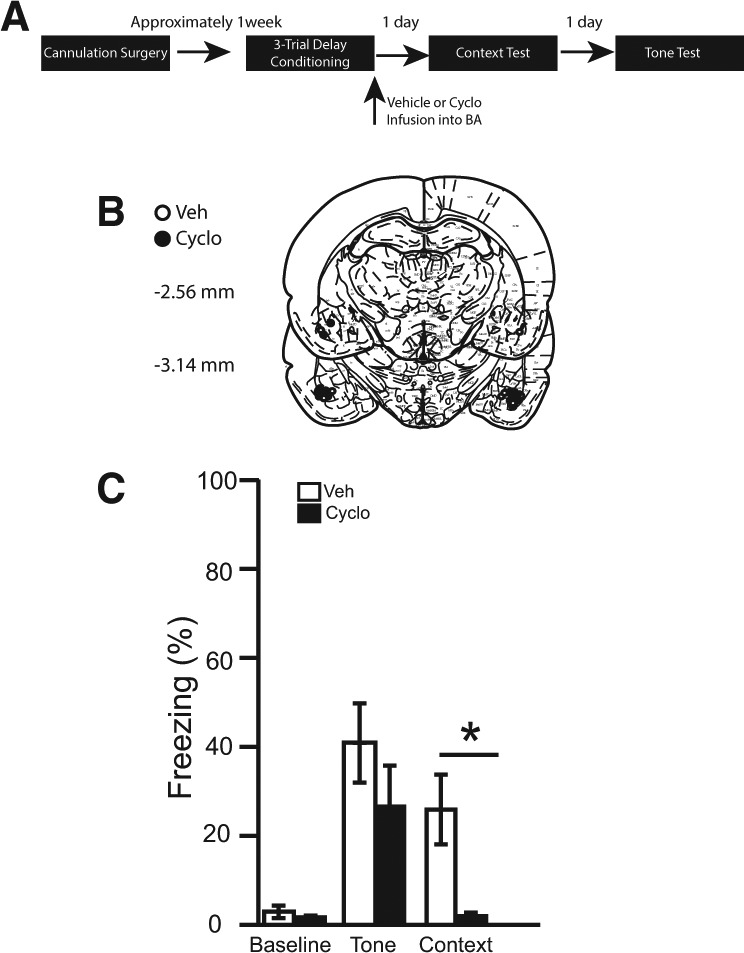
Numerous investigations have definitively shown amygdalar involvement in delay and contextual fear conditioning. However, much less is known about amygdala contributions to trace fear conditioning, and what little evidence exists is conflicting as noted in previous studies. This discrepancy may result from selective targeting of individual nuclei within the amygdala. The present experiments further examine the contributions of amygdalar subnuclei to trace, delay, and contextual fear conditioning. Rats were trained using a 10-trial trace, delay, or unpaired fear conditioning procedure. Pretraining lesions targeting the entire basolateral amygdala (BLA) resulted in a deficit in trace, delay, and contextual fear conditioning. Immediate post-training infusions of the protein synthesis inhibitor, cycloheximide, targeting the basal nucleus of the amygdala (BA) attenuated trace and contextual fear memory expression, but had no effect on delay fear conditioning. However, infusions targeting the lateral nucleus of the amygdala (LA) immediately following conditioning attenuated contextual fear memory expression, but had no effect on delay or trace fear conditioning. In follow-up experiments, rats were trained using a three-trial delay conditioning procedure. Immediate post-training infusions targeting the LA produced deficits in both delay tone and context fear, while infusions targeting the BA produced deficits in context but not delay tone fear. These data fully support a role for the BLA in trace, delay, and contextual fear memories. Specifically, these data suggest that the BA may be more critical for trace fear conditioning, whereas the LA may be more critical for delay fear memories.
大量研究已明确表明杏仁核参与延迟性和情境性恐惧条件反射。然而,关于杏仁核在痕迹性恐惧条件反射中的作用,我们所知甚少,而且如先前研究所指出的,现有的少量证据相互矛盾。这种差异可能是由于对杏仁核内各个核团的选择性靶向所致。本实验进一步研究了杏仁核亚核在痕迹性、延迟性和情境性恐惧条件反射中的作用。使用10次试验的痕迹性、延迟性或非配对恐惧条件反射程序对大鼠进行训练。针对整个基底外侧杏仁核(BLA)的训练前损伤导致痕迹性、延迟性和情境性恐惧条件反射出现缺陷。训练后立即向杏仁核基底核(BA)注射蛋白质合成抑制剂环己酰亚胺,可减弱痕迹性和情境性恐惧记忆的表达,但对延迟性恐惧条件反射没有影响。然而,在条件反射后立即向杏仁核外侧核(LA)注射,可减弱情境性恐惧记忆的表达,但对延迟性或痕迹性恐惧条件反射没有影响。在后续实验中,使用三次试验的延迟性条件反射程序对大鼠进行训练。训练后立即向LA注射会导致延迟性音调恐惧和情境恐惧均出现缺陷,而向BA注射则会导致情境恐惧出现缺陷,但对延迟性音调恐惧没有影响。这些数据充分支持了BLA在痕迹性、延迟性和情境性恐惧记忆中的作用。具体而言,这些数据表明BA可能对痕迹性恐惧条件反射更为关键,而LA可能对延迟性恐惧记忆更为关键。