Luzhna Lidia, Kovalchuk Olga
Department of Biological Sciences, University of Lethbridge, Lethbridge, Canada.
Oncoscience. 2014 Nov 10;1(11):751-62. doi: 10.18632/oncoscience.94. eCollection 2014.
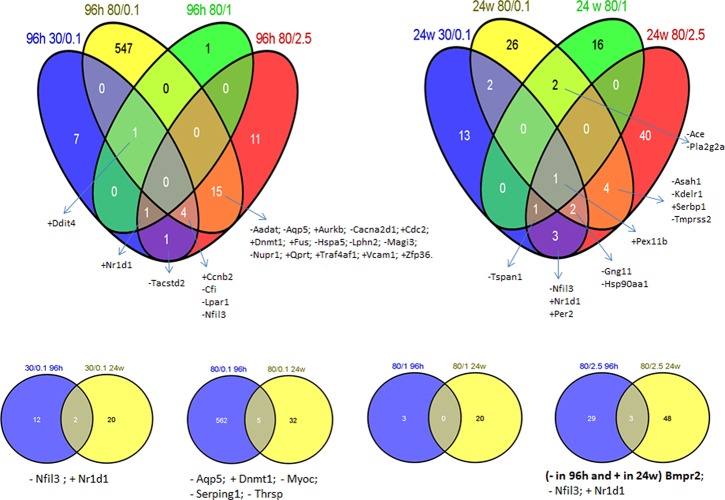
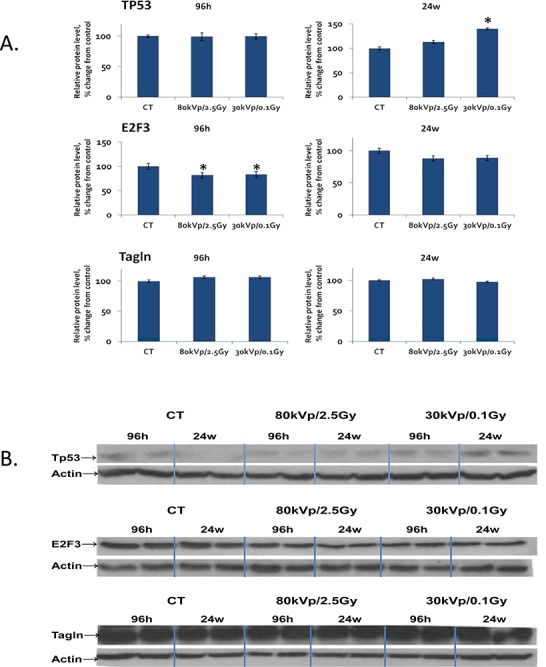
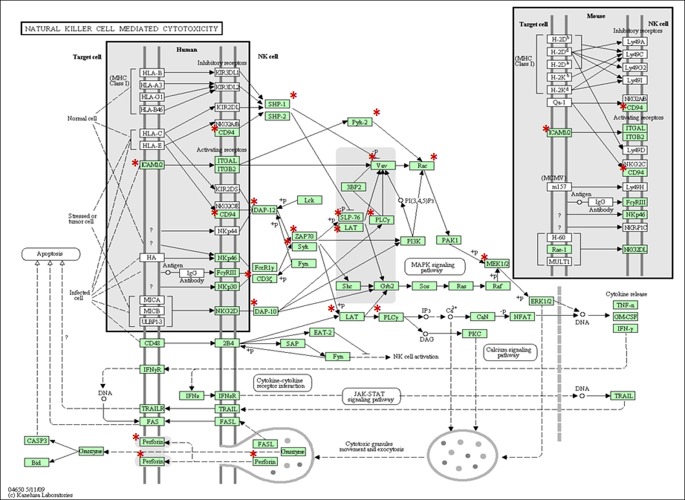
Ionizing radiation has been successfully used in medical tests and treatment therapies for a variety of medical conditions. However, patients and health-care workers are greatly concerned about overexposure to medical ionizing radiation and possible cancer induction due to frequent mammographies and/or CT scans. Diagnostic imaging involves the use of low doses of ionizing radiation, and its potential carcinogenic role creates a cancer risk concern for exposed individuals. In this study, the effects of X-ray exposure of different doses on the gene expression patterns and the micro-RNA expression patterns in normal breast tissue were investigated in rats. Our results revealed the activation of immune response pathways upon low dose of radiation exposure. These included natural killer mediated cytotoxicity pathways, antigen processing and presentation pathways, chemokine signaling pathways, and T- and B-cell receptor signaling pathways. Both high and low doses of radiation led to miRNA expression alterations. Increased expression of miR-34a may be linked to cell cycle arrest and apoptosis. Up-regulation of miR-34a was correlated with down-regulation of its target E2F3 and up-regulation of p53. This data suggests that ionizing radiation at specific high and low doses leads to cell cycle arrest and a possible initiation of apoptosis.
电离辐射已成功应用于多种医疗状况的医学检测和治疗方法中。然而,患者和医护人员非常担心因频繁进行乳房X光检查和/或CT扫描而过度暴露于医用电离辐射以及可能诱发癌症。诊断成像涉及使用低剂量的电离辐射,其潜在的致癌作用引发了受照个体对癌症风险的担忧。在本研究中,我们在大鼠身上研究了不同剂量的X射线照射对正常乳腺组织中基因表达模式和微小RNA表达模式的影响。我们的结果显示,低剂量辐射暴露会激活免疫反应途径。这些途径包括自然杀伤细胞介导的细胞毒性途径、抗原加工和呈递途径、趋化因子信号传导途径以及T细胞和B细胞受体信号传导途径。高剂量和低剂量辐射均导致微小RNA表达改变。miR-34a表达增加可能与细胞周期停滞和细胞凋亡有关。miR-34a的上调与其靶标E2F3的下调以及p53的上调相关。该数据表明,特定高剂量和低剂量的电离辐射会导致细胞周期停滞并可能引发细胞凋亡。