Ducuing Antoine, Keeley Charlotte, Mollereau Bertrand, Vincent Stéphane
Laboratory of Molecular Biology of the Cell, UMR5239, Ecole Normale Supérieure de Lyon, Centre National de la Recherche Scientifique, 69007 Lyon, France.
Department of Biological Engineering, Massachusetts Institute of Technology, Cambridge, MA 02139.
J Cell Biol. 2015 Jan 19;208(2):239-48. doi: 10.1083/jcb.201410042.
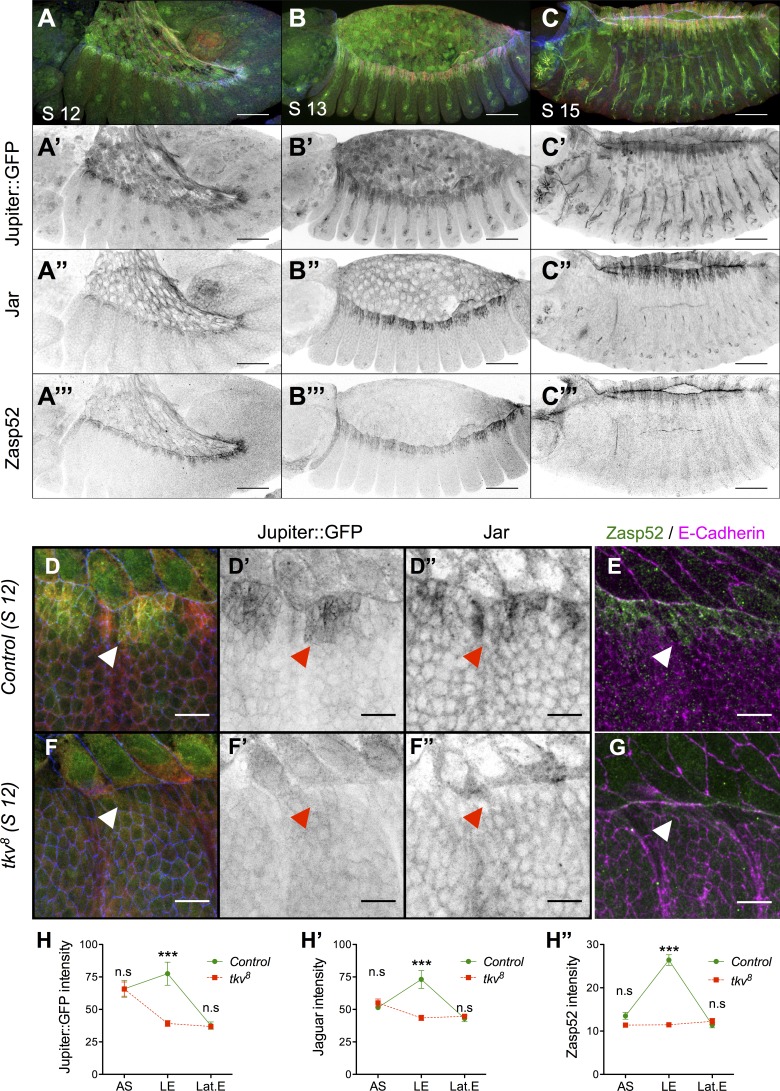
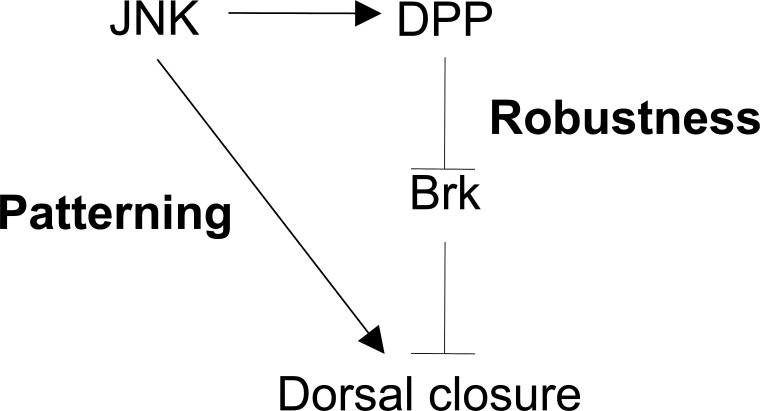
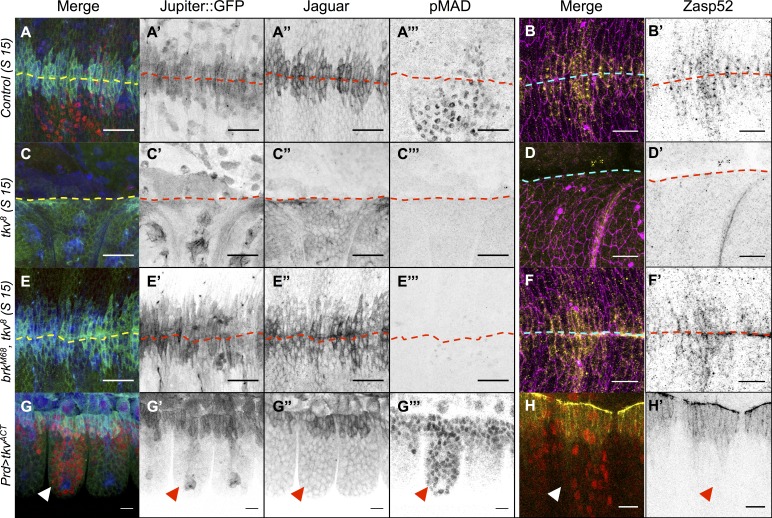
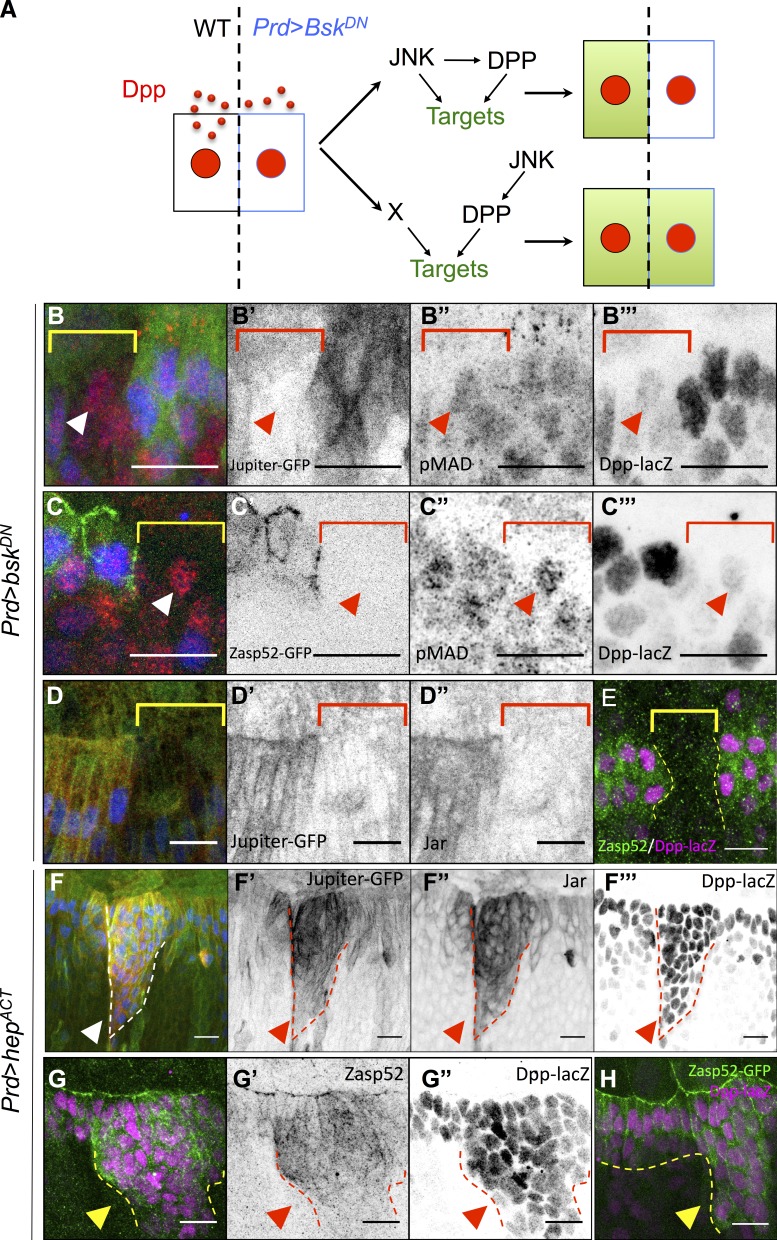
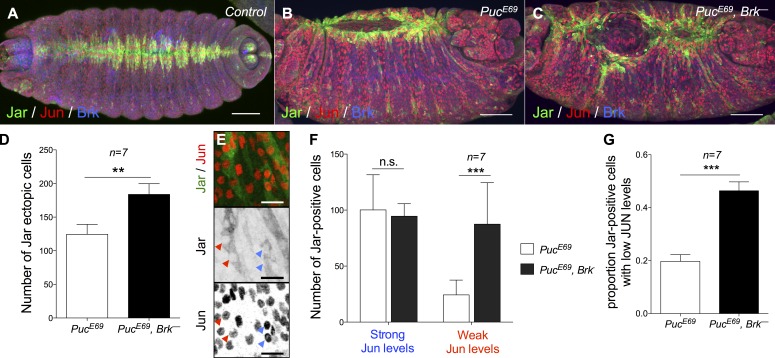
Development is robust because nature has selected various mechanisms to buffer the deleterious effects of environmental and genetic variations to deliver phenotypic stability. Robustness relies on smart network motifs such as feed-forward loops (FFLs) that ensure the reliable interpretation of developmental signals. In this paper, we show that Decapentaplegic (DPP) and JNK form a coherent FFL that controls the specification and differentiation of leading edge cells during Drosophila melanogaster dorsal closure (DC). We provide molecular evidence that through repression by Brinker (Brk), the DPP branch of the FFL filters unwanted JNK activity. High-throughput live imaging revealed that this DPP/Brk branch is dispensable for DC under normal conditions but is required when embryos are subjected to thermal stress. Our results indicate that the wiring of DPP signaling buffers against environmental challenges and canalizes cell identity. We propose that the main function of DPP pathway during Drosophila DC is to ensure robust morphogenesis, a distinct function from its well-established ability to spread spatial information.
发育具有稳健性,因为自然选择了各种机制来缓冲环境和基因变异的有害影响,以实现表型稳定性。稳健性依赖于诸如前馈环(FFL)等智能网络基序,这些基序可确保对发育信号进行可靠解读。在本文中,我们表明,果蝇的Decapentaplegic(DPP)和JNK形成了一个连贯的前馈环,该前馈环在果蝇背侧闭合(DC)过程中控制前缘细胞的特化和分化。我们提供了分子证据,表明通过Brinker(Brk)的抑制作用,前馈环的DPP分支可过滤掉不必要的JNK活性。高通量实时成像显示,在正常条件下,该DPP/Brk分支对于背侧闭合是可有可无的,但在胚胎受到热应激时则是必需的。我们的结果表明,DPP信号通路的连接可缓冲环境挑战并确定细胞身份。我们提出,果蝇背侧闭合过程中DPP信号通路的主要功能是确保稳健的形态发生,这与其已确立的传播空间信息的能力是不同的功能。