Pavlova G V, Vergun A A, Rybalkina E Y, Butovskaya P R, Ryskov A P
a Institute of Gene Biology, Russian Academy of Sciences ; Moscow , Russia.
Cell Cycle. 2015;14(2):200-5. doi: 10.4161/15384101.2014.974427.
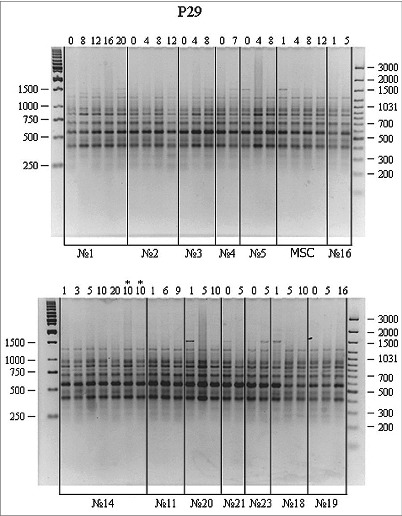
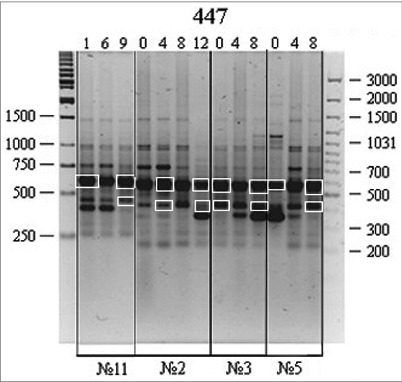
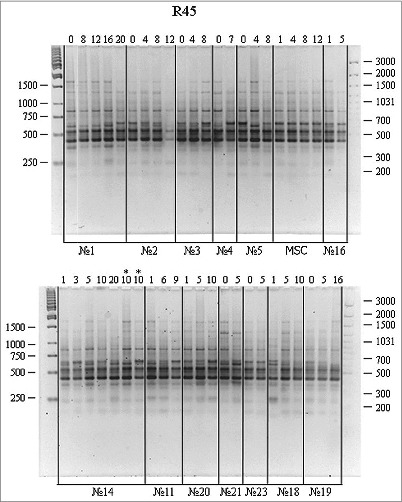
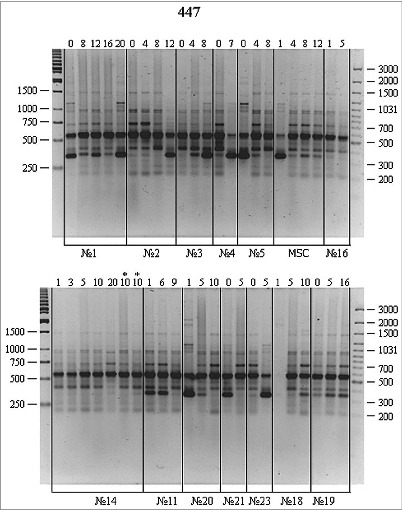
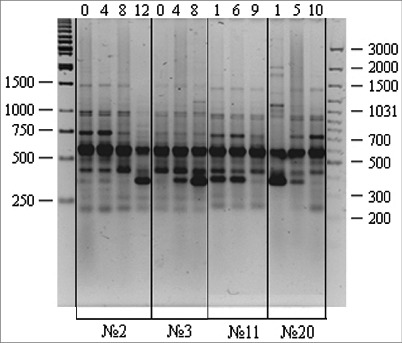
Random amplified polymorphic DNA (RAPD) analysis was adapted for genomic identification of cell cultures and evaluation of DNA stability in cells of different origin at different culture passages. DNA stability was observed in cultures after no more than 5 passages. Adipose-derived stromal cells demonstrated increased DNA instability. RAPD fragments from different cell lines after different number of passages were cloned and sequenced. The chromosomal localization of these fragments was identified and single-nucleotide variations in RAPD fragments isolated from cell lines after 8-12 passages were revealed. Some of them had permanent localization, while most variations demonstrated random distribution and can be considered as de novo mutations.
随机扩增多态性DNA(RAPD)分析被用于细胞培养物的基因组鉴定以及评估不同来源的细胞在不同培养传代时的DNA稳定性。在不超过5代的培养物中观察到了DNA稳定性。脂肪来源的基质细胞表现出DNA不稳定性增加。对不同传代数后的不同细胞系的RAPD片段进行了克隆和测序。确定了这些片段的染色体定位,并揭示了从8至12代细胞系中分离出的RAPD片段中的单核苷酸变异。其中一些具有固定定位,而大多数变异表现为随机分布,可被视为新生突变。