Betz Regina C, Petukhova Lynn, Ripke Stephan, Huang Hailiang, Menelaou Androniki, Redler Silke, Becker Tim, Heilmann Stefanie, Yamany Tarek, Duvic Madeliene, Hordinsky Maria, Norris David, Price Vera H, Mackay-Wiggan Julian, de Jong Annemieke, DeStefano Gina M, Moebus Susanne, Böhm Markus, Blume-Peytavi Ulrike, Wolff Hans, Lutz Gerhard, Kruse Roland, Bian Li, Amos Christopher I, Lee Annette, Gregersen Peter K, Blaumeiser Bettina, Altshuler David, Clynes Raphael, de Bakker Paul I W, Nöthen Markus M, Daly Mark J, Christiano Angela M
Institute of Human Genetics, University of Bonn, Bonn, Germany.
Department of Dermatology, Columbia University, NY, NY.
Nat Commun. 2015 Jan 22;6:5966. doi: 10.1038/ncomms6966.
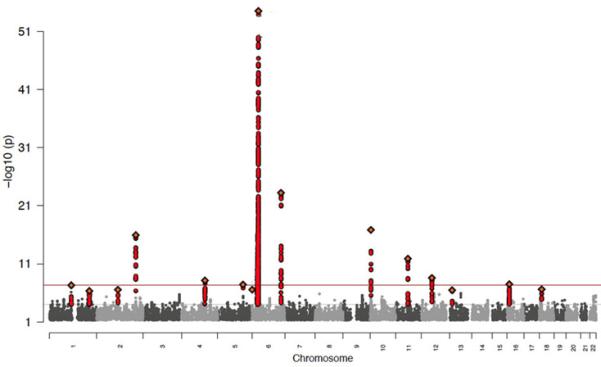
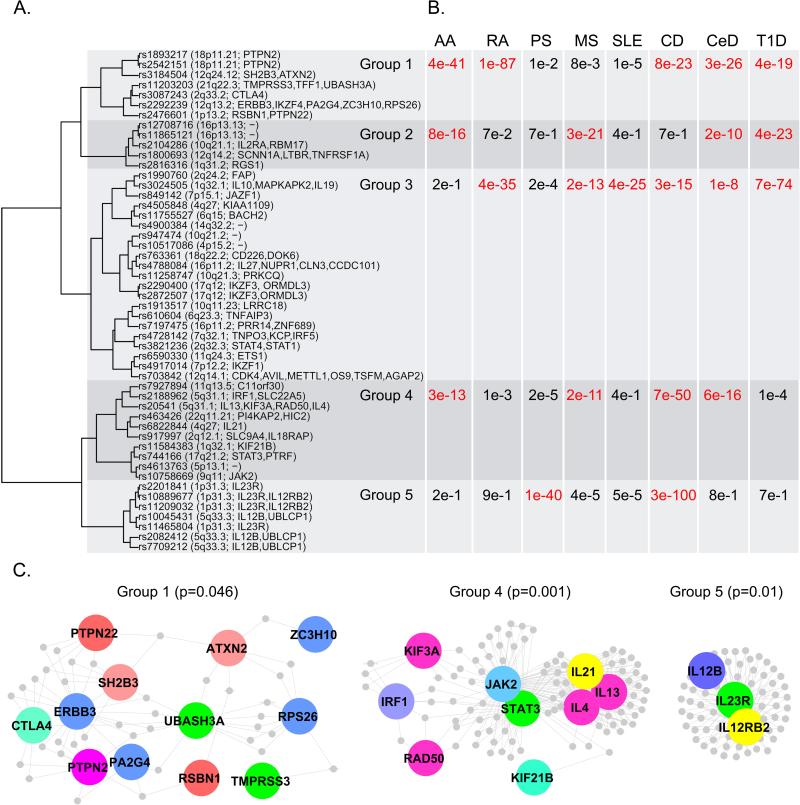
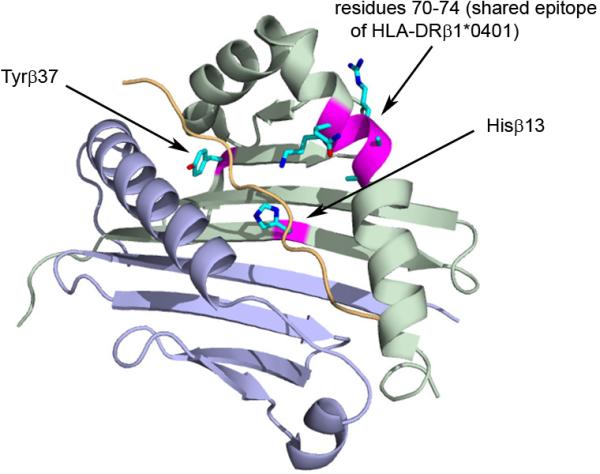
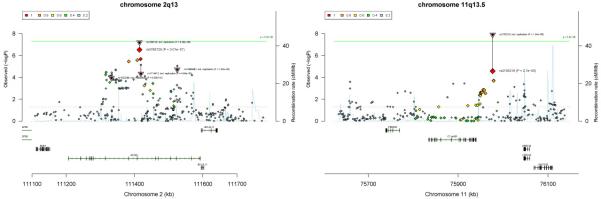
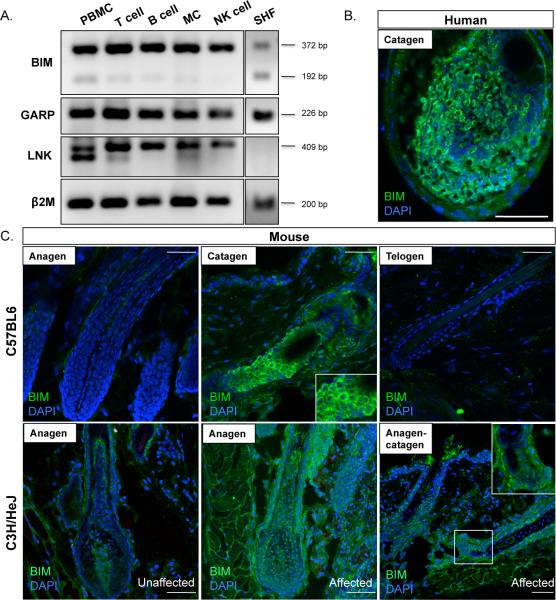
Alopecia areata (AA) is a prevalent autoimmune disease with 10 known susceptibility loci. Here we perform the first meta-analysis of research on AA by combining data from two genome-wide association studies (GWAS), and replication with supplemented ImmunoChip data for a total of 3,253 cases and 7,543 controls. The strongest region of association is the major histocompatibility complex, where we fine-map four independent effects, all implicating human leukocyte antigen-DR as a key aetiologic driver. Outside the major histocompatibility complex, we identify two novel loci that exceed the threshold of statistical significance, containing ACOXL/BCL2L11(BIM) (2q13); GARP (LRRC32) (11q13.5), as well as a third nominally significant region SH2B3(LNK)/ATXN2 (12q24.12). Candidate susceptibility gene expression analysis in these regions demonstrates expression in relevant immune cells and the hair follicle. We integrate our results with data from seven other autoimmune diseases and provide insight into the alignment of AA within these disorders. Our findings uncover new molecular pathways disrupted in AA, including autophagy/apoptosis, transforming growth factor beta/Tregs and JAK kinase signalling, and support the causal role of aberrant immune processes in AA.
斑秃(AA)是一种常见的自身免疫性疾病,已知有10个易感基因座。在此,我们通过合并两项全基因组关联研究(GWAS)的数据,并利用补充的免疫芯片数据对总共3253例病例和7543例对照进行复制,首次对AA研究进行了荟萃分析。最强的关联区域是主要组织相容性复合体,我们在该区域进行精细定位,发现了四个独立效应,均表明人类白细胞抗原-DR是关键的病因驱动因素。在主要组织相容性复合体之外,我们确定了两个超过统计学显著性阈值的新基因座,分别包含ACOXL/BCL2L11(BIM)(2q13);GARP(LRRC32)(11q13.5),以及第三个名义上显著的区域SH2B3(LNK)/ATXN2(12q24.12)。这些区域的候选易感基因表达分析表明,它们在相关免疫细胞和毛囊中表达。我们将我们的结果与其他七种自身免疫性疾病的数据相结合,并深入了解AA在这些疾病中的一致性。我们的发现揭示了AA中被破坏的新分子途径,包括自噬/凋亡、转化生长因子β/Tregs和JAK激酶信号传导,并支持异常免疫过程在AA中的因果作用。