Wirsdörfer Florian, Bangen Jörg M, Pastille Eva, Hansen Wiebke, Flohé Stefanie B
*Surgical Research, Department of Trauma Surgery, University Hospital Essen, University Duisburg-Essen, 45147 Essen, Germany.
‡Institute of Medical Microbiology, University Hospital Essen, University Duisburg-Essen, 45147 Essen, Germany.
Clin Sci (Lond). 2015 Jun;128(11):825-38. doi: 10.1042/CS20140835.
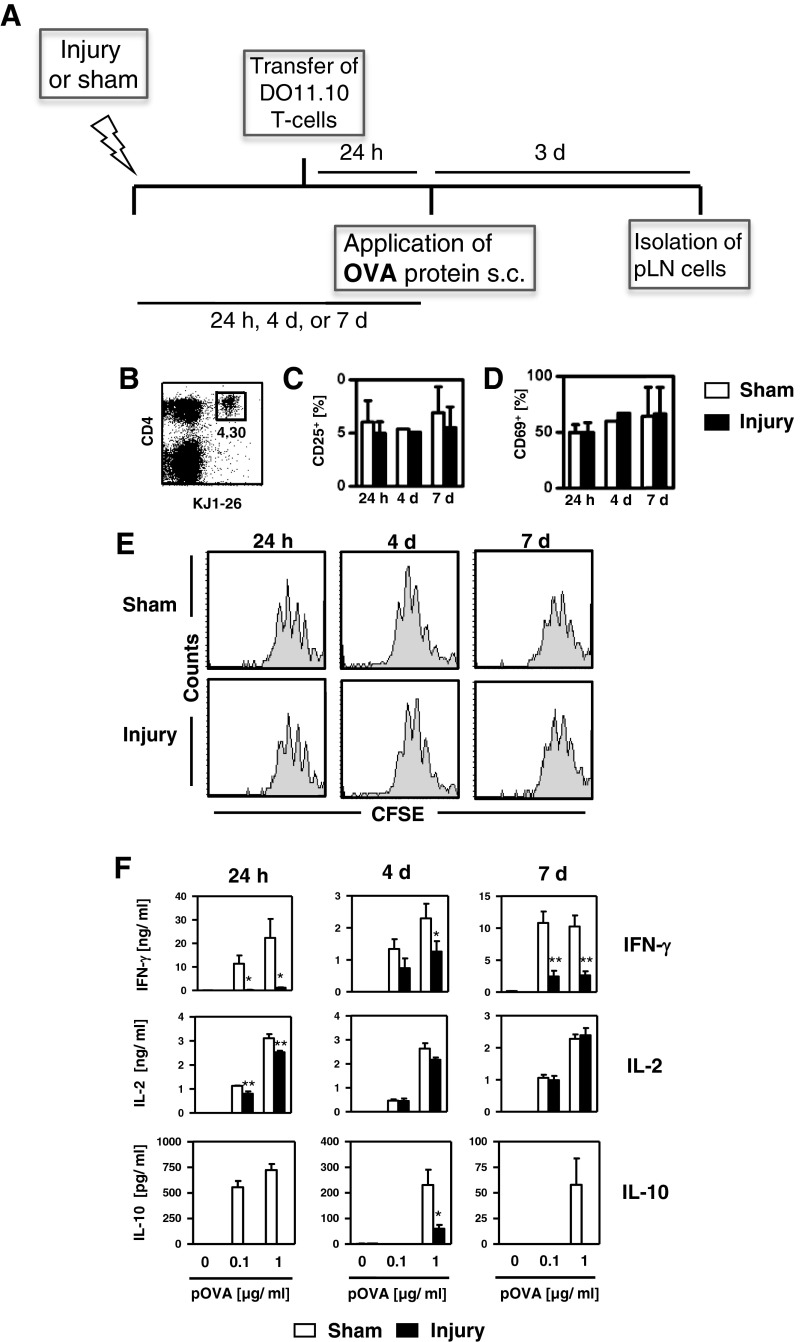
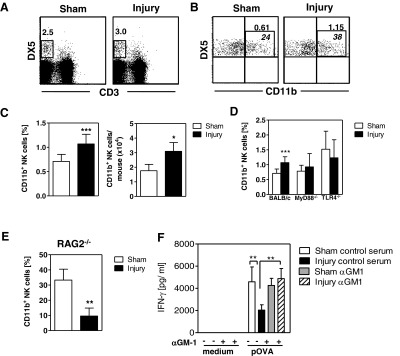
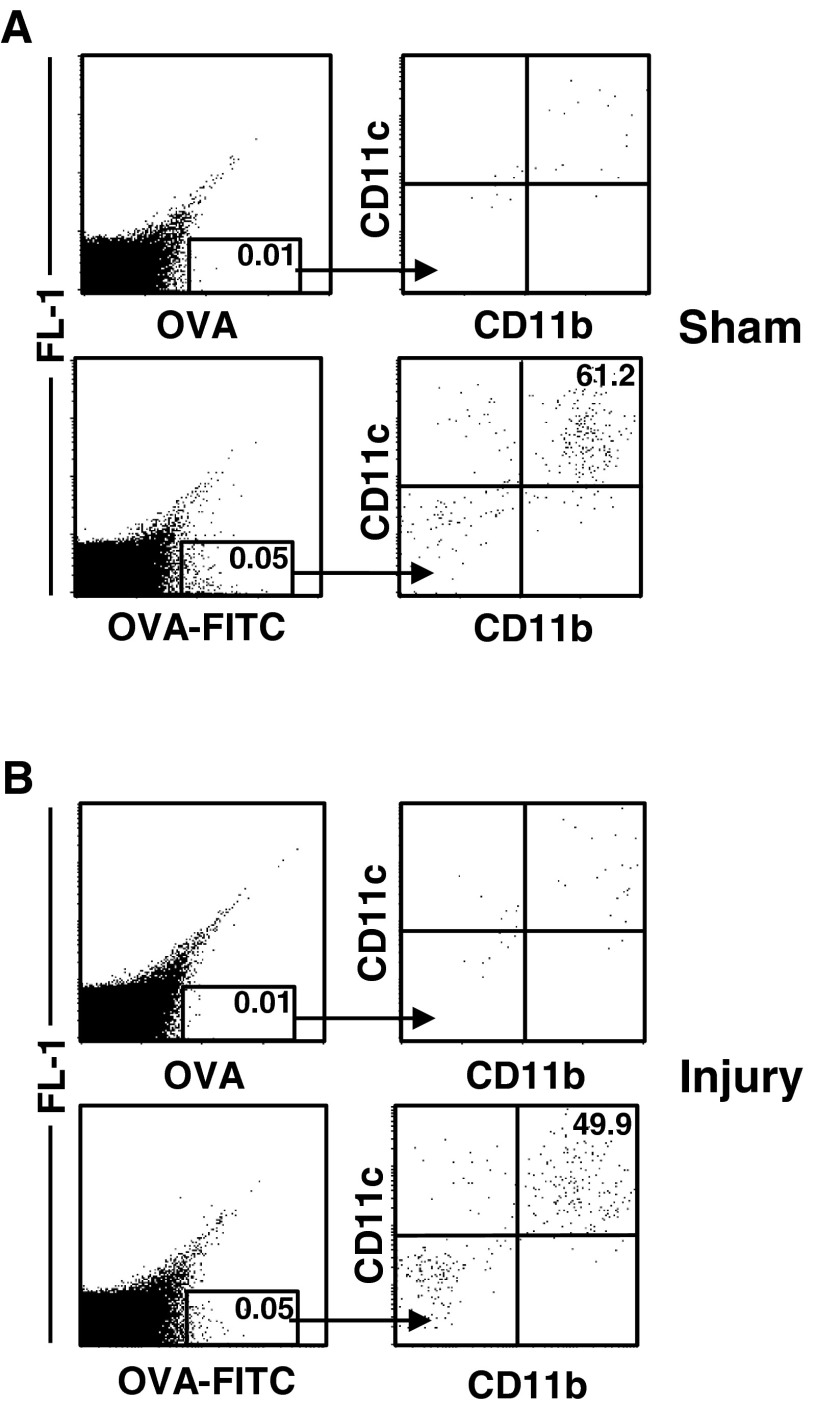
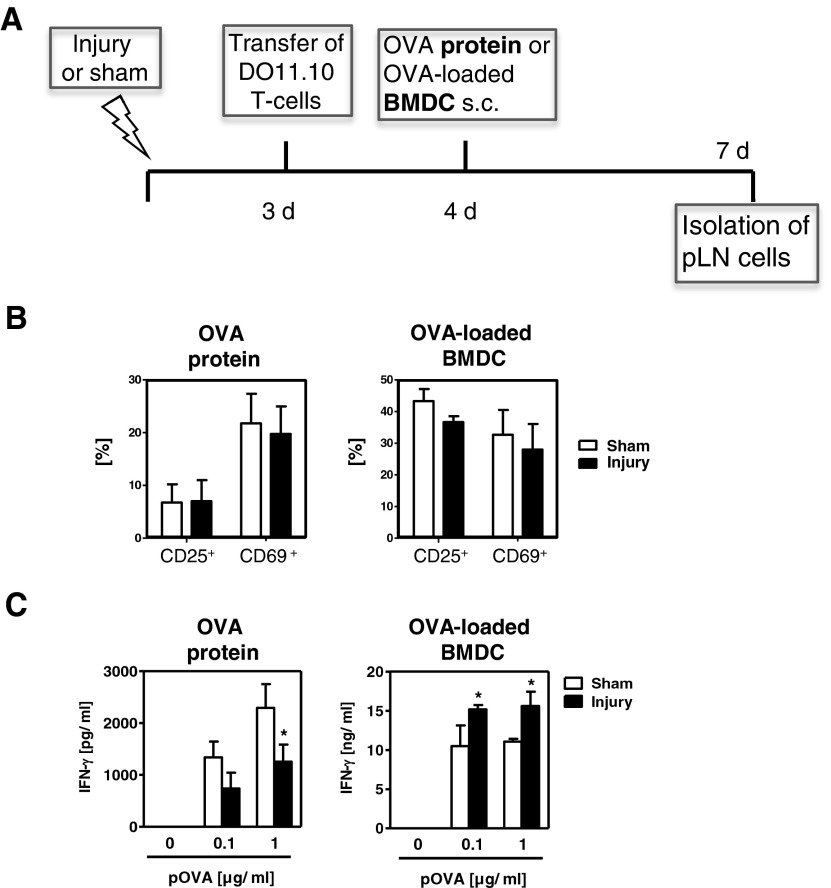
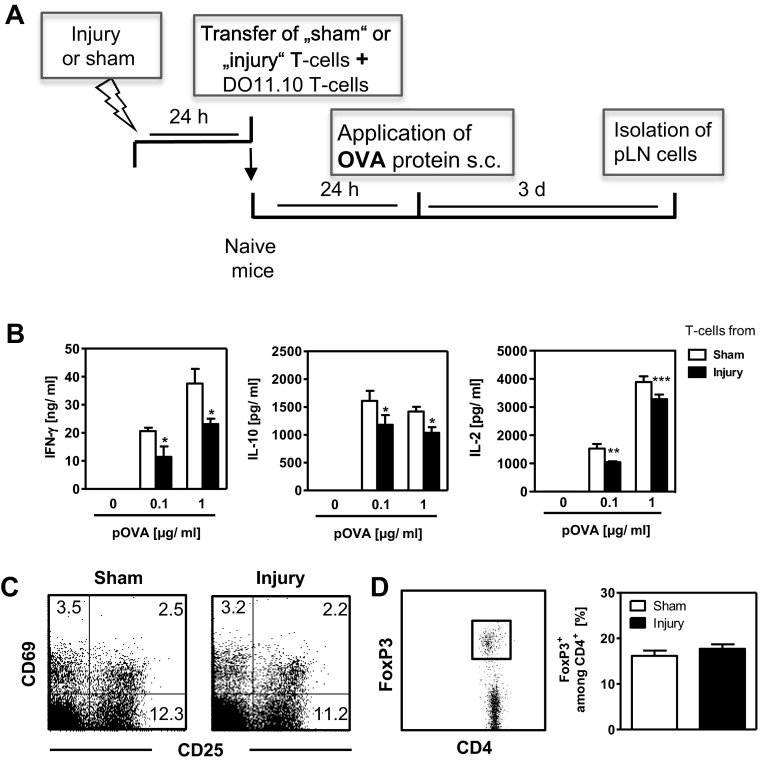
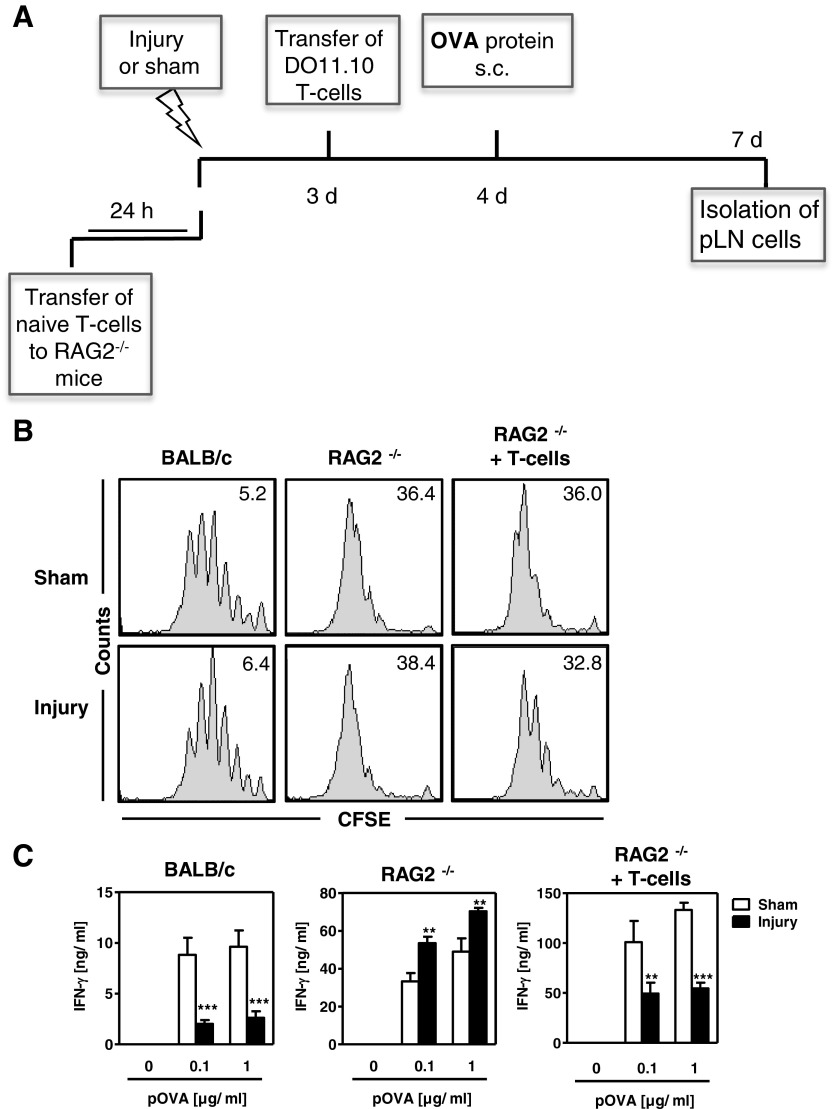
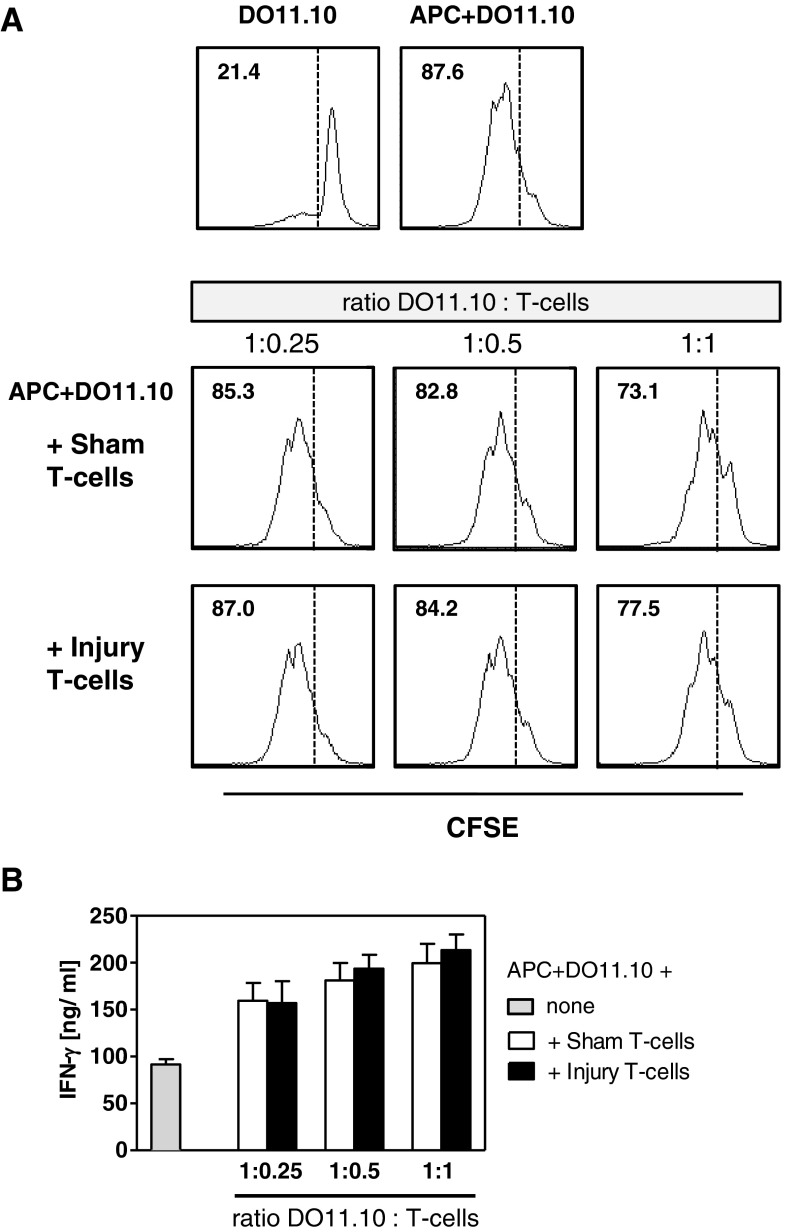
Nosocomial infections represent serious complications after traumatic or surgical injuries in intensive care units. The pathogenesis of the underlying immunosuppression is only incompletely understood. In the present study, we investigated whether injury interferes with the function of the adaptive immune system in particular with the differentiation of antigen-specific T helper (Th)-cell responses in vivo. We used a mouse model for traumatic gastrocnemius muscle injury. Ovalbumin (OVA), which served as a foreign model antigen, was injected into the hind footpads for determination of the differentiation of OVA-specific Th-cells in the draining popliteal lymph node (pLN). The release of interferon (IFN)-γ from OVA-specific Th-cells was impaired within 24 h after injury and this impairment persisted for at least 7 days. In contrast, the proliferation of OVA-specific Th-cells remained unaffected. Injury did not modulate the function of antigen-presenting cells (APCs) in the pLN. Adoptive transfer of total T-cells from pLNs of injured mice inhibited IFN-γ production by OVA-specific Th-cells in naive mice. Suppressed Th1 priming did not occur in lymphocyte-deficient mice after injury but was restored by administration of T-cells before injury. Moreover, the suppression of Th1 differentiation required the presence of natural killer (NK) cells that were recruited to the pLN after injury; this recruitment was dependent on lymphocytes, toll-like receptor 4 (TLR4) and myeloid differentiation factor 88 (MyD88). In summary, upon traumatic skeletal muscle injury T-cells and NK cells together prevent the development of protective Th1 immunity. Breaking this co-operation might be a novel approach to reduce the risk of infectious complications after injury.
医院感染是重症监护病房中创伤或手术后的严重并发症。其潜在免疫抑制的发病机制尚未完全明确。在本研究中,我们调查了损伤是否会干扰适应性免疫系统的功能,特别是体内抗原特异性T辅助(Th)细胞反应的分化。我们使用了创伤性腓肠肌损伤的小鼠模型。将作为外来模型抗原的卵清蛋白(OVA)注射到后足垫中,以测定引流腘窝淋巴结(pLN)中OVA特异性Th细胞的分化情况。损伤后24小时内,OVA特异性Th细胞释放干扰素(IFN)-γ的能力受损,且这种损伤至少持续7天。相比之下,OVA特异性Th细胞的增殖未受影响。损伤并未调节pLN中抗原呈递细胞(APC)的功能。将受伤小鼠pLN中的总T细胞过继转移到未受伤小鼠中,会抑制OVA特异性Th细胞产生IFN-γ。淋巴细胞缺陷小鼠在受伤后未出现Th1启动受抑制的情况,但在受伤前给予T细胞可使其恢复。此外,Th1分化的抑制需要损伤后募集到pLN的自然杀伤(NK)细胞的存在;这种募集依赖于淋巴细胞、Toll样受体4(TLR4)和髓样分化因子88(MyD88)。总之,创伤性骨骼肌损伤后,T细胞和NK细胞共同阻止了保护性Th1免疫的发展。打破这种合作可能是降低损伤后感染并发症风险的一种新方法。