Price David, Kaplan Alan, Jones Rupert, Freeman Daryl, Burden Anne, Gould Shuna, von Ziegenweidt Julie, Ali Muzammil, King Christine, Thomas Mike
Academic Centre of Primary Care, University of Aberdeen, Aberdeen ; Research in Real-Life, Cambridge, UK.
Family Physician Airways Group of Canada, Richmond Hill, ON, Canada.
J Asthma Allergy. 2015 Jan 14;8:1-13. doi: 10.2147/JAA.S76639. eCollection 2015.
Randomized controlled trials indicate that addition of a long-acting muscarinic antagonist (LAMA) such as tiotropium may improve asthma control and reduce exacerbation risk in patients with poorly controlled asthma, but broader clinical studies are needed to investigate the effectiveness of LAMA in real-life asthma care.
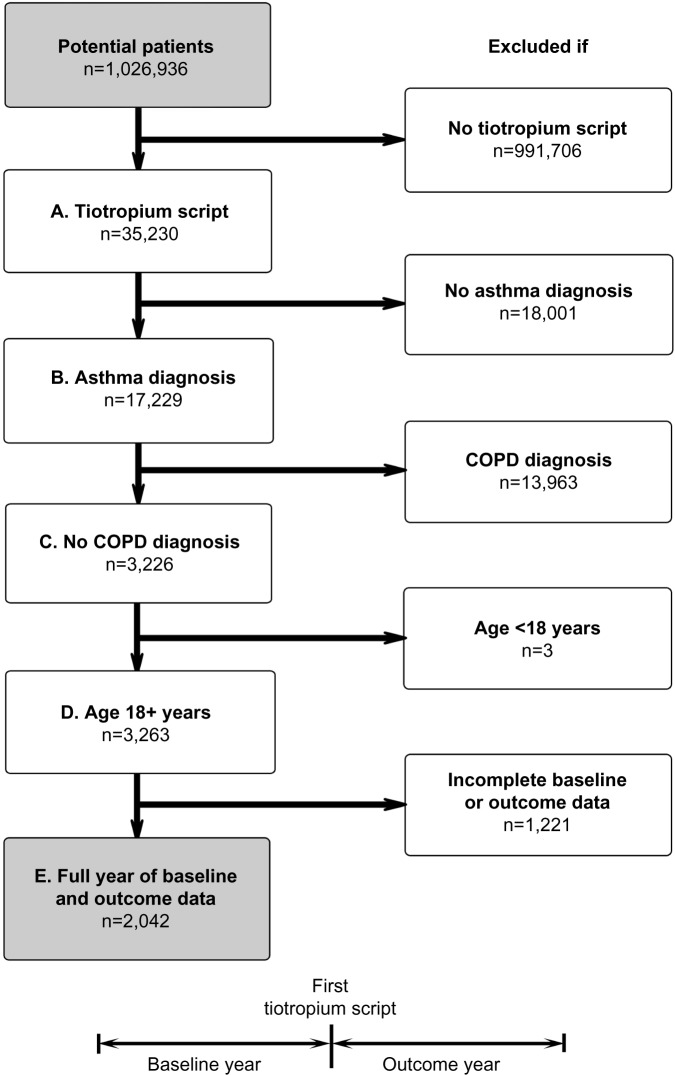
Medical records of adults with asthma (aged ≥18 years) prescribed tiotropium were obtained from the UK Optimum Patient Care Research Database for the period 2001-2013. Patients diagnosed with chronic obstructive pulmonary disease were excluded, but no other clinical exclusions were applied. Two primary outcomes were compared in the year before (baseline) and the year after (outcome) addition of tiotropium: exacerbations (asthma-related hospital emergency department attendance or inpatient admission, or acute oral corticosteroid course) and acute respiratory events (exacerbation or antibiotic prescription with lower respiratory consultation). Secondary outcomes included lung function test results and short-acting β2 agonist usage. The Wilcoxon signed-rank test was used for variables measured on the interval scale, the marginal homogeneity test for categorized variables, and the paired t-test for lung function indices.
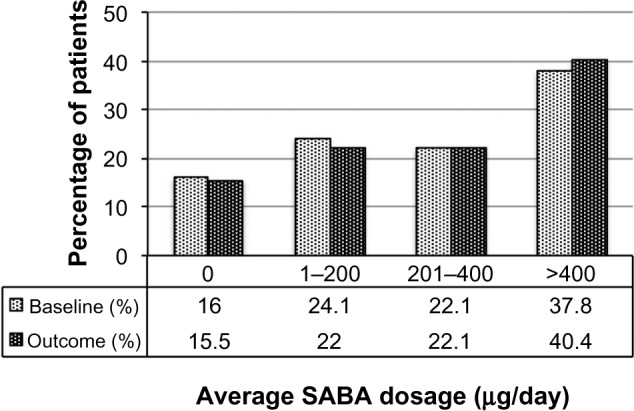
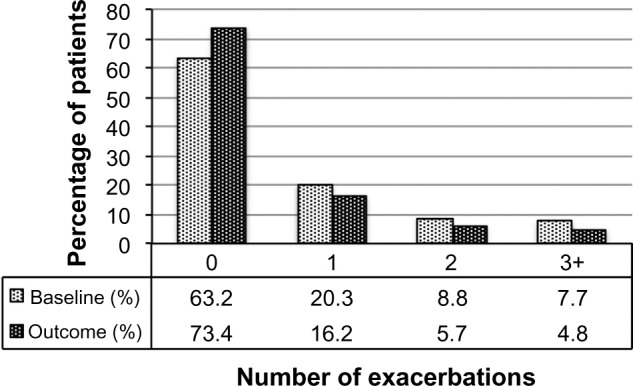
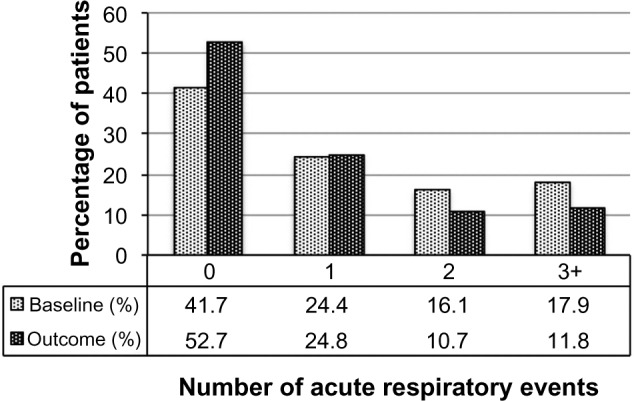
Of the 2,042 study patients, 83% were prescribed an inhaled corticosteroid and 68% a long-acting β2 agonist during the baseline year; 67% were prescribed both. Comparing baseline and outcome years, the percentage of patients having at least one exacerbation decreased from 37% to 27% (P<0.001) and the percentage having at least one acute respiratory event decreased from 58% to 47% (P<0.001). There were no significant changes in lung function, and usage of short-acting β2 agonists (in salbutamol/albuterol equivalents) increased from a median (interquartile range) of 274 (110, 548) to 329 (110, 603) μg/day (P=0.01).
In this real-life asthma population, addition of LAMA therapy was associated with significant decreases in the incidence of exacerbations and antibiotic prescriptions for lower respiratory tract infections in the following year.
随机对照试验表明,添加长效毒蕈碱拮抗剂(LAMA)如噻托溴铵可改善哮喘控制,并降低哮喘控制不佳患者的急性加重风险,但需要更广泛的临床研究来调查LAMA在实际哮喘治疗中的有效性。
从英国最佳患者护理研究数据库中获取2001年至2013年期间开具噻托溴铵处方的成年哮喘患者(年龄≥18岁)的病历。排除诊断为慢性阻塞性肺疾病的患者,但不应用其他临床排除标准。比较添加噻托溴铵前一年(基线)和后一年(结果)的两个主要结局:急性加重(与哮喘相关的医院急诊科就诊或住院,或急性口服糖皮质激素疗程)和急性呼吸事件(急性加重或因下呼吸道会诊开具抗生素处方)。次要结局包括肺功能测试结果和短效β2激动剂的使用情况。对区间尺度测量的变量使用Wilcoxon符号秩检验,对分类变量使用边际同质性检验,对肺功能指标使用配对t检验。
在2042名研究患者中,83%在基线年份使用吸入性糖皮质激素,68%使用长效β2激动剂;67%两者都使用。比较基线年份和结果年份,至少发生一次急性加重的患者百分比从37%降至27%(P<0.001),至少发生一次急性呼吸事件的患者百分比从58%降至47%(P<0.001)。肺功能无显著变化,短效β2激动剂的使用量(以沙丁胺醇等效剂量计)从中位数(四分位间距)274(110,548)μg/天增加至329(110,603)μg/天(P=0.01)。
在这个实际的哮喘患者群体中,添加LAMA治疗与次年急性加重发生率和下呼吸道感染抗生素处方的显著减少相关。