Wang Juan, Stephan Roger, Zurfluh Katrin, Hächler Herbert, Fanning Séamus
UCD Centre for Food Safety, School of Public Health, Physiotherapy and Population Science, University College Dublin Dublin, Ireland.
Vetsuisse Faculty, Institute for Food Safety and Hygiene, University of Zurich Zürich, Switzerland.
Front Microbiol. 2015 Jan 6;5:716. doi: 10.3389/fmicb.2014.00716. eCollection 2014.
Previously 14 conjugative plasmids from multi-drug resistant (MDR) Escherichia coli from healthy humans and food-producing animals in Switzerland were sequenced. The aim of this study was to extend the genetic characterization of these plasmids with a focus on bla ESBL genes including bla CTX-M-1 and bla TEM, class 1 integrons and toxin-antitoxin (TA) systems contained therein.
The nucleotide sequences and subsequent annotation therein of 14 conjugative plasmids were previously determined from their corresponding transconjugants. The TA loci were confirmed by RASTA-Bacteria.
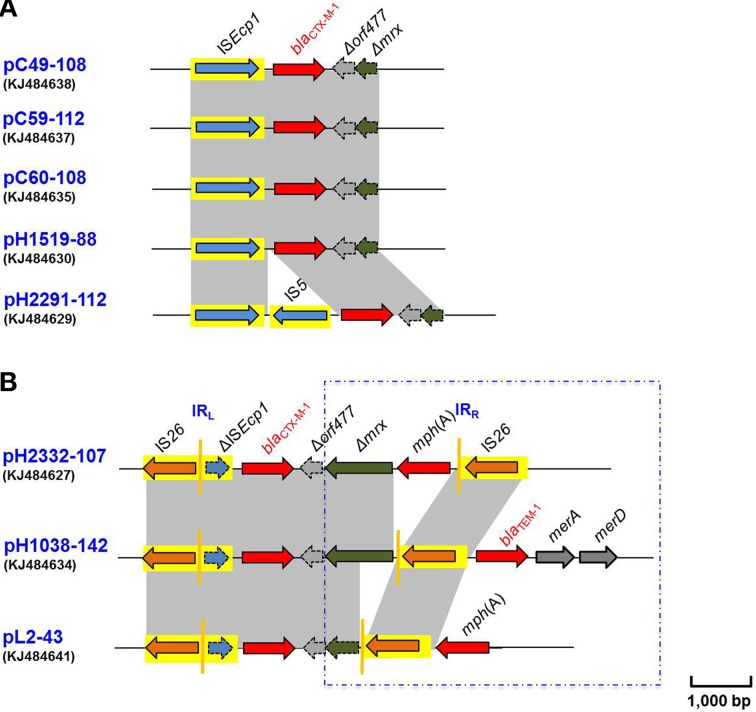
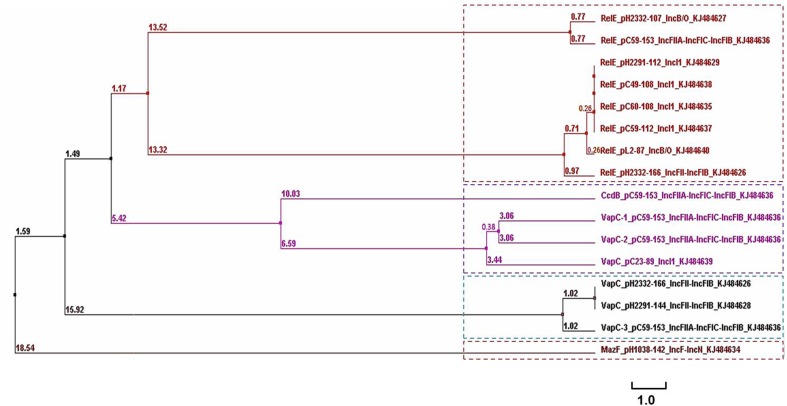
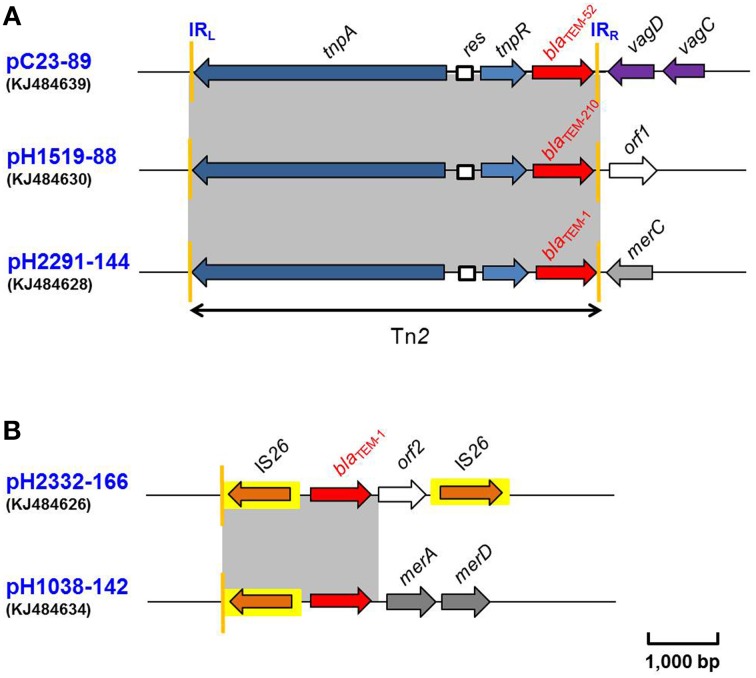
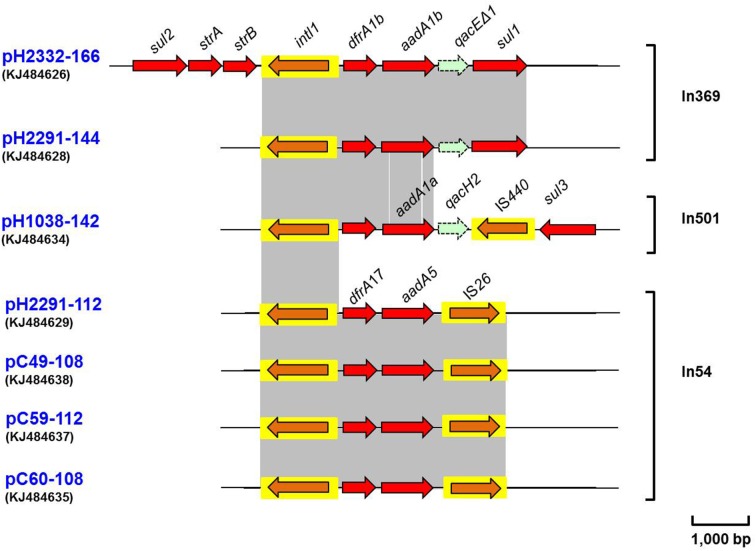
Eight of the conjugative plasmids identified were found to encode genes expressing ESBLs. Structural heterogeneity was noted in the regions flanking both the bla CTX-M-1 and bla TEM genes. The bla CTX-M-1 genes were associated with the common insertion sequences ISEcp1 and IS26, and uniquely with an IS5 element in one case; while bla TEM genes were found to be associated with IS26 and Tn2. A new bla TEM-210 gene was identified. Seven class 1 integrons were also identified and assigned into 3 groups, denoted as In54, In369 and In501. Sixteen TA loci belonging to 4 of the TA gene families (relBE, vapBC, ccd and mazEF) were identified on 11 of these plasmids.
Comparative sequence analysis of these plasmids provided data on the structures likely to contribute to sequence diversity associated with these accessory genes, including IS26, ISEcp1 and Tn2. All of them contribute to the dissemination of the corresponding resistance genes located on the different plasmids. There appears to be no association between β-lactam encoding genes and TA systems.
之前对来自瑞士健康人和食用动物的14个多药耐药(MDR)大肠杆菌接合质粒进行了测序。本研究的目的是扩展这些质粒的遗传特征,重点关注bla ESBL基因,包括bla CTX-M-1和bla TEM、1类整合子以及其中所含的毒素-抗毒素(TA)系统。
之前已从相应的接合子中确定了14个接合质粒的核苷酸序列及其后续注释。通过RASTA-Bacteria确认TA位点。
在鉴定出的14个接合质粒中,有8个被发现编码表达ESBL的基因。在bla CTX-M-1和bla TEM基因两侧的区域发现了结构异质性。bla CTX-M-1基因与常见插入序列ISEcp1和IS26相关,在一个案例中还独特地与IS5元件相关;而bla TEM基因被发现与IS26和Tn2相关。鉴定出一个新的bla TEM-210基因。还鉴定出7个1类整合子,并分为3组,分别表示为In54、In369和In501。在其中11个质粒上鉴定出属于4个TA基因家族(relBE、vapBC、ccd和mazEF)的16个TA位点。
这些质粒的比较序列分析提供了可能导致与这些辅助基因相关的序列多样性的结构数据,包括IS26、ISEcp1和Tn2。它们都有助于位于不同质粒上的相应抗性基因的传播。β-内酰胺编码基因与TA系统之间似乎没有关联。