Wang Pengfei, Xia Han, Zhang Ye, Zhao Shuzhen, Zhao Chuanzhi, Hou Lei, Li Changsheng, Li Aiqin, Ma Chuanxi, Wang Xingjun
Agricultural College, Anhui Agricultural University, Hefei, 230036, PR China.
Bio-Tech Research Center, Shandong Academy of Agricultural Sciences; Shandong Provincial Key Laboratory of Crop Genetic Improvement, Ecology and Physiology, Jinan, 250100, PR China.
BMC Genomics. 2015 Jan 23;16(1):21. doi: 10.1186/s12864-014-1204-7.
Epigenetic modifications play important roles in plant and animal development. DNA methylation impacts the transposable element (TE) silencing, gene imprinting and expression regulation.
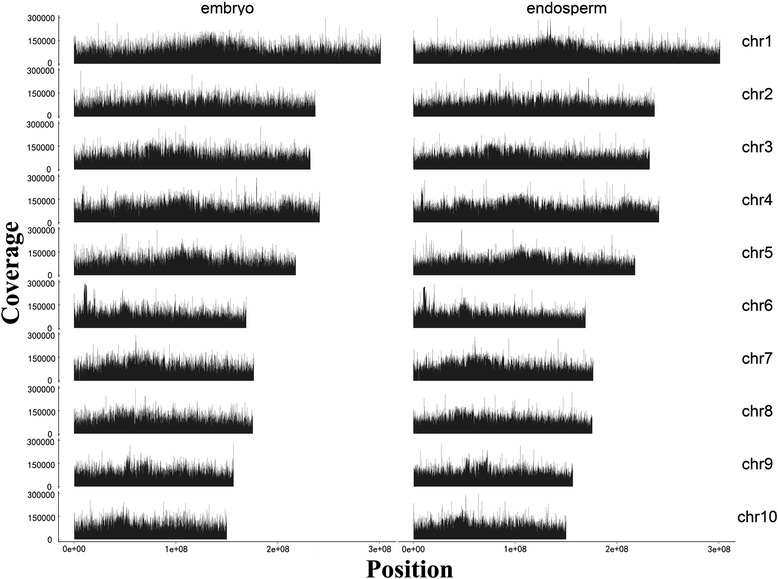
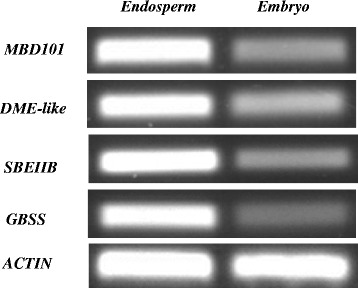
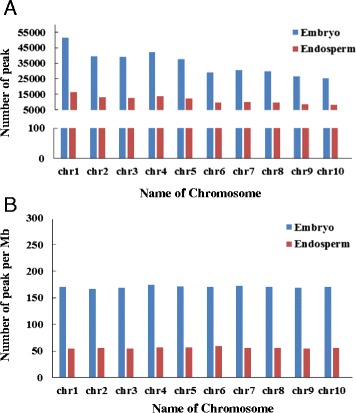
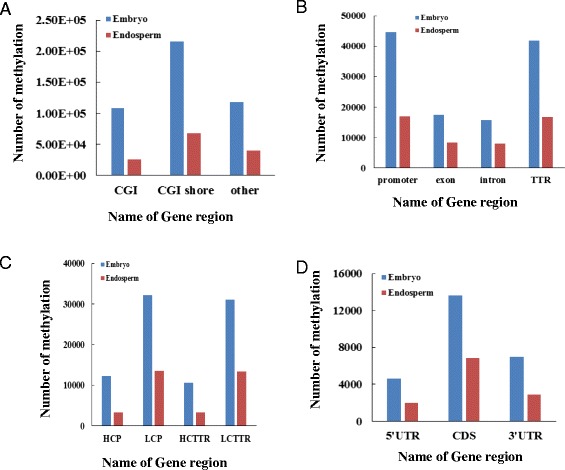
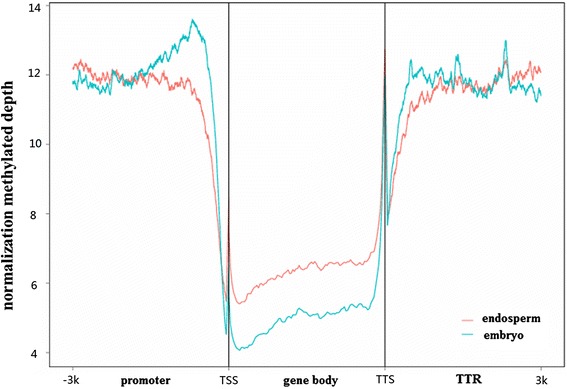
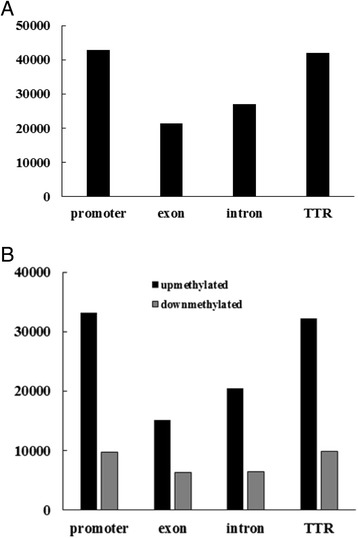
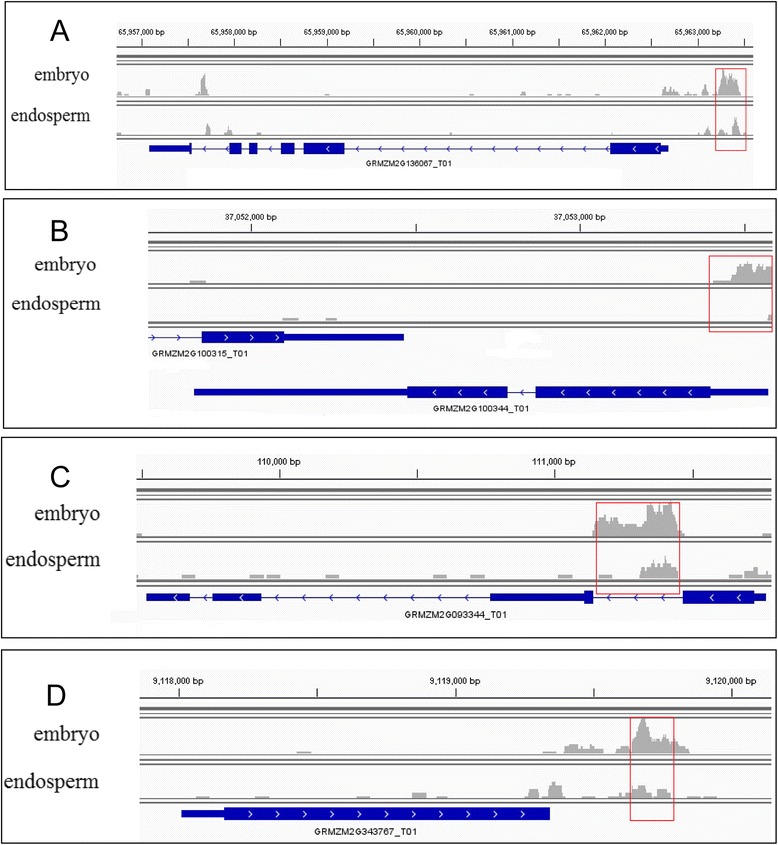
Through a genome-wide analysis, DNA methylation peaks were characterized and mapped in maize embryo and endosperm genome, respectively. Distinct methylation level was observed across maize embryo and endosperm. The maize embryo genome contained more DNA methylation than endosperm. Totally, 985,478 CG islands (CGIs) were identified and most of them were unmethylated. More CGI shores were methylated than CGIs in maize suggested that DNA methylation level was not positively correlated with CpG density. The promoter sequence and transcriptional termination region (TTR) were more methylated than the gene body (intron and exon) region based on peak number and methylated depth. Result showed that 99% TEs were methylated in maize embryo, but a large portion of them (34.8%) were not methylated in endosperm. Maize embryo and endosperm exhibit distinct pattern/level of methylation. The most differentially methylated region between embryo and endosperm are CGI shores. Our results indicated that DNA methylation is associated with both gene silencing and gene activation in maize. Many genes involved in embryogenesis and seed development were found differentially methylated in embryo and endosperm. We found 41.5% imprinting genes were similarly methylated and 58.5% imprinting genes were differentially methylated between embryo and endosperm. Methylation level was associated with allelic silencing of only a small number of imprinting genes. The expression of maize DEMETER-like (DME-like) gene and MBD101 gene (MBD4 homolog) were higher in endosperm than in embryo. These two genes may be associated with distinct methylation levels across maize embryo and endosperm.
Through MeDIP-seq we systematically analyzed the methylomes of maize embryo and endosperm and results indicated that the global methylation status of embryo was more than that of the endosperm. Differences could be observed at the total number of methylation peaks, DMRs and specific methylated genes which were tightly associated with development of embryo and endosperm. Our results also revealed that many DNA methylation regions didn't affect transcription of the corresponding genes.
表观遗传修饰在动植物发育中起重要作用。DNA甲基化影响转座元件(TE)沉默、基因印记和表达调控。
通过全基因组分析,分别在玉米胚和胚乳基因组中对DNA甲基化峰进行了表征和定位。在玉米胚和胚乳中观察到不同的甲基化水平。玉米胚基因组比胚乳含有更多的DNA甲基化。总共鉴定出985,478个CG岛(CGI),其中大部分未甲基化。在玉米中,CGI边缘的甲基化程度高于CGI,这表明DNA甲基化水平与CpG密度并非正相关。基于峰数量和甲基化深度,启动子序列和转录终止区域(TTR)的甲基化程度高于基因体(内含子和外显子)区域。结果表明,99%的TE在玉米胚中甲基化,但其中很大一部分(34.8%)在胚乳中未甲基化。玉米胚和胚乳表现出不同的甲基化模式/水平。胚和胚乳之间甲基化差异最大的区域是CGI边缘。我们的结果表明,DNA甲基化与玉米中的基因沉默和基因激活均相关。发现许多参与胚胎发生和种子发育的基因在胚和胚乳中存在差异甲基化。我们发现41.5%的印记基因甲基化情况相似,58.5%的印记基因在胚和胚乳之间存在差异甲基化。甲基化水平仅与少数印记基因的等位基因沉默相关。玉米类DEMETER(DME-like)基因和MBD101基因(MBD4同源物)在胚乳中的表达高于胚。这两个基因可能与玉米胚和胚乳中不同的甲基化水平有关。
通过甲基化DNA免疫沉淀测序(MeDIP-seq),我们系统地分析了玉米胚和胚乳的甲基化组,结果表明胚的整体甲基化状态高于胚乳。在甲基化峰总数、差异甲基化区域(DMR)和与胚和胚乳发育紧密相关的特定甲基化基因方面可以观察到差异。我们的结果还表明,许多DNA甲基化区域并不影响相应基因的转录。