Hamorsky Krystal Teasley, Kouokam J Calvin, Jurkiewicz Jessica M, Nelson Bailey, Moore Lauren J, Husk Adam S, Kajiura Hiroyuki, Fujiyama Kazuhito, Matoba Nobuyuki
1] Owensboro Cancer Research Program of James Graham Brown Cancer Center at University of Louisville School of Medicine, Owensboro, KY, USA [2] Department of Medicine, University of Louisville School of Medicine, Louisville, KY, USA.
1] Owensboro Cancer Research Program of James Graham Brown Cancer Center at University of Louisville School of Medicine, Owensboro, KY, USA [2] Department of Pharmacology and Toxicology, University of Louisville School of Medicine, Louisville, KY, USA.
Sci Rep. 2015 Jan 23;5:8003. doi: 10.1038/srep08003.
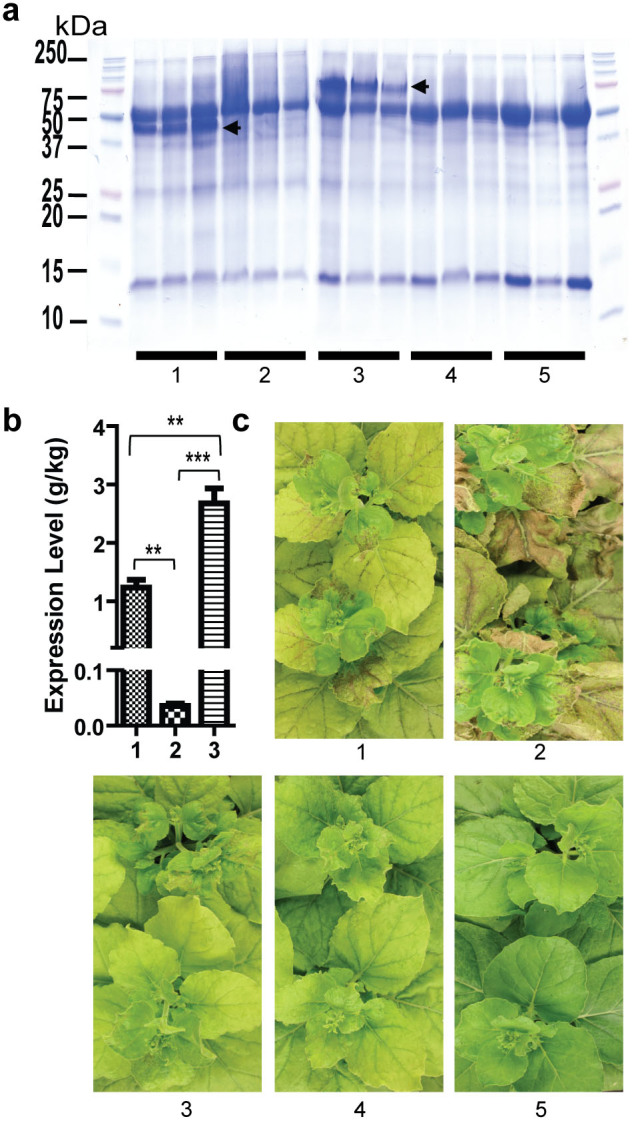
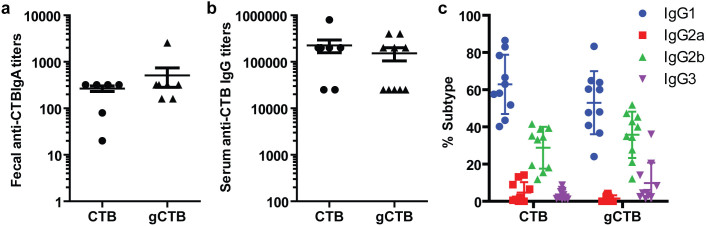
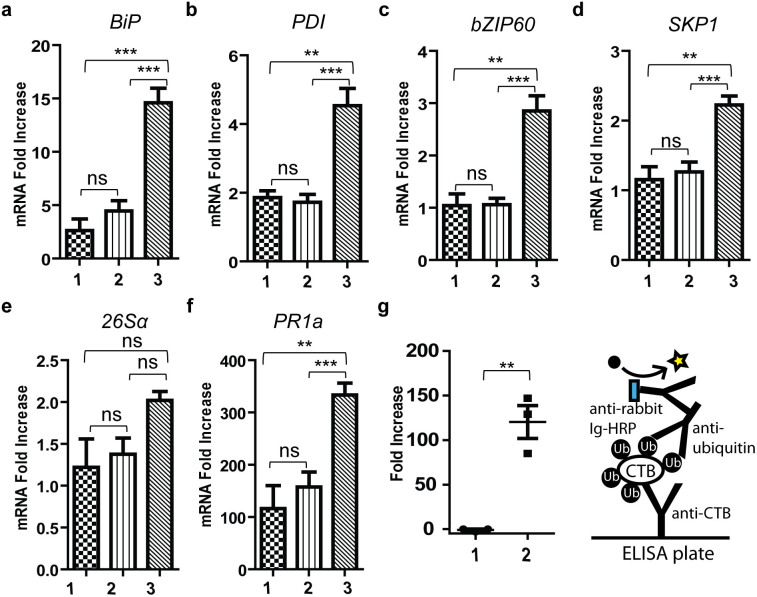
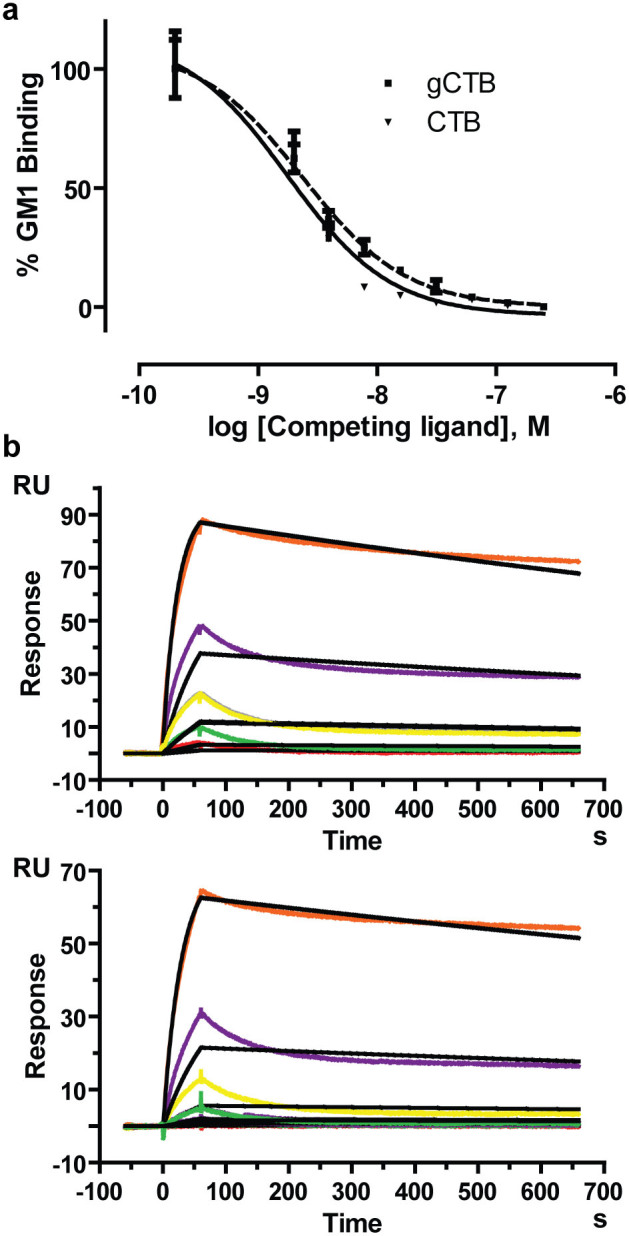
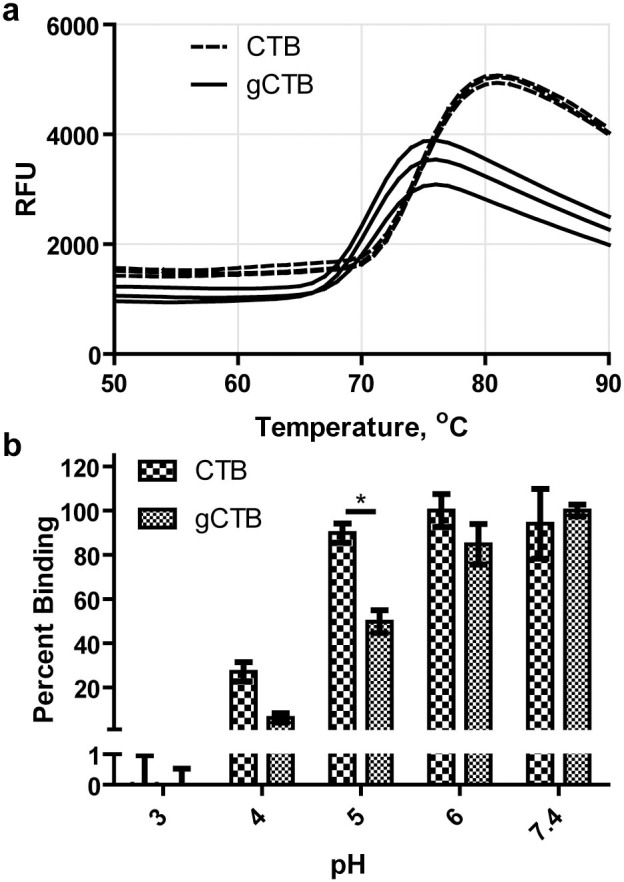
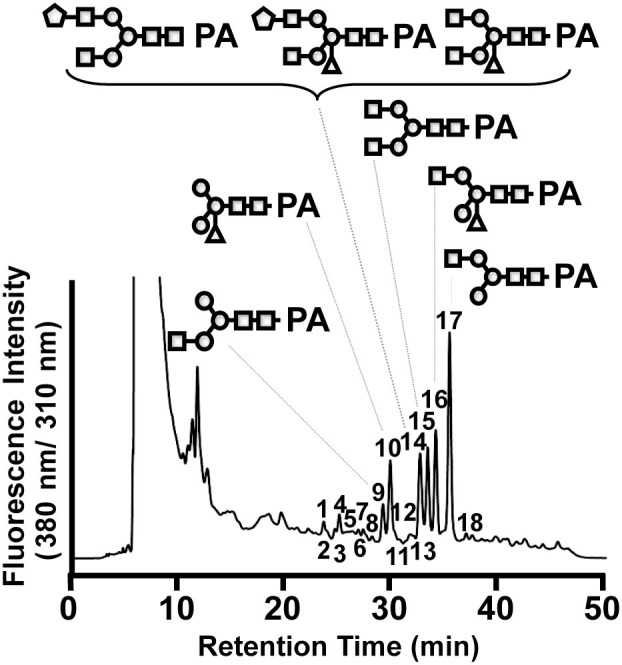
Plant-based transient overexpression systems enable rapid and scalable production of subunit vaccines. Previously, we have shown that cholera toxin B subunit (CTB), an oral cholera vaccine antigen, is N-glycosylated upon expression in transgenic Nicotiana benthamiana. Here, we found that overexpression of aglycosylated CTB by agroinfiltration of a tobamoviral vector causes massive tissue necrosis and poor accumulation unless retained in the endoplasmic reticulum (ER). However, the re-introduction of N-glycosylation to its original or an alternative site significantly relieved the necrosis and provided a high CTB yield without ER retention. Quantitative gene expression analysis of PDI, BiP, bZIP60, SKP1, 26Sα proteasome and PR1a, and the detection of ubiquitinated CTB polypeptides revealed that N-glycosylation significantly relieved ER stress and hypersensitive response, and facilitated the folding/assembly of CTB. The glycosylated CTB (gCTB) was characterized for potential vaccine use. Glycan profiling revealed that gCTB contained approximately 38% plant-specific glycans. gCTB retained nanomolar affinity to GM1-ganglioside with only marginal reduction of physicochemical stability and induced an anti-cholera holotoxin antibody response comparable to native CTB in a mouse oral immunization study. These findings demonstrated gCTB's potential as an oral immunogen and point to a potential role of N-glycosylation in increasing recombinant protein yields in plants.
基于植物的瞬时过表达系统能够快速且可扩展地生产亚单位疫苗。此前,我们已经表明,霍乱毒素B亚基(CTB)作为一种口服霍乱疫苗抗原,在转基因本氏烟草中表达时会发生N-糖基化。在此,我们发现,通过烟草花叶病毒载体进行农杆菌浸润来过表达无糖基化的CTB会导致大量组织坏死且积累不佳,除非将其保留在内质网(ER)中。然而,将N-糖基化重新引入其原始位点或替代位点可显著缓解坏死,并在不保留在内质网的情况下提供高CTB产量。对PDI、BiP、bZIP60、SKP1、26Sα蛋白酶体和PR1a进行定量基因表达分析,以及对泛素化的CTB多肽进行检测,结果表明N-糖基化可显著缓解内质网应激和超敏反应,并促进CTB的折叠/组装。对糖基化的CTB(gCTB)进行了潜在疫苗用途的表征。聚糖分析表明,gCTB含有约38%的植物特异性聚糖。gCTB对GM1神经节苷脂保留纳摩尔亲和力,仅略微降低了物理化学稳定性,并且在小鼠口服免疫研究中诱导出与天然CTB相当的抗霍乱全毒素抗体反应。这些发现证明了gCTB作为口服免疫原的潜力,并指出了N-糖基化在提高植物中重组蛋白产量方面的潜在作用。