DuHadway Caitlin M, Hustad Katherine C
University of Wisconsin - Madison Department of Communicative Disorders Waisman Center.
J Med Speech Lang Pathol. 2012 Dec;20(4).
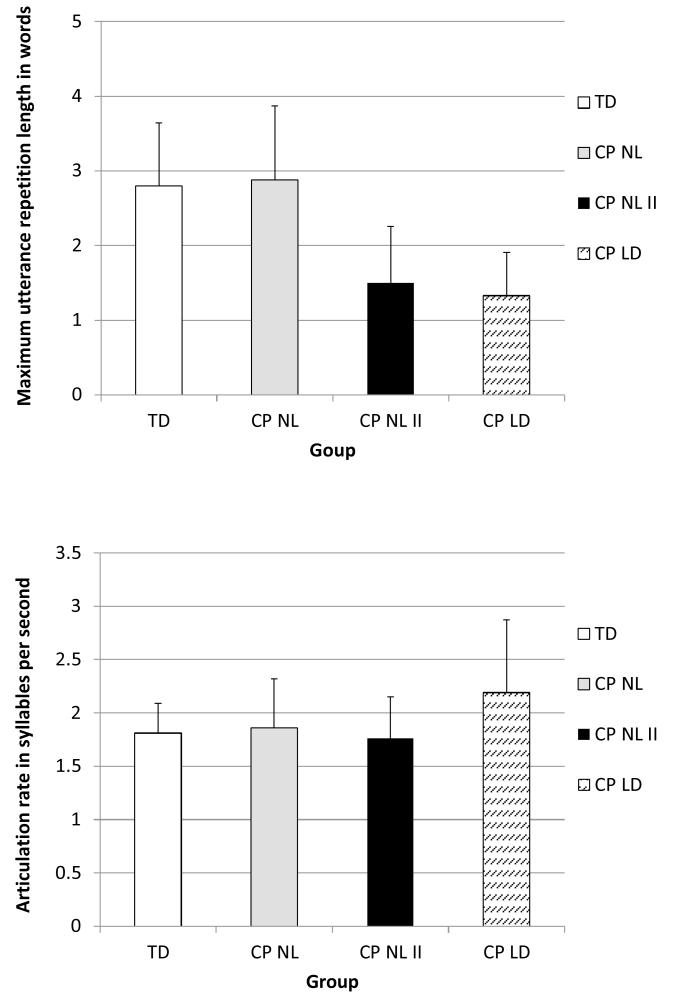
We investigated the contribution of vowel space, articulation rate, maximum utterance length, and language skills to intelligibility in 30-36 month old children with CP. We also examined differences among variables for 3 subgroups of children with CP and a small group of typically developing (TD) children.
Nineteen children with CP and 5 TD children provided speech samples, and 120 listeners transcribed the speech samples. Acoustic analysis of temporal and vowel spectral measures was completed on single-word productions.
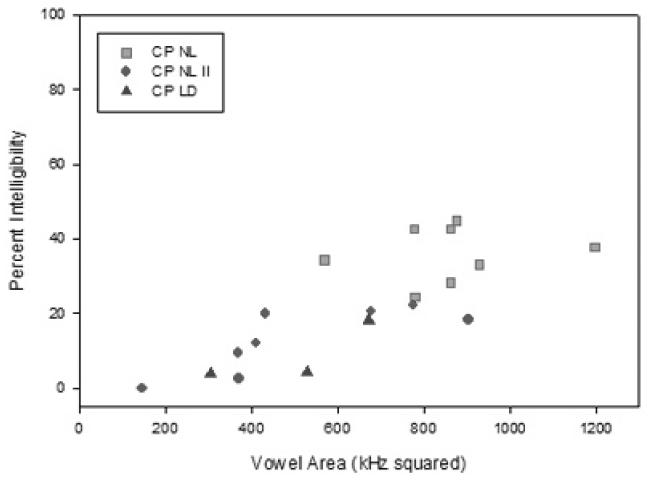
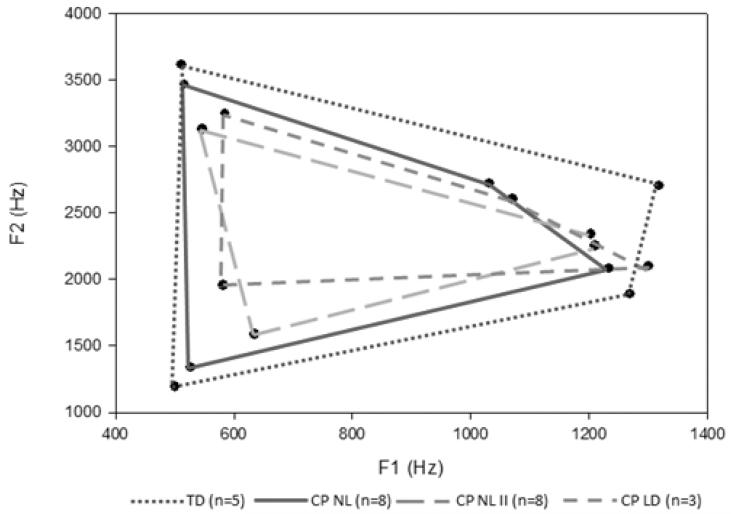
Vowel space was the only variable that made a significant and independent contribution to intelligibility, though all variables collectively accounted for 74% of the variance in intelligibility scores. TD children tended to have larger vowel spaces, than children with CP, even among children with CP who had intelligibility scores within the range of TD children.
Of children with CP who were able to talk at 30-36 months of age, 60% had clinical speech or language deficits. Production of vowels appears to make an important contribution to intelligibility; and for many children with CP, considerable deficits in intelligibility may be evident by the age of 3. Early interventions targeting both speech and language may improve intelligibility and functional communication skills.
我们研究了元音空间、发音速率、最大话语长度和语言技能对30 - 36个月大的脑瘫儿童言语清晰度的影响。我们还检查了脑瘫儿童的3个亚组和一小群发育正常(TD)儿童在这些变量上的差异。
19名脑瘫儿童和5名发育正常儿童提供了语音样本,120名听众对这些语音样本进行了转录。对单个单词发音进行了时间和元音频谱测量的声学分析。
元音空间是唯一对言语清晰度有显著且独立影响的变量,尽管所有变量共同解释了言语清晰度得分中74%的方差。发育正常儿童往往比脑瘫儿童有更大的元音空间,即使在言语清晰度得分处于发育正常儿童范围内的脑瘫儿童中也是如此。
在30 - 36个月大能够说话的脑瘫儿童中,60%有临床言语或语言缺陷。元音的发音似乎对言语清晰度有重要影响;对于许多脑瘫儿童来说,在3岁时言语清晰度可能就会出现明显缺陷。针对言语和语言的早期干预可能会提高言语清晰度和功能性沟通技能。