Corsalini Massimo, Di Venere Daniela, Pettini Francesco, Stefanachi Gianluca, Catapano Santo, Boccaccio Antonio, Lamberti Luciano, Pappalettere Carmine, Carossa Stefano
School of Dentistry, University of Bari, Bari, Italy.
School of Dentistry, University of Ferrara, Ferrara, Italy.
Open Dent J. 2014 Dec 29;8:241-50. doi: 10.2174/1874210601408010241. eCollection 2014.
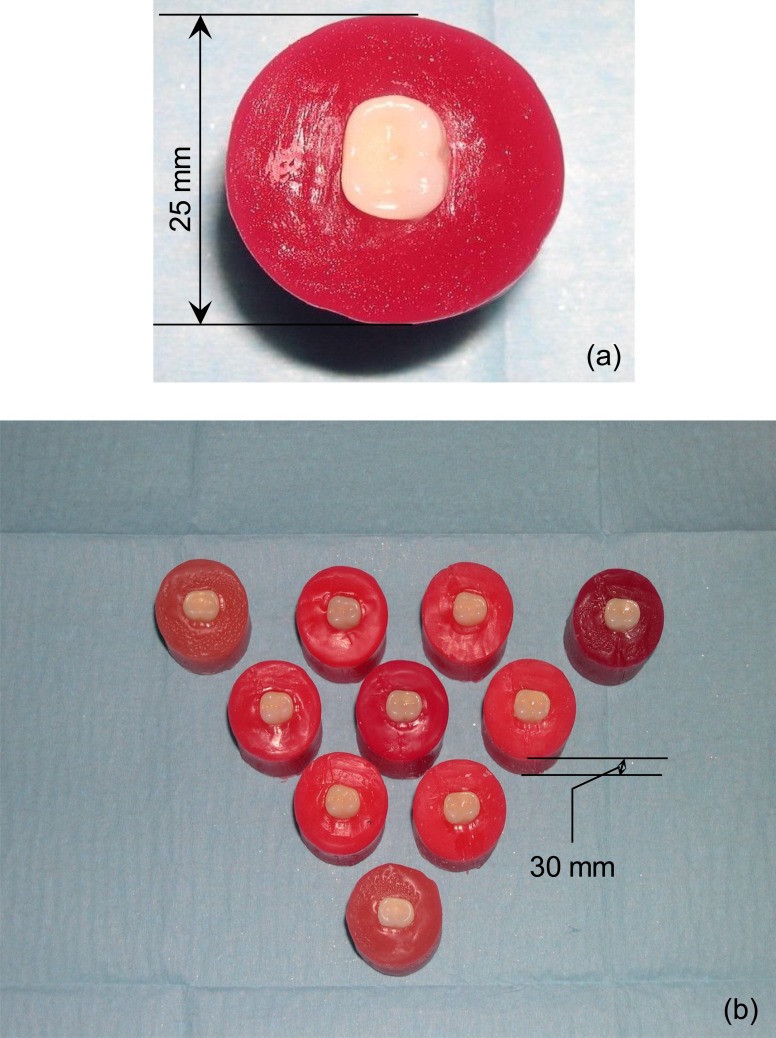
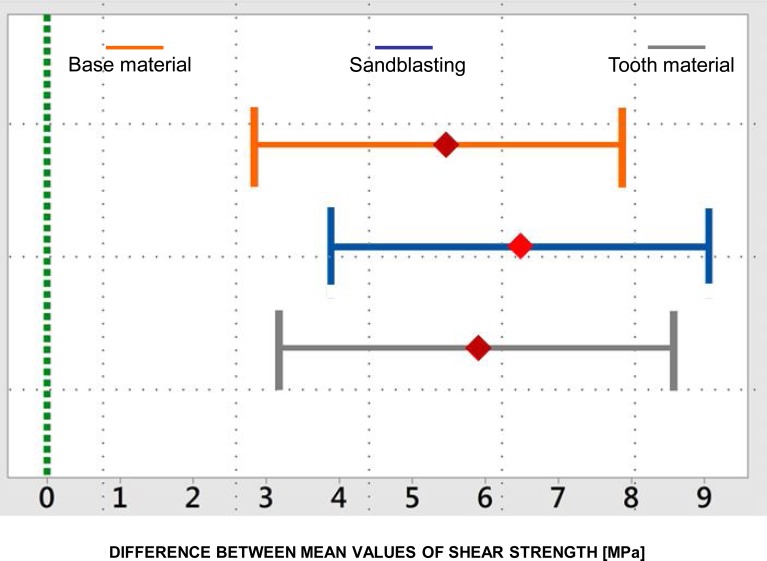
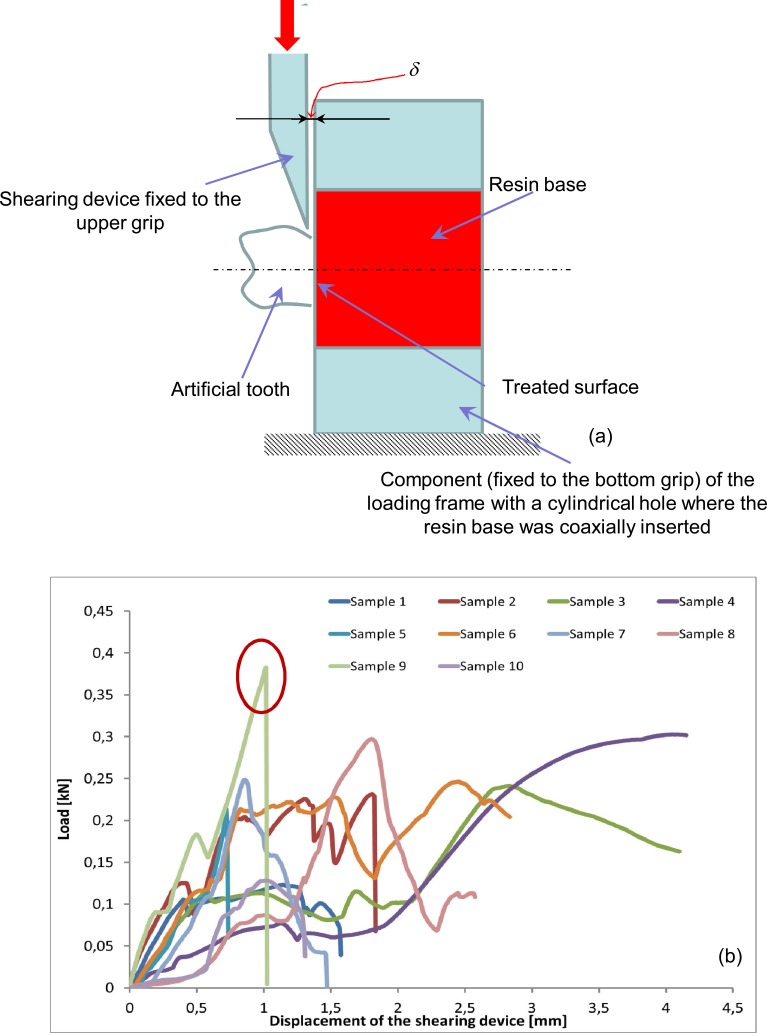
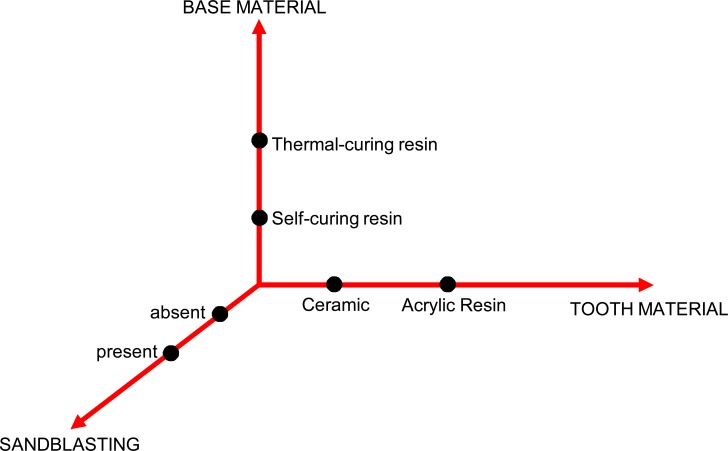
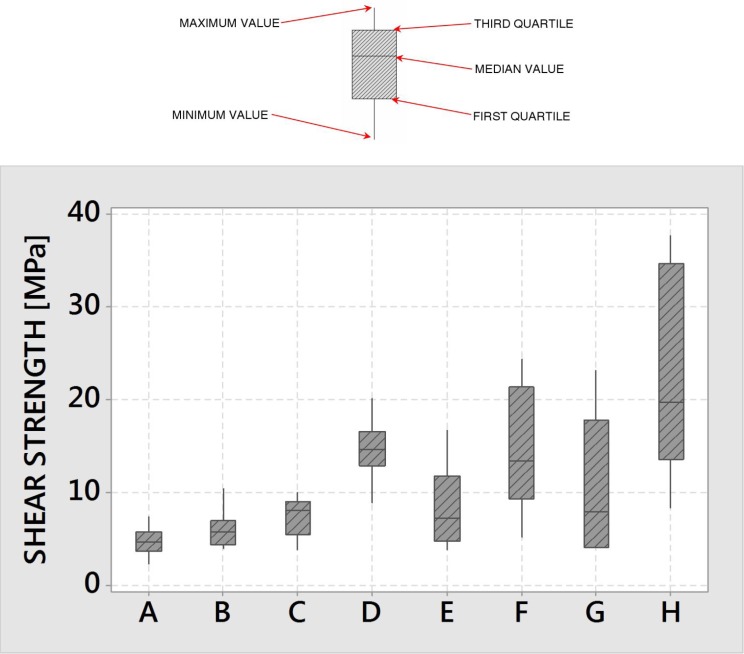
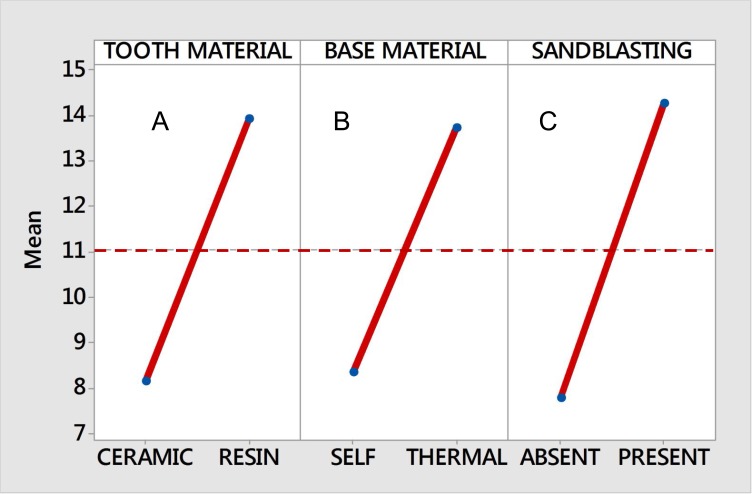
The purpose of this study is to compare the shear bond strength of different resin bases and artificial teeth made of ceramic or acrylic resin materials and whether tooth-base interface may be treated with aluminium oxide sandblasting. Experimental measurements were carried on 80 specimens consisting of a cylinder of acrylic resin into which a single tooth is inserted. An ad hoc metallic frame was realized to measure the shear bond strength at the tooth-base interface. A complete factorial plan was designed and a three-way ANalysis Of VAriance (ANOVA) was carried out to investigate if shear bond strength is affected by the following factors: (i) tooth material (ceramic or resin); (ii) base material (self-curing or thermal-curing resin); (iii) presence or absence of aluminium oxide sandblasting treatment at the tooth-base interface. Tukey post hoc test was also conducted to evaluate any statistically significant difference between shear strength values measured for the dif-ferently prepared samples. It was found from ANOVA that the above mentioned factors all affect shear strength. Furthermore, post hoc analysis indi-cated that there are statistically significant differences (p-value=0.000) between measured shear strength values for: (i) teeth made of ceramic material vs. teeth made of acrylic resin material; (ii) bases made of self-curing resin vs. thermal-curing resin; (iii) specimens treated with aluminium oxide sandblasting vs. untreated specimens. Shear strength values measured for acryl-ic resin teeth were on average 70% higher than those measured for ceramic teeth. The shear bond strength was maximized by preparing samples with thermal-curing resin bases and resin teeth submitted to aluminium oxide sandblasting.
本研究的目的是比较不同树脂基托以及由陶瓷或丙烯酸树脂材料制成的人工牙的剪切粘结强度,以及牙-基托界面是否可以用氧化铝喷砂处理。对80个样本进行了实验测量,这些样本由一个插入单颗牙齿的丙烯酸树脂圆柱体组成。制作了一个特殊的金属框架来测量牙-基托界面的剪切粘结强度。设计了一个完全析因试验计划,并进行了三因素方差分析(ANOVA),以研究剪切粘结强度是否受以下因素影响:(i)牙齿材料(陶瓷或树脂);(ii)基托材料(自凝或热凝树脂);(iii)牙-基托界面是否存在氧化铝喷砂处理。还进行了Tukey事后检验,以评估不同制备样本的剪切强度值之间的任何统计学显著差异。从方差分析中发现,上述因素均影响剪切强度。此外,事后分析表明,在以下方面测量的剪切强度值之间存在统计学显著差异(p值 = 0.000):(i)陶瓷材料制成的牙齿与丙烯酸树脂材料制成的牙齿;(ii)自凝树脂制成的基托与热凝树脂制成的基托;(iii)经过氧化铝喷砂处理的样本与未处理的样本。丙烯酸树脂牙齿的剪切强度值平均比陶瓷牙齿高约70%。通过制备热凝树脂基托和经过氧化铝喷砂处理的树脂牙齿样本,剪切粘结强度达到最大值。