Mani Akshay, Ravindran Resmi, Mannepalli Soujanya, Vang Daniel, Luciw Paul A, Hogarth Michael, Khan Imran H, Krishnan Viswanathan V
Center for Comparative Medicine, University of California Davis, Davis, California, United States of America.
Department of Chemistry, California State University, Fresno, California, United States of America.
PLoS One. 2015 Jan 23;10(1):e0116262. doi: 10.1371/journal.pone.0116262. eCollection 2015.
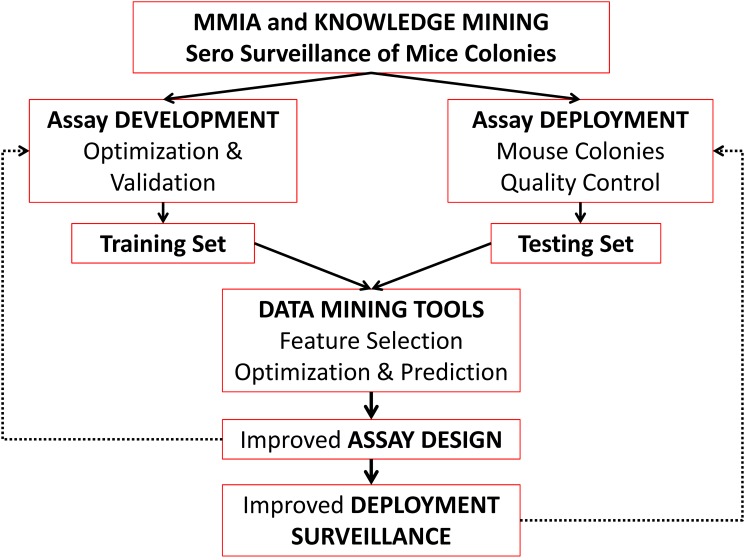
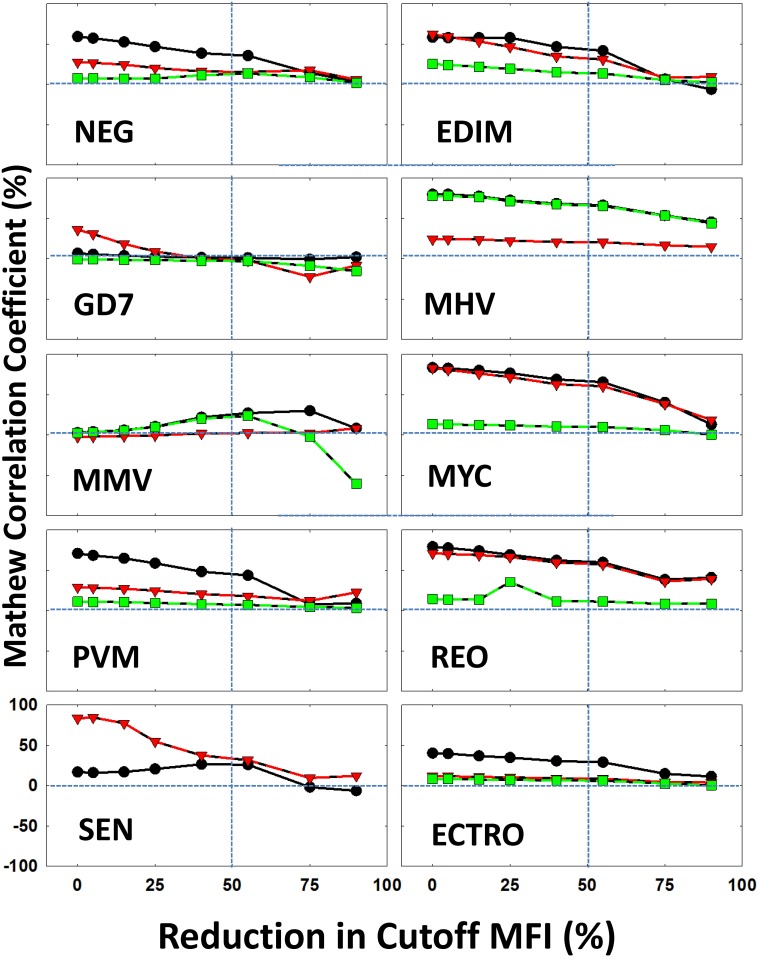
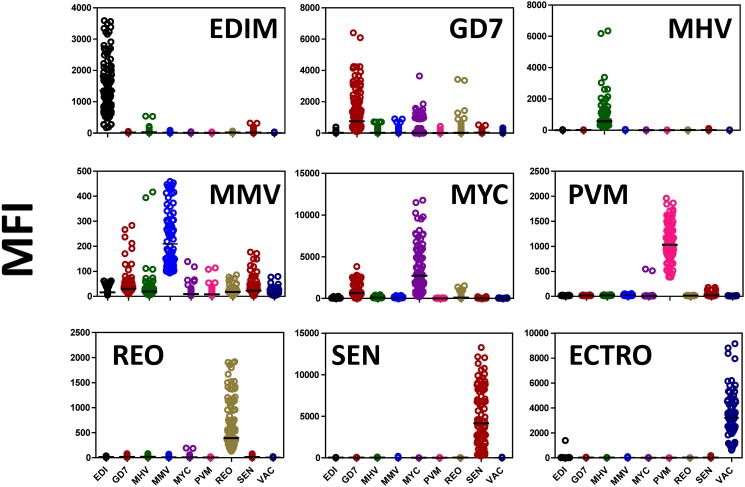
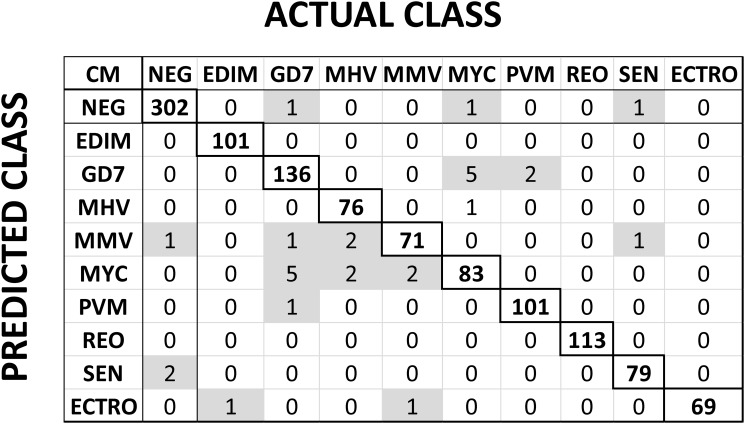
Multiplex methodologies, especially those with high-throughput capabilities generate large volumes of data. Accumulation of such data (e.g., genomics, proteomics, metabolomics etc.) is fast becoming more common and thus requires the development and implementation of effective data mining strategies designed for biological and clinical applications. Multiplex microbead immunoassay (MMIA), on xMAP or MagPix platform (Luminex), which is amenable to automation, offers a major advantage over conventional methods such as Western blot or ELISA, for increasing the efficiencies in serodiagnosis of infectious diseases. MMIA allows detection of antibodies and/or antigens efficiently for a wide range of infectious agents simultaneously in host blood samples, in one reaction vessel. In the process, MMIA generates large volumes of data. In this report we demonstrate the application of data mining tools on how the inherent large volume data can improve the assay tolerance (measured in terms of sensitivity and specificity) by analysis of experimental data accumulated over a span of two years. The combination of prior knowledge with machine learning tools provides an efficient approach to improve the diagnostic power of the assay in a continuous basis. Furthermore, this study provides an in-depth knowledge base to study pathological trends of infectious agents in mouse colonies on a multivariate scale. Data mining techniques using serodetection of infections in mice, developed in this study, can be used as a general model for more complex applications in epidemiology and clinical translational research.
多重检测方法,尤其是那些具有高通量能力的方法会产生大量数据。这类数据(如基因组学、蛋白质组学、代谢组学等)的积累正变得越来越普遍,因此需要开发和实施针对生物学和临床应用设计的有效数据挖掘策略。基于xMAP或MagPix平台(Luminex)的多重微珠免疫测定(MMIA)适合自动化操作,与传统方法如蛋白质印迹法或酶联免疫吸附测定法相比,在提高传染病血清学诊断效率方面具有显著优势。MMIA能够在一个反应容器中,在宿主血液样本中同时高效检测多种感染因子的抗体和/或抗原。在此过程中,MMIA会产生大量数据。在本报告中,我们通过分析两年内积累的实验数据,展示了数据挖掘工具在如何利用固有的大量数据提高检测耐受性(以灵敏度和特异性衡量)方面的应用。先验知识与机器学习工具的结合提供了一种持续提高检测诊断能力的有效方法。此外,本研究提供了一个深入的知识库,用于在多变量尺度上研究小鼠群体中感染因子的病理趋势。本研究中开发的利用小鼠感染血清检测的数据挖掘技术,可作为流行病学和临床转化研究中更复杂应用的通用模型。