Jin Liang, Jiang Qiujie, Wu Zhengsheng, Shao Changxia, Zhou Yong, Yang Luting, Uitto Jouni, Wang Gang
Department of Dermatology, Xijing Hospital, Fourth Military Medical University, Xi'an, China.
Department of Dermatology and Cutaneous Biology, Sidney Kimmel Medical College at Thomas Jefferson University, Philadelphia, Pennsylvania, USA.
J Invest Dermatol. 2015 May;135(5):1294-1302. doi: 10.1038/jid.2015.10. Epub 2015 Jan 23.
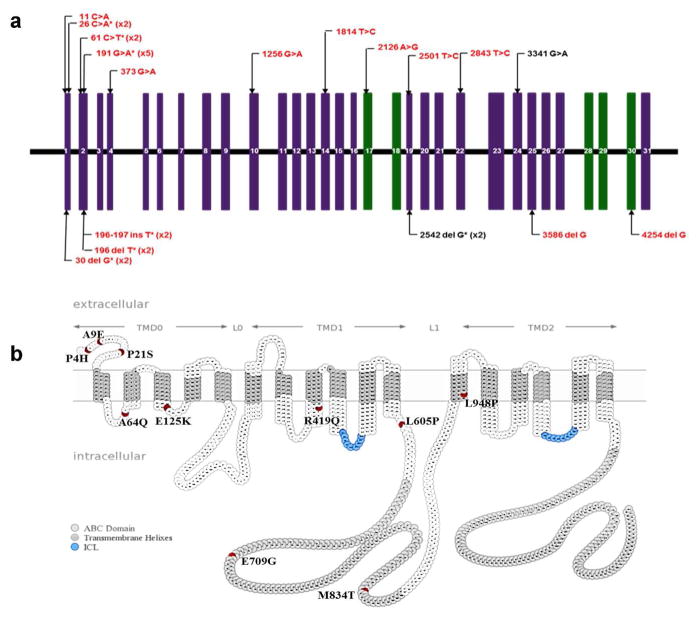
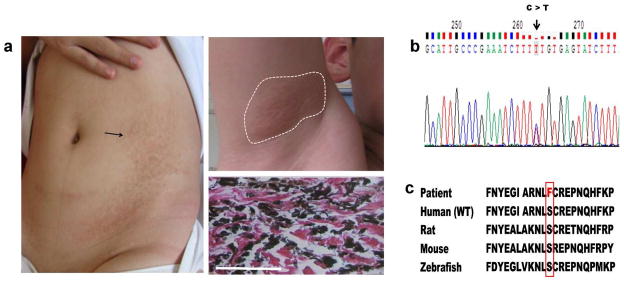
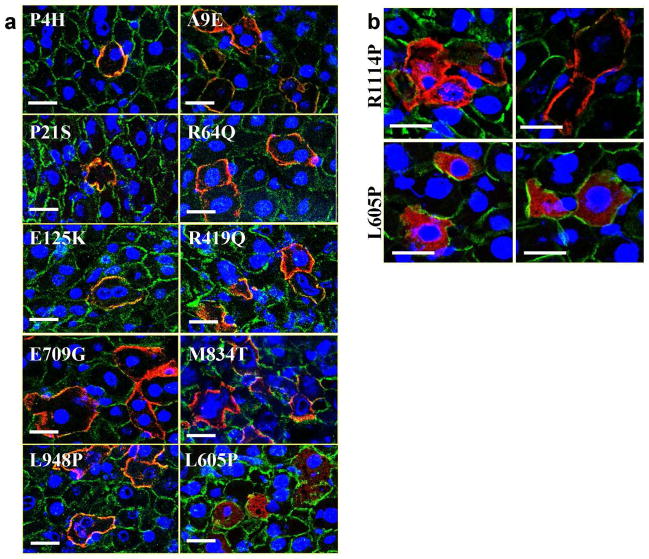
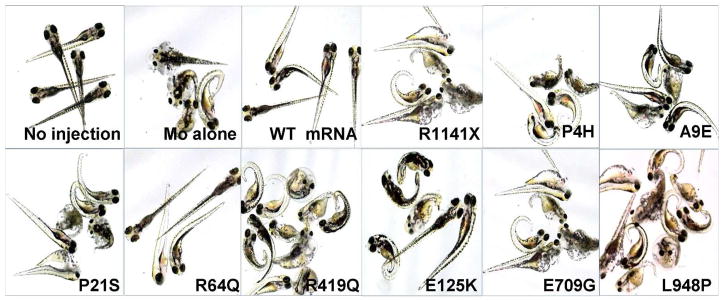
Pseudoxanthoma elasticum (PXE), an autosomal recessive disorder characterized by ectopic mineralization, is caused by mutations in the ABCC6 gene. We examined clinically 29 Chinese PXE patients from unrelated families, so far the largest cohort of Asian PXE patients. In a subset of 22 patients, we sequenced ABCC6 and another candidate gene, ENPP1, and conducted pathogenicity analyses for each variant. We identified a total of 17 distinct mutations in ABCC6, 15 of them being, to our knowledge, previously unreported, including 5 frameshift and 10 missense variants. In addition, a missense mutation in combination with a recurrent nonsense mutation in ENPP1 was discovered in a pediatric PXE case. No cases with p.R1141X or del23-29 mutations, common in Caucasian patient populations, were identified. The 10 missense mutations in ABCC6 were expressed in the mouse liver via hydrodynamic tail-vein injections. One mutant protein showed cytoplasmic accumulation indicating abnormal subcellular trafficking, while the other nine mutants showed correct plasma membrane location. These nine mutations were further investigated for their pathogenicity using a recently developed zebrafish mRNA rescue assay. Minimal rescue of the morpholino-induced phenotype was achieved with eight of the nine mutant human ABCC6 mRNAs tested, implying pathogenicity. This study demonstrates that the Chinese PXE population harbors unique ABCC6 mutations. These genetic data have implications for allele-specific therapy currently being developed for PXE.
弹性假黄瘤(PXE)是一种常染色体隐性疾病,其特征为异位矿化,由ABCC6基因突变引起。我们对来自非亲缘家庭的29名中国PXE患者进行了临床检查,这是目前最大的亚洲PXE患者队列。在22名患者的子集中,我们对ABCC6和另一个候选基因ENPP1进行了测序,并对每个变异进行了致病性分析。我们在ABCC6中总共鉴定出17种不同的突变,据我们所知,其中15种以前未被报道,包括5种移码突变和10种错义变异。此外,在一名儿科PXE病例中发现了ENPP1中的一个错义突变与一个复发性无义突变相结合的情况。未发现白种人患者群体中常见的p.R1141X或del23 - 29突变病例。通过尾静脉流体动力学注射将ABCC6中的10种错义突变在小鼠肝脏中表达。一种突变蛋白显示出细胞质积累,表明亚细胞运输异常,而其他九种突变体显示出正确的质膜定位。使用最近开发的斑马鱼mRNA拯救试验进一步研究了这九种突变的致病性。在所测试的九种突变型人类ABCC6 mRNA中,有八种对吗啉代诱导的表型实现了最小程度的拯救,这意味着具有致病性。这项研究表明,中国PXE人群中存在独特的ABCC6突变。这些遗传数据对目前正在为PXE开发的等位基因特异性疗法具有重要意义。