Vrijens Karen, Bollati Valentina, Nawrot Tim S
Centre for Environmental Sciences, Hasselt University, Diepenbeek, Belgium.
Environ Health Perspect. 2015 May;123(5):399-411. doi: 10.1289/ehp.1408459. Epub 2015 Jan 16.
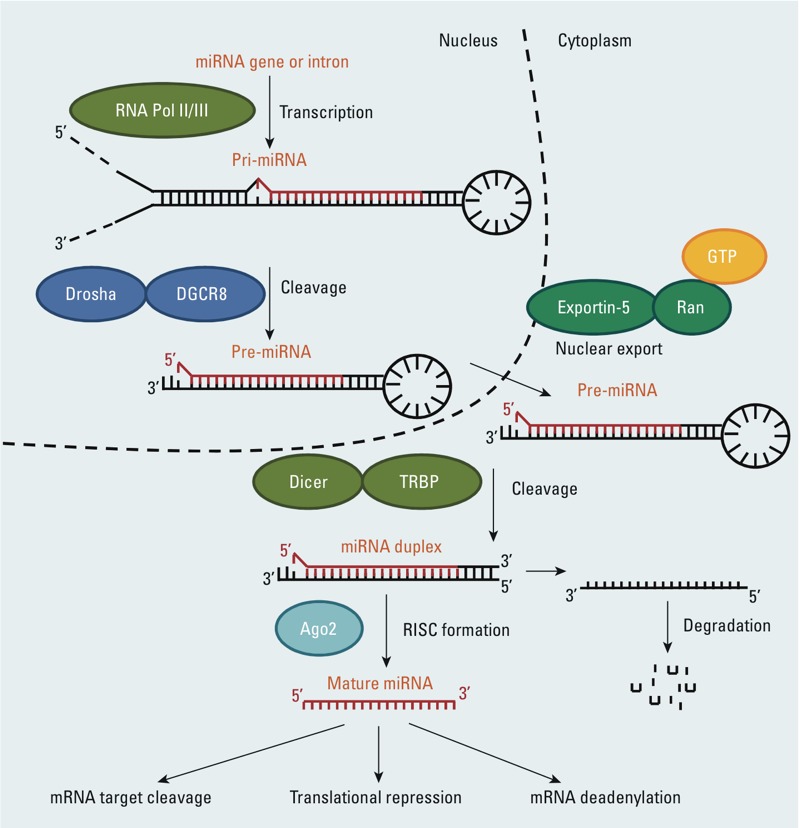
The exposome encompasses all life-course environmental exposures from the prenatal period onward that influence health. MicroRNAs (miRNAs) are interesting entities within this concept as markers and causation of disease. MicroRNAs are short oligonucleotide sequences that can interact with several mRNA targets.
We reviewed the current state of the field on the potential of using miRNAs as biomarkers for environmental exposure. We investigated miRNA signatures in response to all types of environmental exposure to which a human can be exposed, including cigarette smoke, air pollution, nanoparticles, and diverse chemicals; and we examined the health conditions for which the identified miRNAs have been reported (i.e., cardiovascular disease, cancer, and diabetes).
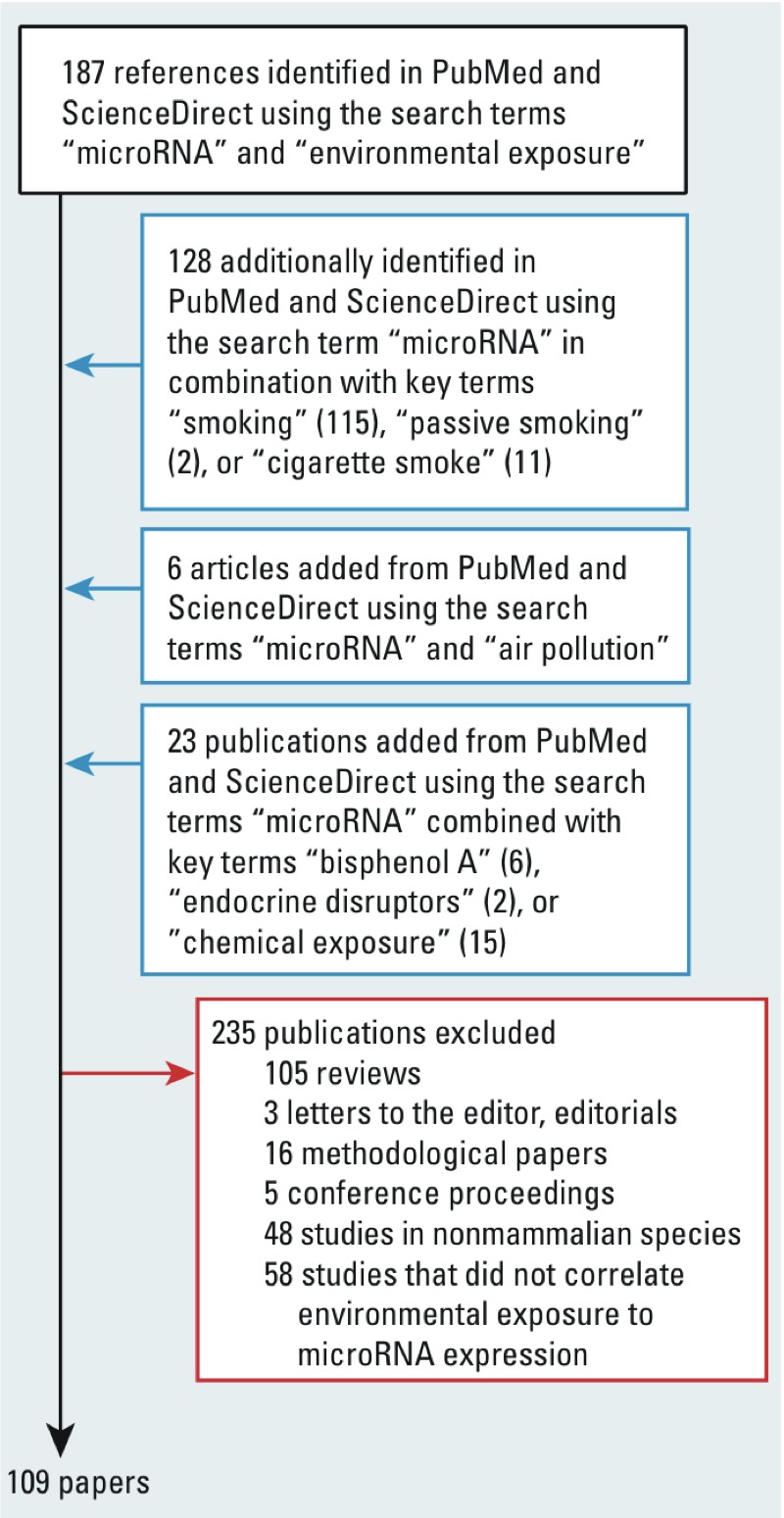
We searched the PubMed and ScienceDirect databases to identify relevant studies.
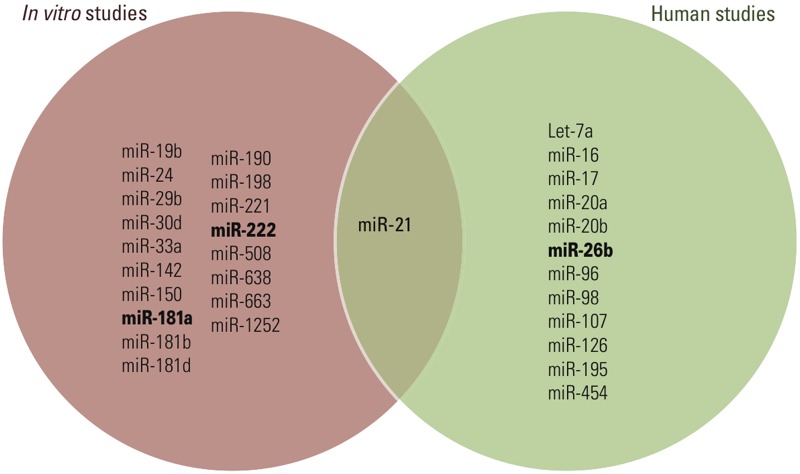
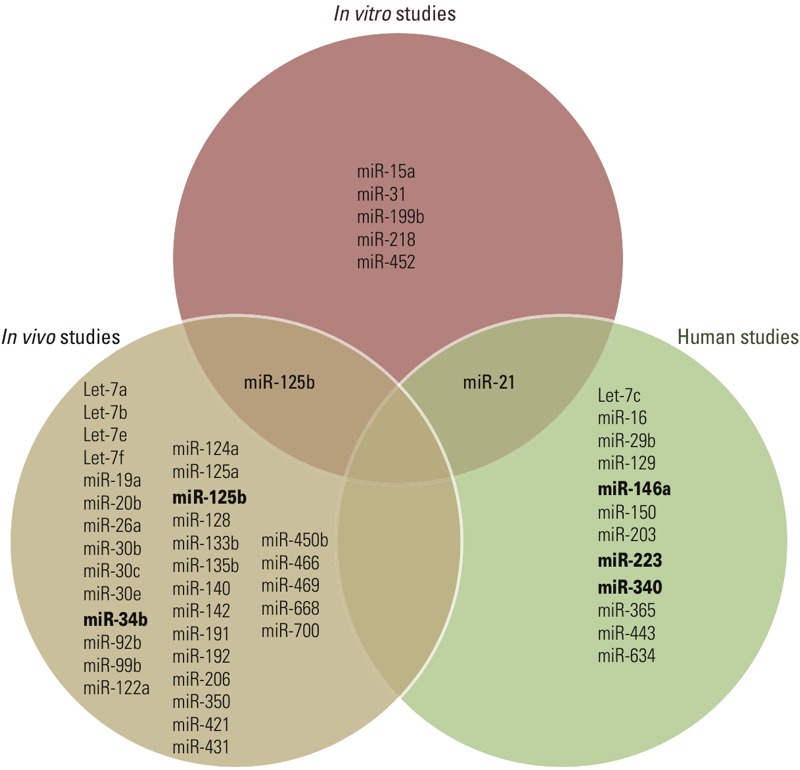
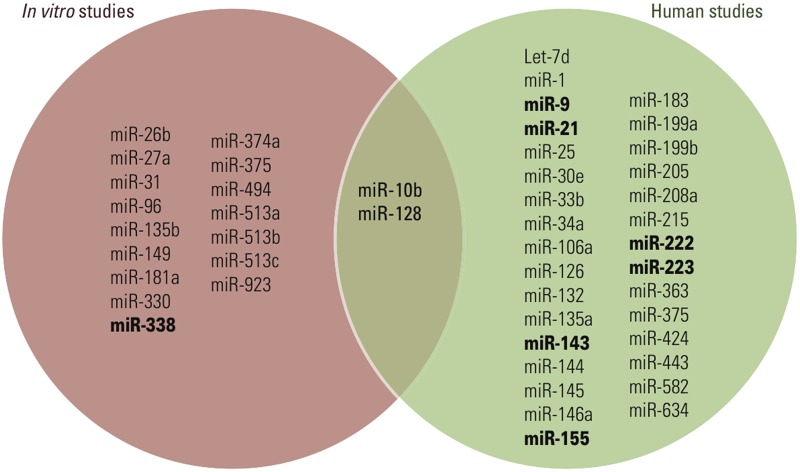
For all exposures incorporated in this review, 27 miRNAs were differentially expressed in at least two independent studies. miRNAs that had expression alterations associated with smoking observed in multiple studies are miR-21, miR-34b, miR-125b, miR-146a, miR-223, and miR-340; and those miRNAs that were observed in multiple air pollution studies are miR-9, miR-10b, miR-21, miR-128, miR-143, miR-155, miR-222, miR-223, and miR-338. We found little overlap among in vitro, in vivo, and human studies between miRNAs and exposure. Here, we report on disease associations for those miRNAs identified in multiple studies on exposure.
miRNA changes may be sensitive indicators of the effects of acute and chronic environmental exposure. Therefore, miRNAs are valuable novel biomarkers for exposure. Further studies should elucidate the role of the mediation effect of miRNA between exposures and effect through all stages of life to provide a more accurate assessment of the consequences of miRNA changes.
暴露组涵盖了从孕期开始影响健康的所有生命历程中的环境暴露。微小RNA(miRNA)作为疾病的标志物和病因,是这一概念中引人关注的实体。微小RNA是短的寡核苷酸序列,可与多个mRNA靶点相互作用。
我们综述了利用miRNA作为环境暴露生物标志物潜力的该领域现状。我们研究了人类可能暴露的所有类型环境暴露(包括香烟烟雾、空气污染、纳米颗粒和各种化学物质)所引发的miRNA特征;并考察了已报道的这些已鉴定miRNA所关联的健康状况(即心血管疾病、癌症和糖尿病)。
我们检索了PubMed和ScienceDirect数据库以识别相关研究。
对于本综述纳入的所有暴露,至少在两项独立研究中27种miRNA表达存在差异。在多项研究中观察到与吸烟相关的表达改变的miRNA有miR-21、miR-34b、miR-125b、miR-146a、miR-223和miR-340;而在多项空气污染研究中观察到的miRNA有miR-9、miR-10b、miR-21、miR-128、miR-143、miR-155、miR-222、miR-223和miR-338。我们发现miRNA与暴露在体外、体内和人体研究之间几乎没有重叠。在此,我们报告在多项暴露研究中鉴定出的那些miRNA与疾病的关联。
miRNA变化可能是急性和慢性环境暴露影响的敏感指标。因此,miRNA是有价值的新型暴露生物标志物。进一步的研究应阐明miRNA在暴露与效应之间通过生命各阶段的中介作用,以更准确地评估miRNA变化的后果。