Shahmanesh Mohsen, Phillips Kenneth, Boothby Meg, Tomlinson Jeremy W
School of Clinical and Experimental Medicine, College of Medical and Dental Sciences, University of Birmingham, Birmingham, United Kingdom.
ILS Genomics (formerly Beckman Coulter Genomics), Morrisville, North Carolina, United States of America.
PLoS One. 2015 Jan 24;10(1):e0117164. doi: 10.1371/journal.pone.0117164. eCollection 2015.
To compare changes in gene expression by microarray from subcutaneous adipose tissue from HIV treatment naïve patients treated with efavirenz based regimens containing abacavir (ABC), tenofovir (TDF) or zidovidine (AZT).
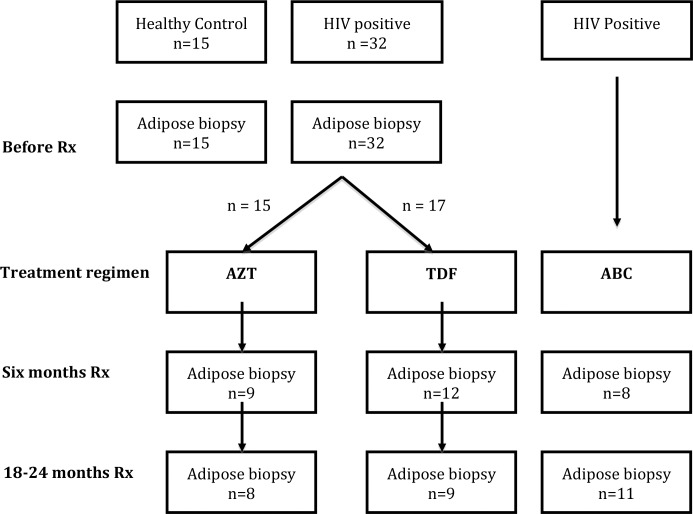
Subcutaneous fat biopsies were obtained before, at 6- and 18-24-months after treatment, and from HIV negative controls. Groups were age, ethnicity, weight, biochemical profile, and pre-treatment CD4 count matched. Microarray data was generated using the Agilent Whole Human Genome Microarray. Identification of differentially expressed genes and genomic response pathways was performed using limma and gene set enrichment analysis.
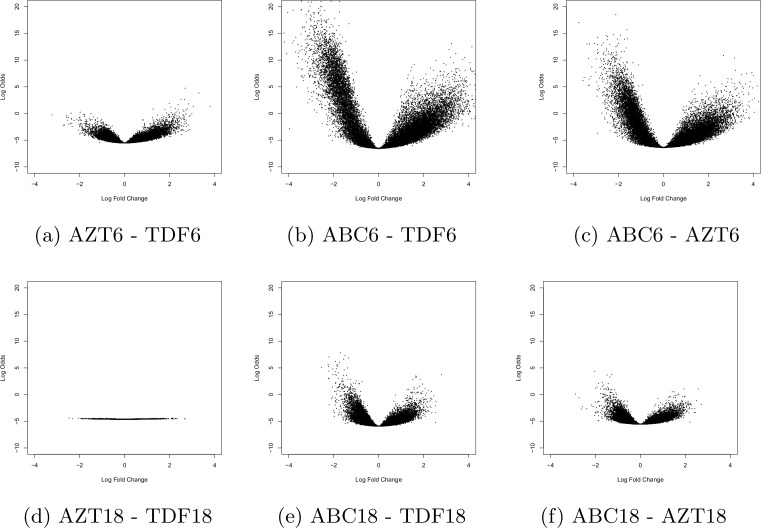
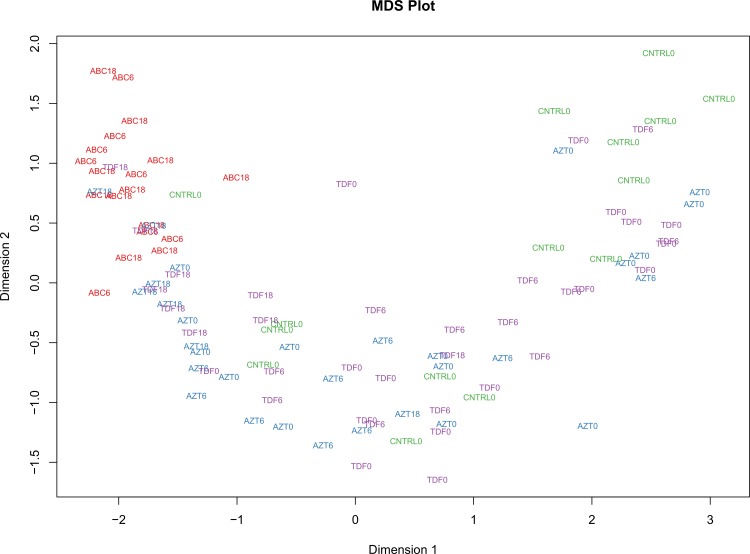
There were significant divergences between ABC and the other two groups 6 months after treatment in genes controlling cell adhesion and environmental information processing, with some convergence at 18-24 months. Compared to controls the ABC group, but not AZT or TDF showed enrichment of genes controlling adherence junction, at 6 months and 18-24 months (adjusted p<0.05) and focal adhesions and tight junction at 6 months (p<0.5). Genes controlling leukocyte transendothelial migration (p<0.05) and ECM-receptor interactions (p = 0.04) were over-expressed in ABC compared to TDF and AZT at 6 months but not at 18-24 months. Enrichment of pathways and individual genes controlling cell adhesion and environmental information processing were specifically dysregulated in the ABC group in comparison with other treatments. There was little difference between AZT and TDF.
After initiating treatment, there is divergence in the expression of genes controlling cell adhesion and environmental information processing between ABC and both TDF and AZT in subcutaneous adipose tissue. If similar changes are also taking place in other tissues including the coronary vasculature they may contribute to the increased risk of cardiovascular events reported in patients recently started on abacavir-containing regimens.
比较初治人类免疫缺陷病毒(HIV)患者皮下脂肪组织基因表达的变化,这些患者接受了含阿巴卡韦(ABC)、替诺福韦(TDF)或齐多夫定(AZT)的依非韦伦治疗方案。
在治疗前、治疗后6个月和18 - 24个月以及HIV阴性对照者中获取皮下脂肪活检样本。各研究组在年龄、种族、体重、生化指标和治疗前CD4细胞计数方面相匹配。使用安捷伦全人类基因组芯片生成微阵列数据。采用limma和基因集富集分析来鉴定差异表达基因和基因组反应途径。
治疗6个月后,ABC组与其他两组在控制细胞黏附及环境信息处理的基因方面存在显著差异,在18 - 24个月时出现一些趋同。与对照组相比,ABC组在6个月和18 - 24个月时显示控制黏着连接的基因富集(校正p<0.05),在6个月时显示粘着斑和紧密连接相关基因富集(p<0.5)。与TDF和AZT相比,ABC组在6个月而非18 - 24个月时,控制白细胞跨内皮迁移(p<0.05)和细胞外基质受体相互作用(p = 0.04)的基因过度表达。与其他治疗相比,ABC组中控制细胞黏附及环境信息处理的途径和单个基因的富集存在特异性失调。AZT和TDF之间差异不大。
开始治疗后,ABC组与TDF组和AZT组在皮下脂肪组织中控制细胞黏附及环境信息处理的基因表达存在差异。如果在包括冠状血管在内的其他组织中也发生类似变化,它们可能导致近期开始接受含阿巴卡韦治疗方案的患者心血管事件风险增加。