Spudich James A
*Department of Biochemistry, Stanford University School of Medicine, Stanford, CA 94305, U.S.A.
Biochem Soc Trans. 2015 Feb;43(1):64-72. doi: 10.1042/BST20140324.
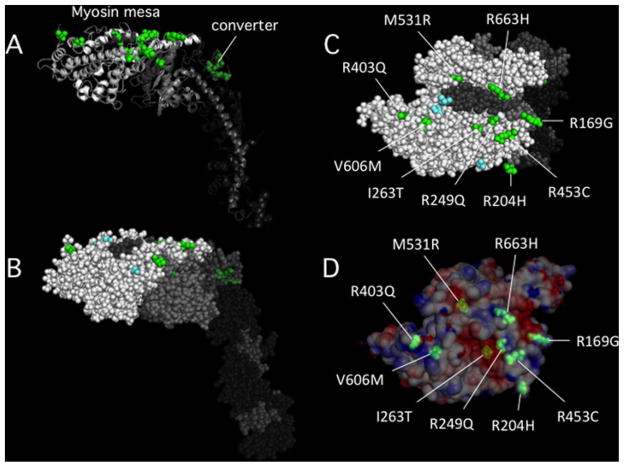
No matter how many times one explores the structure of the myosin molecule, there is always something new to discover. Here, I describe the myosin mesa, a structural feature of the motor domain that has the characteristics of a binding domain for another protein, possibly myosin-binding protein C (MyBP-C). Interestingly, many well-known hypertrophic cardiomyopathy (HCM) mutations lie along this surface and may affect the putative interactions proposed here. A potential unifying hypothesis for the molecular basis of human hypertrophic cardiomyopathy is discussed here. It involves increased power output of the cardiac muscle as a result of HCM mutations causing the release of inhibition by myosin binding protein C.
无论对肌球蛋白分子的结构进行多少次探索,总会有新的发现。在此,我描述了肌球蛋白台面,这是运动结构域的一个结构特征,具有作为另一种蛋白质(可能是肌球蛋白结合蛋白C,即MyBP - C)结合结构域的特性。有趣的是,许多著名的肥厚型心肌病(HCM)突变都位于这个表面,可能会影响本文提出的假定相互作用。本文讨论了关于人类肥厚型心肌病分子基础的一个潜在统一假说。它涉及由于HCM突变导致肌球蛋白结合蛋白C解除抑制从而使心肌功率输出增加。