Wong Eric T, Lok Edwin, Swanson Kenneth D
Brain Tumor Center and Neuro-Oncology Unit, Beth Israel Deaconess Medical Center, Harvard Medical School, Boston, Massachusetts.
Cancer Med. 2015 Mar;4(3):383-91. doi: 10.1002/cam4.421. Epub 2015 Jan 26.
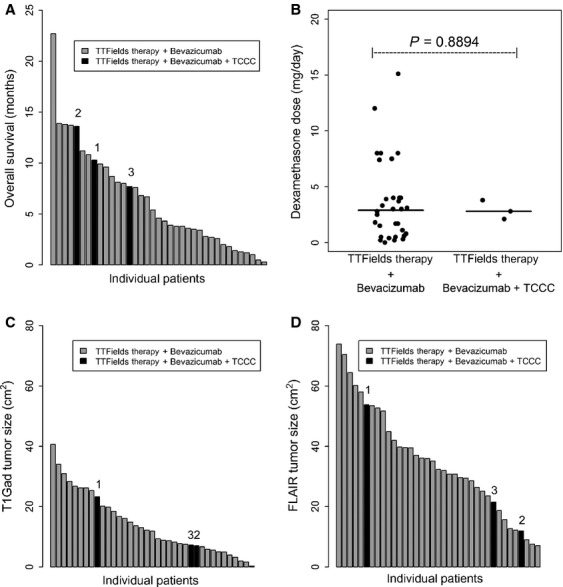
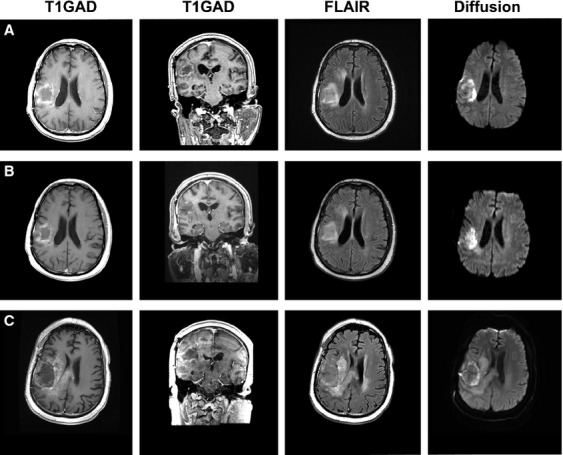
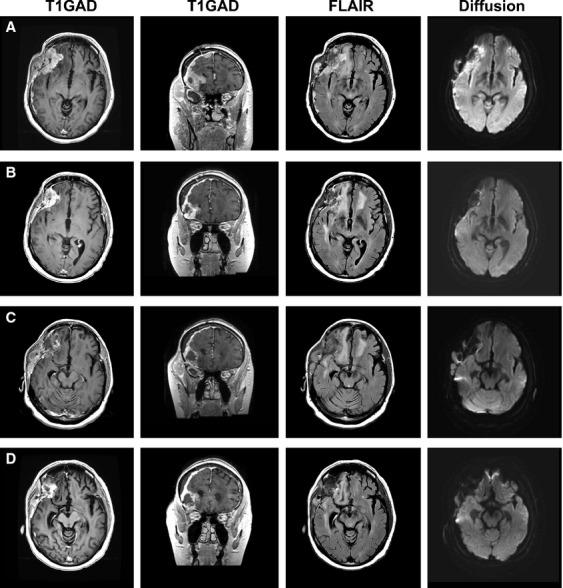
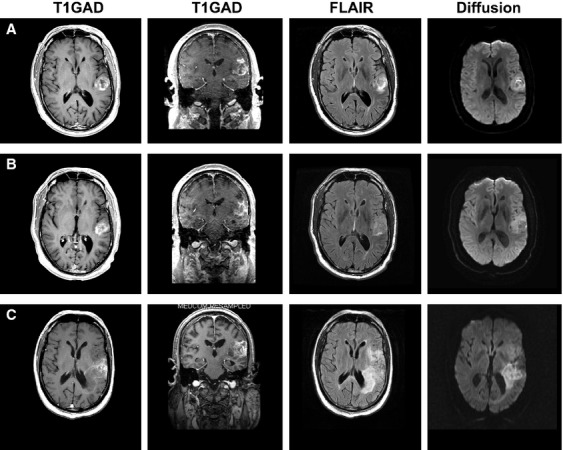
The NovoTTF-100A is a device that emits alternating electric fields and it is approved for the treatment of recurrent glioblastoma. It works by perturbing tumor cells during mitosis as they enter anaphase leading to aneuploidy, asymmetric chromosome segregation and cell death with evidence of increased immunogenicity. Clinical trial data have shown equivalent efficacy when compared to salvage chemotherapies in recurrent disease. Responders were found to have had a lower dexamethasone usage and a higher rate of prior low-grade histology. We treated a series of patients with NovoTTF-100A and bevacizumab alone (n = 34) or in combination with a regimen consisting of 6-thioguanine, lomustine, capecitabine, and celecoxib (TCCC) (n = 3). Compared to the former cohort, the latter cohort exhibited a trend for prolonged overall survival, median 4.1 (0.3-22.7) months versus 10.3 (7.7-13.6) months respectively (P = 0.0951), with one experiencing an objective response with a 50% reduction in tumor size on magnetic resonance imaging despite possessing a larger tumor size at baseline and more severe neurologic dysfunction than the median for either group. These observations illustrate the possibility of improving survival and achieving a response in patients with end-stage recurrent glioblastoma by biasing the tumor toward anti-tumor immunologic response with a combination of NovoTTF-100A and TCCC, as well as the continuation of bevacizumab in order to limit dexamethasone use due to its global immunosuppressive effect on the patient.
NovoTTF-100A是一种能发出交变电场的设备,已被批准用于治疗复发性胶质母细胞瘤。它的工作原理是在肿瘤细胞进入有丝分裂后期时干扰它们,导致非整倍体、不对称染色体分离和细胞死亡,并有免疫原性增加的证据。临床试验数据表明,与复发性疾病的挽救性化疗相比,其疗效相当。研究发现,有反应者的地塞米松使用量较低,且先前低级别组织学的发生率较高。我们治疗了一系列患者,其中单独使用NovoTTF-100A和贝伐单抗的患者有34例,或联合使用由6-硫鸟嘌呤、洛莫司汀、卡培他滨和塞来昔布组成的方案(TCCC)的患者有3例。与前一组相比,后一组显示出总生存期延长的趋势,中位数分别为4.1(0.3 - 22.7)个月和10.3(7.7 - 13.6)个月(P = 0.0951),其中有1例出现客观反应,磁共振成像显示肿瘤大小缩小50%,尽管其基线时肿瘤尺寸更大,神经功能障碍比两组的中位数更严重。这些观察结果表明,通过将NovoTTF-100A和TCCC联合使用,使肿瘤偏向抗肿瘤免疫反应,以及继续使用贝伐单抗以限制由于其对患者的整体免疫抑制作用而导致的地塞米松使用,有可能提高晚期复发性胶质母细胞瘤患者的生存率并实现反应。