Unit of Biochemistry and Cellular Biology (URBC), Namur Research Institute for LIfe Sciences (NARILIS), University of Namur (UNamur), 61 Rue de Bruxelles, B-5000 Namur, Belgium.
Unit of Pharmacology and Therapeutics (FATH 5349), University of Louvain Medical School (UCL), 52 Avenue Mounier, B-1200 Bruxelles, Belgium.
Neoplasia. 2015 Jan;17(1):66-78. doi: 10.1016/j.neo.2014.11.003.
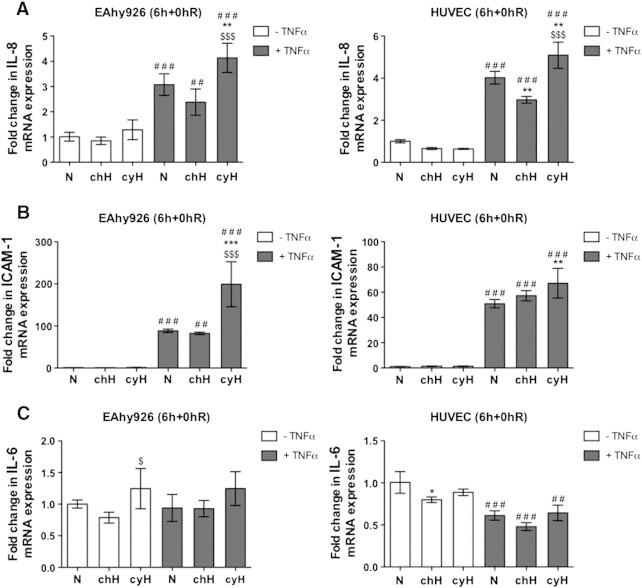
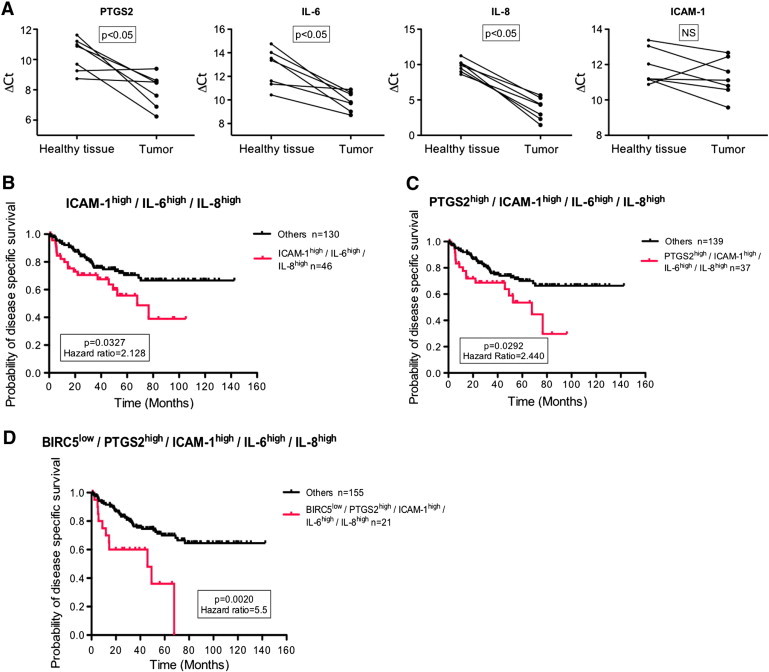
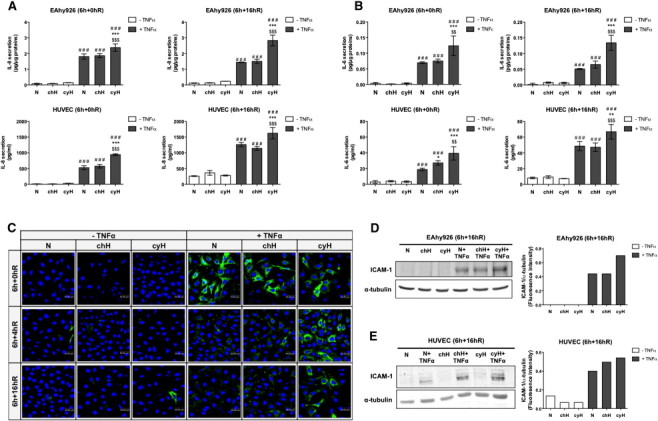
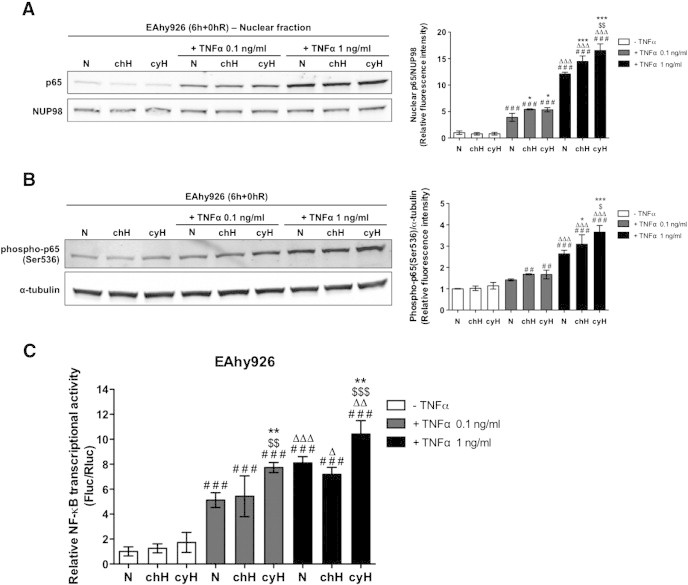
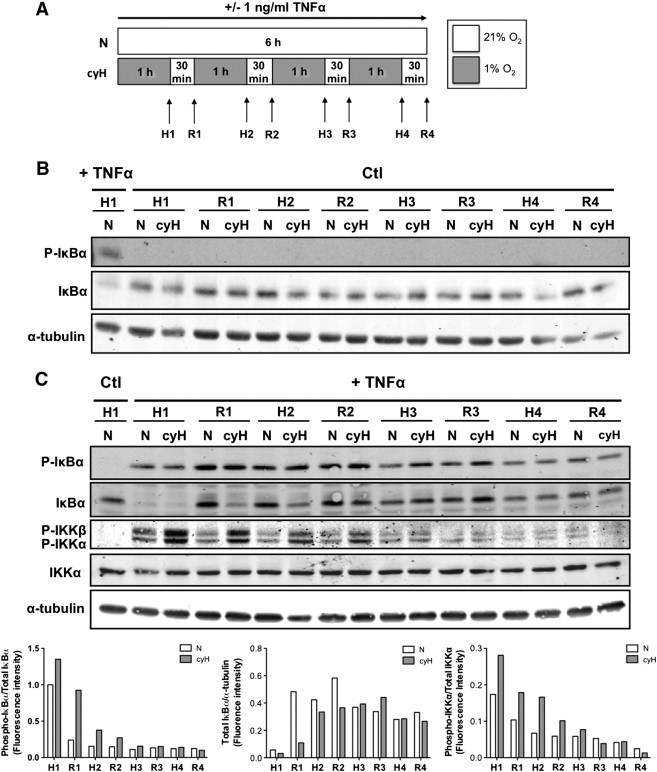
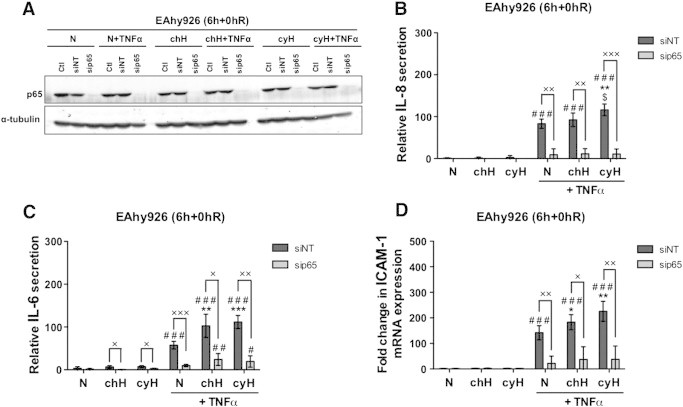
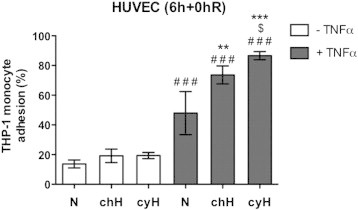
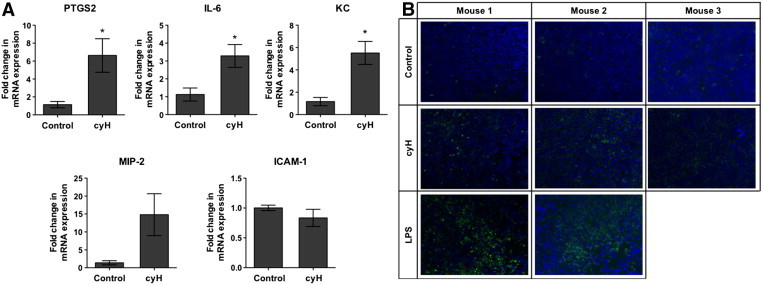
Abnormal architecture of the tumor blood network, as well as heterogeneous erythrocyte flow, leads to temporal fluctuations in tissue oxygen tension exposing tumor and stromal cells to cycling hypoxia. Inflammation is another feature of tumor microenvironment and is considered as a new enabling characteristic of tumor progression. As cycling hypoxia is known to participate in tumor aggressiveness, the purpose of this study was to evaluate its role in tumor-promoting inflammation. Firstly, we assessed the impact of cycling hypoxia in vitro on endothelial inflammatory response induced by tumor necrosis factor α. Results showed that endothelial cells exposed to cycling hypoxia displayed an amplified proinflammatory phenotype, characterized by an increased expression of inflammatory cytokines, namely, interleukin (IL)-6 and IL-8; by an increased expression of adhesion molecules, in particular intercellular adhesion molecule-1 (ICAM-1); and consequently by an increase in THP-1 monocyte adhesion. This exacerbation of endothelial inflammatory phenotype occurs through nuclear factor-κB overactivation. Secondly, the role of cycling hypoxia was studied on overall tumor inflammation in vivo in tumor-bearing mice. Results showed that cycling hypoxia led to an enhanced inflammation in tumors as prostaglandin-endoperoxide synthase 2 (PTGS2), IL-6, CXCL1 (C-X-C motif ligand 1), and macrophage inflammatory protein 2 (murine IL-8 functional homologs) mRNA expression was increased and as a higher leukocyte infiltration was evidenced. Furthermore, cycling hypoxia-specific inflammatory phenotype, characterized by a simultaneous (baculoviral inhibitor of apoptosis repeat-containing 5)(low)/PTGS2(high)/ICAM-1(high)/IL-6(high)/IL-8(high) expression, is associated with a poor prognosis in human colon cancer. This new phenotype could thus be used in clinic to more precisely define prognosis for colon cancer patients. In conclusion, our findings evidenced for the first time the involvement of cycling hypoxia in tumor-promoting inflammation amplification.
肿瘤血液网络的异常结构以及不均匀的红细胞流动导致组织氧张力出现时间波动,使肿瘤和基质细胞反复发生缺氧。炎症是肿瘤微环境的另一个特征,被认为是肿瘤进展的一个新的促进特征。已知反复缺氧参与肿瘤侵袭性,本研究旨在评估其在促进肿瘤炎症中的作用。首先,我们评估了体外反复缺氧对肿瘤坏死因子α诱导的内皮炎症反应的影响。结果表明,反复缺氧暴露的内皮细胞表现出增强的促炎表型,其特征为炎症细胞因子(白细胞介素(IL)-6 和 IL-8)表达增加;粘附分子,特别是细胞间粘附分子-1(ICAM-1)表达增加;随后 THP-1 单核细胞黏附增加。这种内皮炎症表型的加剧是通过核因子-κB 的过度激活发生的。其次,在荷瘤小鼠体内研究了反复缺氧对整体肿瘤炎症的作用。结果表明,反复缺氧导致肿瘤炎症增强,因为前列腺素内过氧化物合酶 2(PTGS2)、IL-6、CXCL1(C-X-C 基序配体 1)和巨噬细胞炎症蛋白 2(鼠 IL-8 功能同源物)mRNA 表达增加,并且白细胞浸润增加。此外,反复缺氧特异性炎症表型的特征是同时(杆状病毒凋亡抑制剂重复包含 5)(低)/PTGS2(高)/ICAM-1(高)/IL-6(高)/IL-8(高)表达,与人类结肠癌预后不良相关。这种新表型可用于临床更精确地为结肠癌患者定义预后。总之,我们的研究结果首次证实了反复缺氧在促进肿瘤炎症放大中的作用。