Department of Medicinal Chemistry and Molecular Pharmacology, Purdue University, West Lafayette, IN 47907.
Department of Medicinal Chemistry and Molecular Pharmacology, Purdue University, West Lafayette, IN 47907.
Neoplasia. 2015 Jan;17(1):124-33. doi: 10.1016/j.neo.2014.11.009.
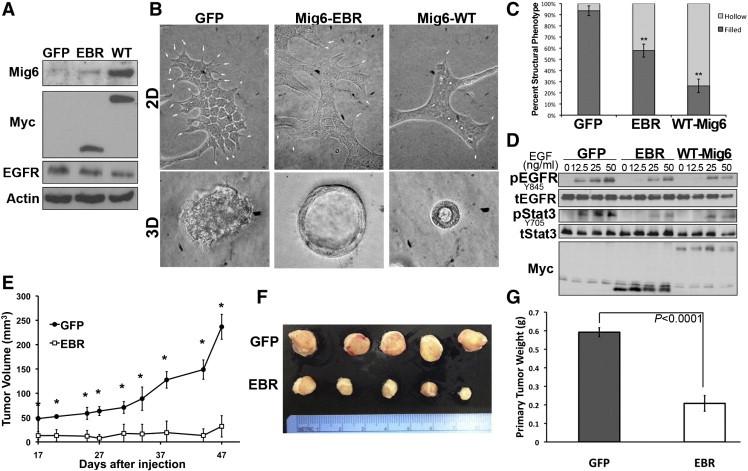
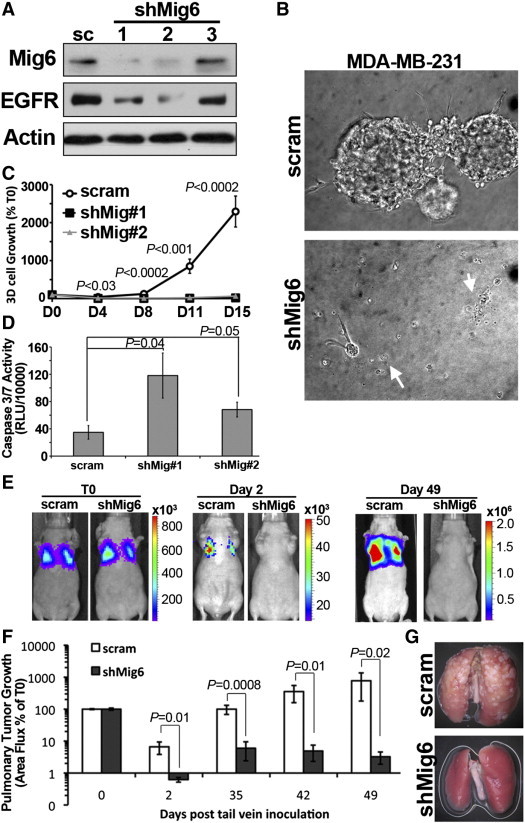
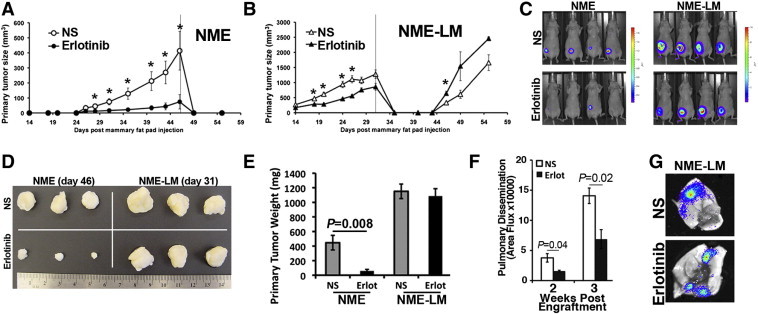
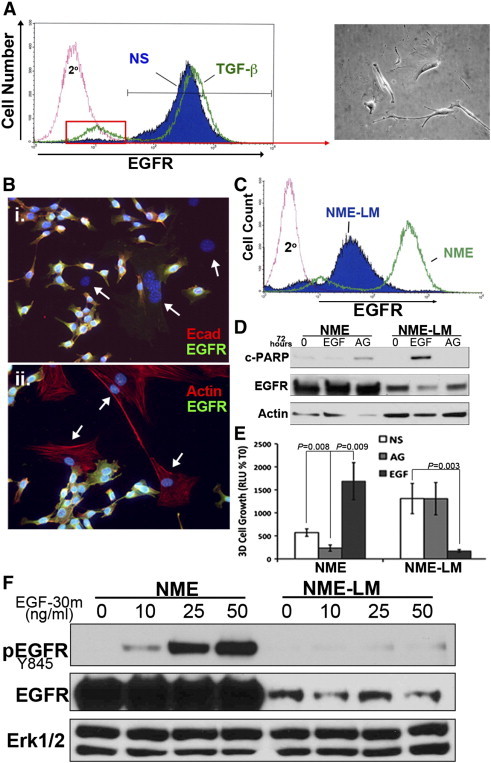
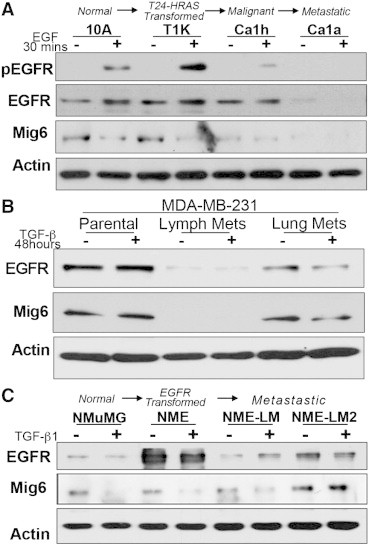
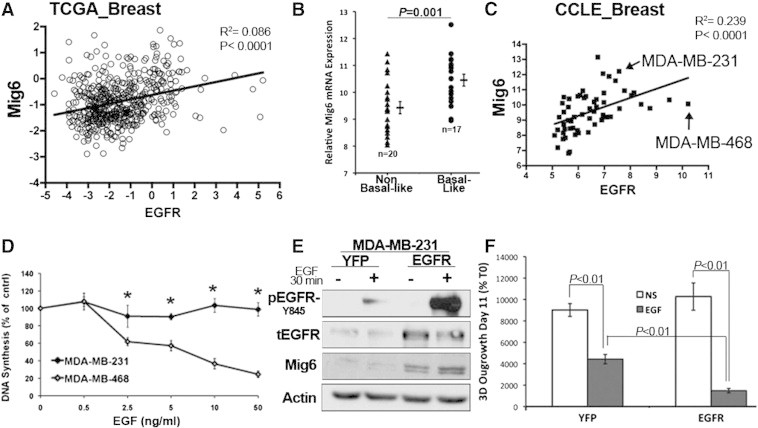
Numerous studies by our lab and others demonstrate that epidermal growth factor receptor (EGFR) plays critical roles in primary breast cancer (BC) initiation, growth and dissemination. However, clinical trials targeting EGFR function in BC have lead to disappointing results. In the current study we sought to identify the mechanisms responsible for this disparity by investigating the function of EGFR across the continuum of the metastatic cascade. We previously established that overexpression of EGFR is sufficient for formation of in situ primary tumors by otherwise nontransformed murine mammary gland cells. Induction of epithelial-mesenchymal transition (EMT) is sufficient to drive the metastasis of these EGFR-transformed tumors. Examining growth factor receptor expression across this and other models revealed a potent downregulation of EGFR through metastatic progression. Consistent with diminution of EGFR following EMT and metastasis EGF stimulation changes from a proliferative to an apoptotic response in in situ versus metastatic tumor cells, respectively. Furthermore, overexpression of EGFR in metastatic MDA-MB-231 BC cells promoted their antitumorigenic response to EGF in three dimensional (3D) metastatic outgrowth assays. In line with the paradoxical function of EGFR through EMT and metastasis we demonstrate that the EGFR inhibitory molecule, Mitogen Induced Gene-6 (Mig6), is tumor suppressive in in situ tumor cells. However, Mig6 expression is absolutely required for prevention of apoptosis and ultimate metastasis of MDA-MB-231 cells. Further understanding of the paradoxical function of EGFR between primary and metastatic tumors will be essential for application of its targeted molecular therapies in BC.
我们实验室和其他实验室的大量研究表明,表皮生长因子受体(EGFR)在原发性乳腺癌(BC)的发生、生长和扩散中发挥着关键作用。然而,针对 BC 中 EGFR 功能的临床试验结果令人失望。在目前的研究中,我们通过研究 EGFR 在转移级联过程中的作用,试图确定导致这种差异的机制。我们之前的研究表明,EGFR 的过表达足以使原本非转化的小鼠乳腺细胞形成原位原发性肿瘤。上皮-间充质转化(EMT)的诱导足以驱动这些 EGFR 转化肿瘤的转移。在这些和其他模型中检查生长因子受体的表达,揭示了 EGFR 在转移进展过程中受到强烈下调。与 EMT 和转移后 EGFR 减少一致,EGF 刺激分别在原位和转移性肿瘤细胞中从增殖反应转变为凋亡反应。此外,在转移性 MDA-MB-231 BC 细胞中过表达 EGFR 可促进其对三维(3D)转移性生长测定中 EGF 的抗肿瘤反应。与 EMT 和转移过程中 EGFR 的矛盾功能一致,我们证明了 EGFR 抑制分子 Mitogen Induced Gene-6(Mig6)在原位肿瘤细胞中具有肿瘤抑制作用。然而,Mig6 的表达对于预防 MDA-MB-231 细胞的凋亡和最终转移是绝对必需的。进一步了解原发性和转移性肿瘤中 EGFR 的矛盾功能,对于在 BC 中应用其靶向分子治疗至关重要。