Andolino Chaylen, Cotul Eylem Kulkoyluoglu, Xianyu Zilin, Li Yun, Bhat Divya, Ayers Mitchell, Buhman Kimberly K, Hursting Stephen D, Wendt Michael K, Teegarden Dorothy
Department of Nutrition Science, Purdue University, West Lafayette, IN, 47907, USA.
Purdue Institute for Cancer Research, Purdue University, West Lafayette, IN, USA.
Cancer Metab. 2025 Jul 10;13(1):35. doi: 10.1186/s40170-025-00404-3.
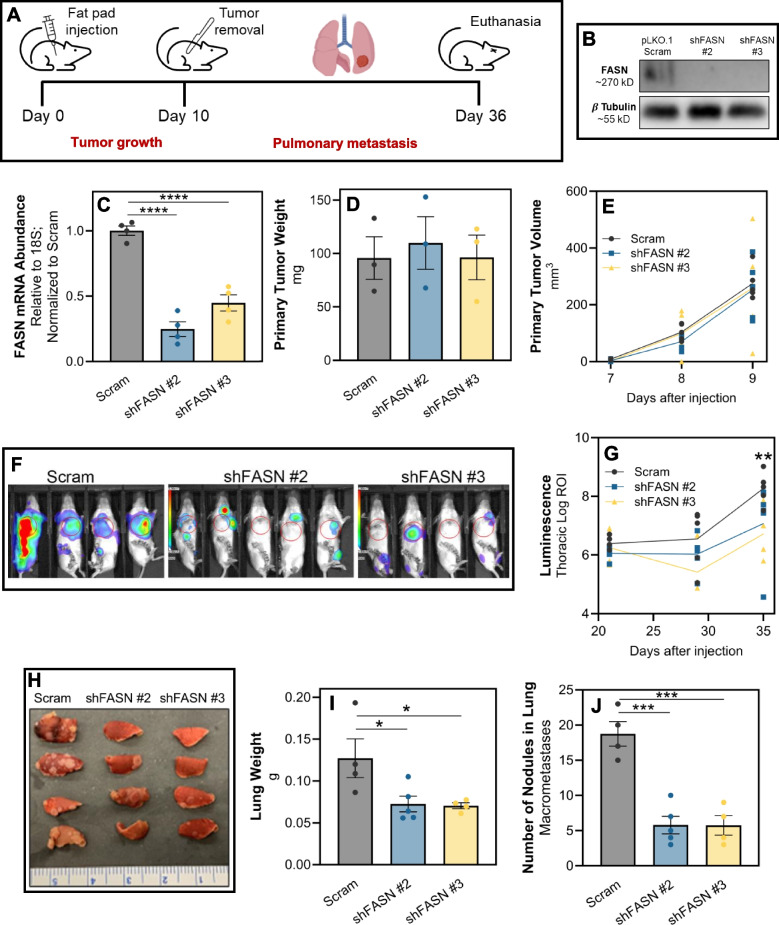
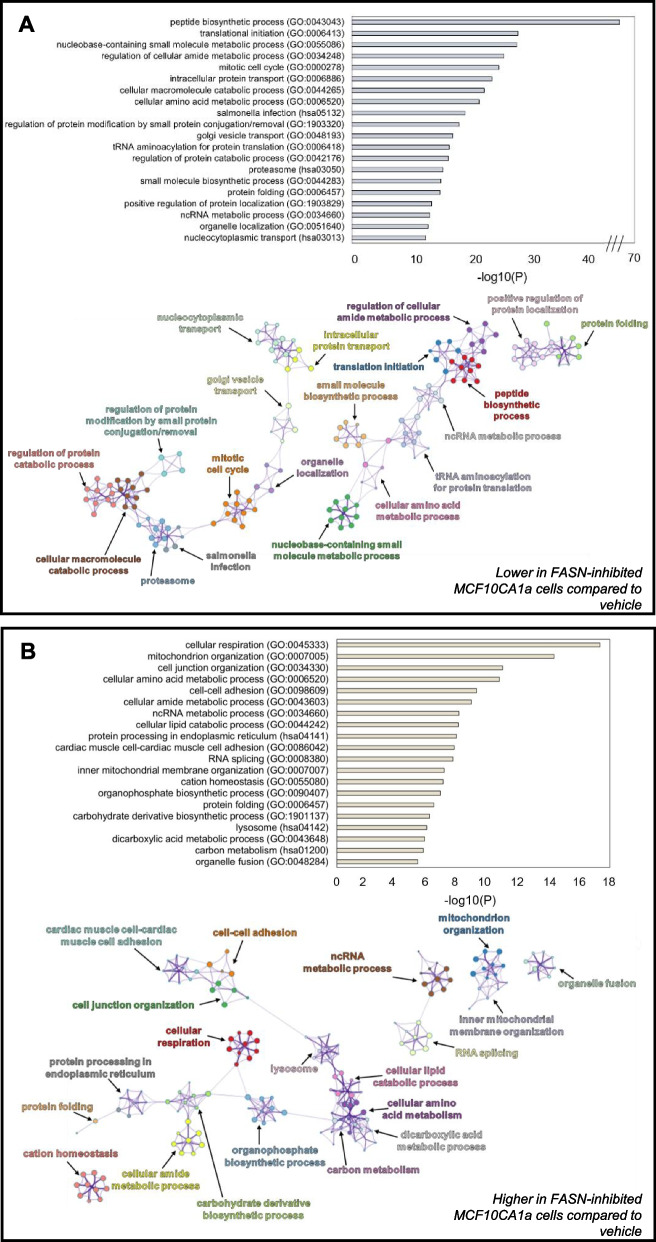
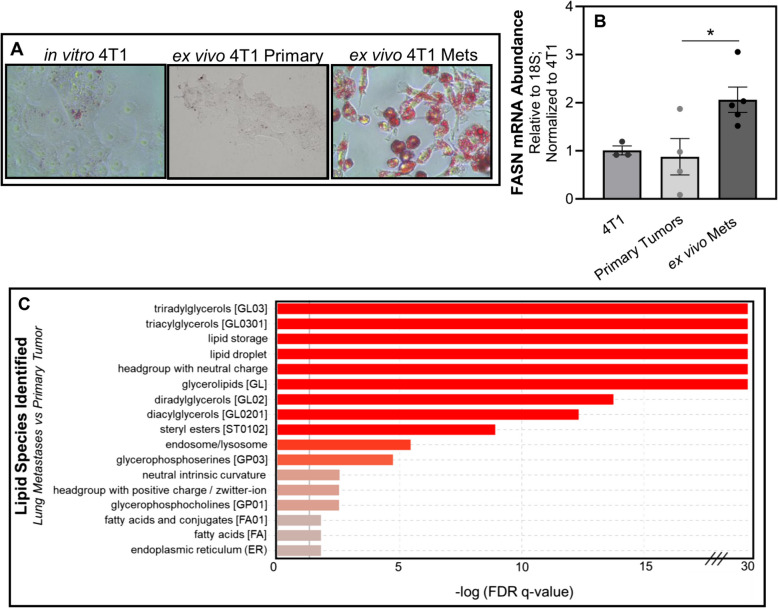
Lipid accumulation is associated with breast cancer metastasis. However, the mechanisms underlying how breast cancer cells increase lipid stores and their functional role in disease progression remain incompletely understood. Herein we quantified changes in lipid metabolism and characterized cytoplasmic lipid droplets in metastatic versus non-metastatic breast cancer cells. C-labeled palmitate was used to determine differences in fatty acid (FA) uptake and oxidation. Despite similar levels of palmitate uptake, metastatic cells increase lipid accumulation and oxidation of endogenous FAs compared to non-metastatic cells. Isotope tracing also demonstrated that metastatic cells support increased de novo lipogenesis by converting higher levels of glutamine and glucose into the FA precursor, citrate. Consistent with this, metastatic cells displayed increased levels of fatty acid synthase (FASN) and de novo lipogenesis. Genetic depletion or pharmacologic inhibition of FASN reduced cell migration, survival in anoikis assays, and in vivo metastasis. Finally, global proteomic analysis indicated that proteins involved in proteasome function, mitotic cell cycle, and intracellular protein transport were reduced following FASN inhibition of metastatic cells. Overall, these studies demonstrate that breast cancer metastases accumulate FAs by increasingde novo lipogenesis, storing TAG as cytoplasmic lipid droplets, and catabolizing these stores to drive several FAO-dependent steps in metastasis.
脂质积累与乳腺癌转移相关。然而,乳腺癌细胞增加脂质储存的潜在机制及其在疾病进展中的功能作用仍未完全明确。在此,我们对转移性和非转移性乳腺癌细胞中的脂质代谢变化进行了定量,并对细胞质脂滴进行了表征。使用碳标记的棕榈酸来确定脂肪酸(FA)摄取和氧化的差异。尽管棕榈酸摄取水平相似,但与非转移性细胞相比,转移性细胞增加了脂质积累和内源性FA的氧化。同位素示踪还表明,转移性细胞通过将更高水平的谷氨酰胺和葡萄糖转化为FA前体柠檬酸,来支持增加的从头脂肪生成。与此一致,转移性细胞中脂肪酸合酶(FASN)水平和从头脂肪生成增加。FASN的基因敲除或药物抑制降低了细胞迁移、失巢凋亡试验中的存活率以及体内转移。最后,全局蛋白质组分析表明,在转移性细胞中FASN受到抑制后,参与蛋白酶体功能、有丝分裂细胞周期和细胞内蛋白质转运的蛋白质减少。总体而言,这些研究表明,乳腺癌转移灶通过增加从头脂肪生成、将甘油三酯储存为细胞质脂滴以及分解这些储存物来驱动转移过程中几个依赖脂肪酸氧化的步骤,从而积累脂肪酸。