Lim Hooi Ching, Multhaupt Hinke A B, Couchman John R
Department of Biomedical Sciences and Biotech Research & Innovation Center, University of Copenhagen, Biocenter, Ole Maaløes Vej 5, 2200, Copenhagen N, Denmark.
Current address: Stem Cell Center, Lund University, Lund, Sweden.
Mol Cancer. 2015 Jan 27;14(1):15. doi: 10.1186/s12943-014-0279-8.
Cell surface proteoglycans interact with numerous regulators of cell behavior through their glycosaminoglycan chains. The syndecan family of transmembrane proteoglycans are virtually ubiquitous cell surface receptors that are implicated in the progression of some tumors, including breast carcinoma. This may derive from their regulation of cell adhesion, but roles for specific syndecans are unresolved.
The MDA-MB231 human breast carcinoma cell line was exposed to exogenous glycosaminoglycans and changes in cell behavior monitored by western blotting, immunocytochemistry, invasion and collagen degradation assays. Selected receptors including PAR-1 and syndecans were depleted by siRNA treatments to assess cell morphology and behavior. Immunohistochemistry for syndecan-2 and its interacting partner, caveolin-2 was performed on human breast tumor tissue arrays. Two-tailed paired t-test and one-way ANOVA with Tukey's post-hoc test were used in the analysis of data.
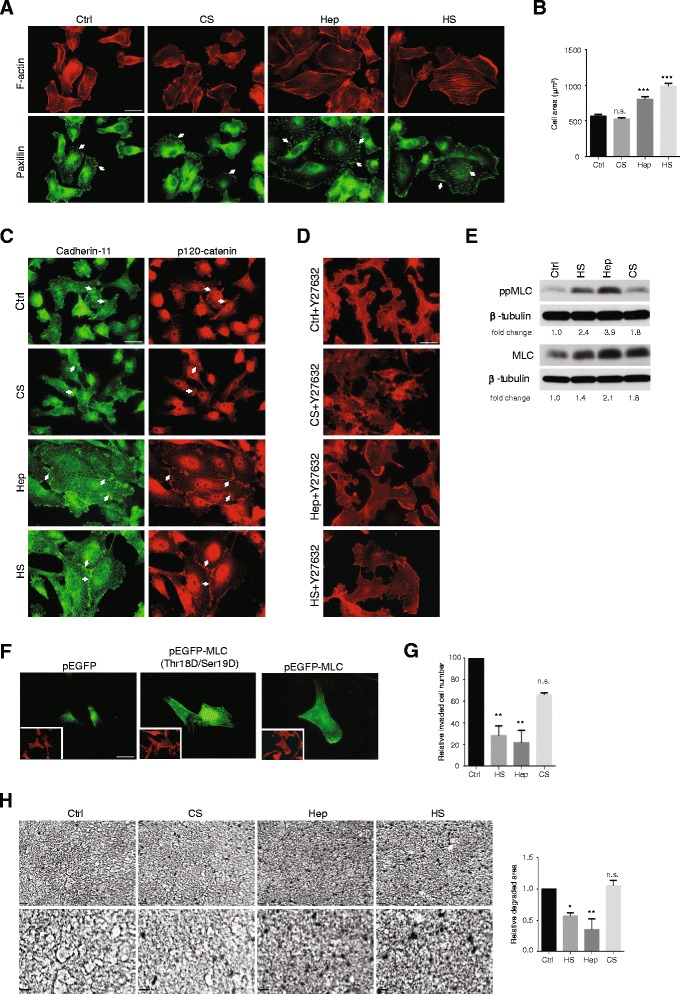
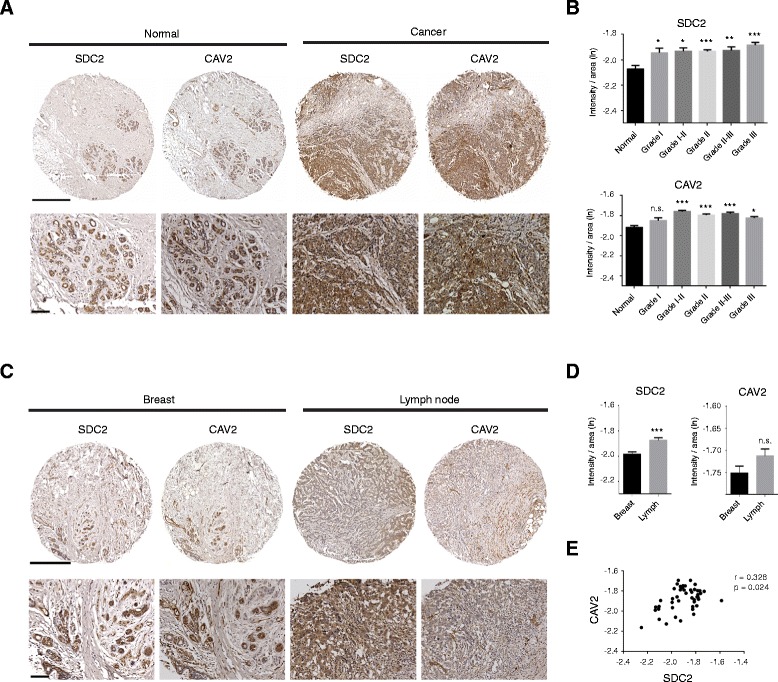
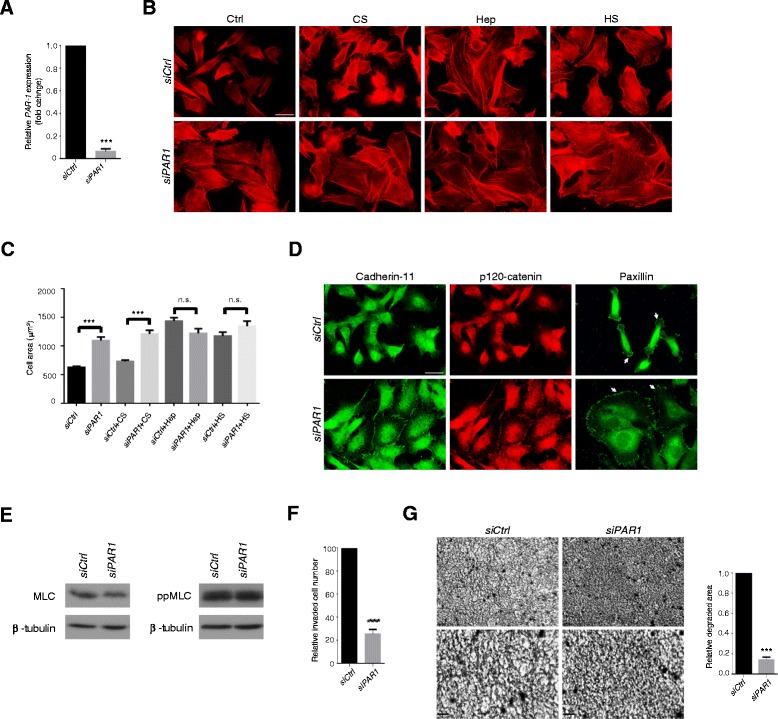
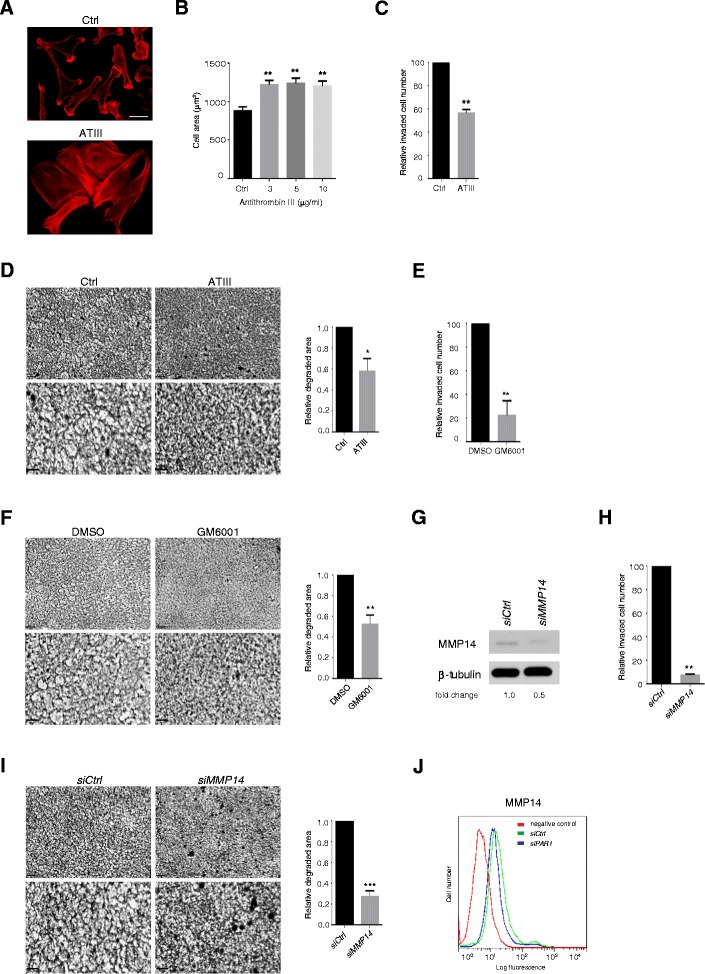
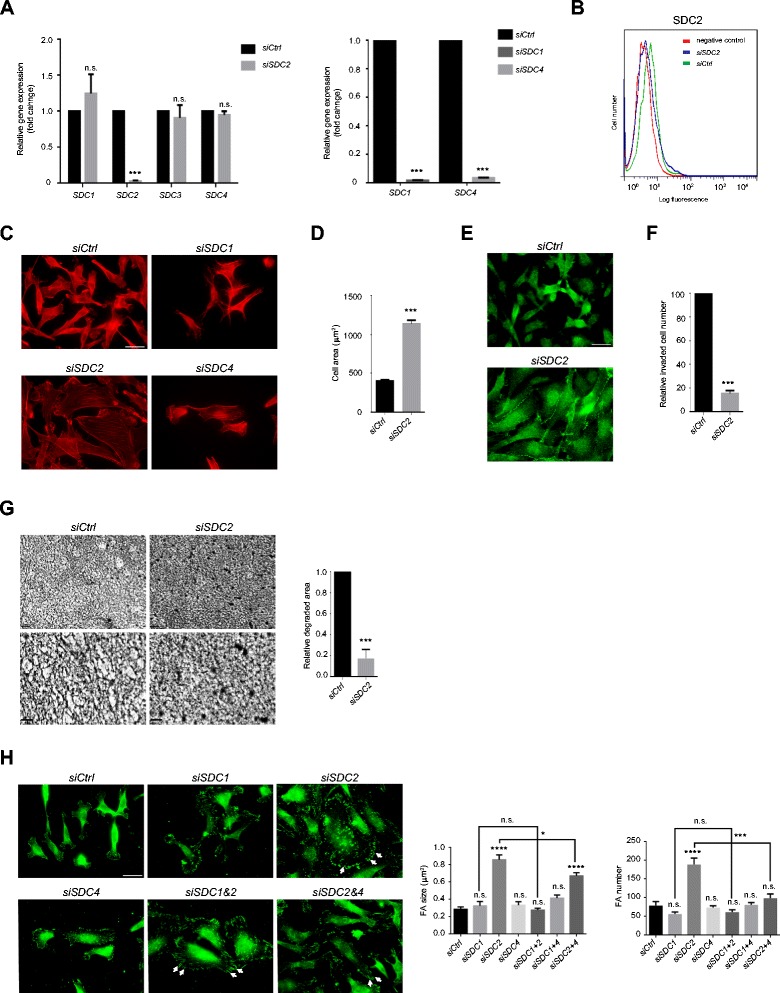
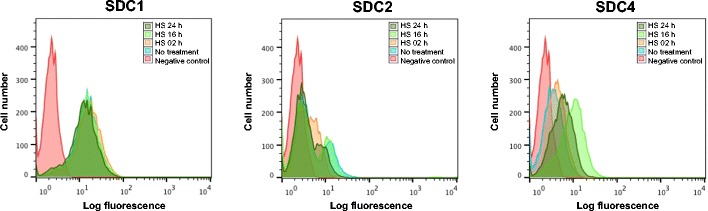
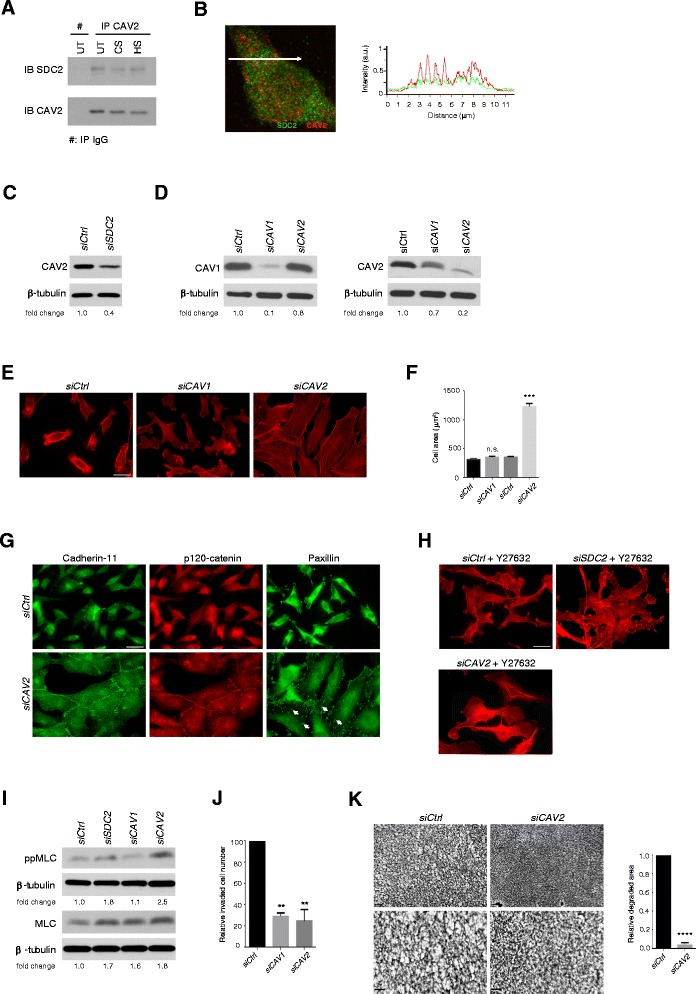
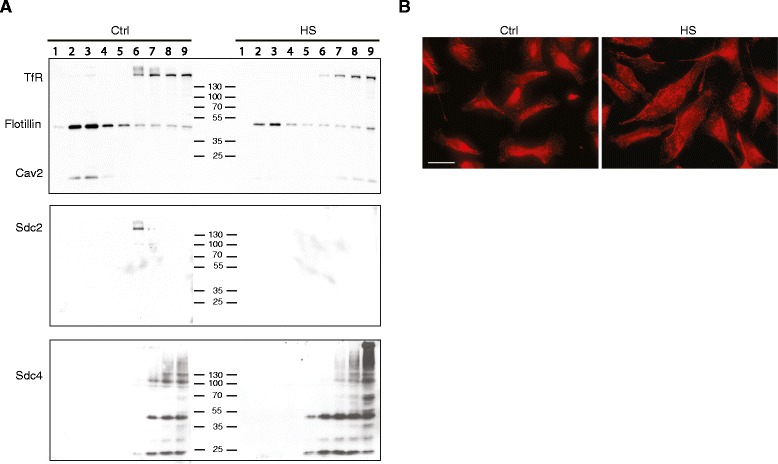
MDA-MB231 cells were shown to be highly sensitive to exogenous heparan sulfate or heparin, promoting increased spreading, focal adhesion and adherens junction formation with concomitantly reduced invasion and matrix degradation. The molecular basis for this effect was revealed to have two components. First, thrombin inhibition contributed to enhanced cell adhesion and reduced invasion. Second, a specific loss of cell surface syndecan-2 was noted. The ensuing junction formation was dependent on syndecan-4, whose role in promoting actin cytoskeletal organization is known. Syndecan-2 interacts with, and may regulate, caveolin-2. Depletion of either molecule had the same adhesion-promoting influence, along with reduced invasion, confirming a role for this complex in maintaining the invasive phenotype of mammary carcinoma cells. Finally, both syndecan-2 and caveolin-2 were upregulated in tissue arrays from breast cancer patients compared to normal mammary tissue. Moreover their expression levels were correlated in triple negative breast cancers.
Cell surface proteoglycans, notably syndecan-2, may be important regulators of breast carcinoma progression through regulation of cytoskeleton, cell adhesion and invasion.
细胞表面蛋白聚糖通过其糖胺聚糖链与众多细胞行为调节因子相互作用。跨膜蛋白聚糖的syndecan家族实际上是普遍存在的细胞表面受体,与包括乳腺癌在内的一些肿瘤的进展有关。这可能源于它们对细胞黏附的调节,但特定syndecan的作用尚未明确。
将MDA-MB231人乳腺癌细胞系暴露于外源性糖胺聚糖,并通过蛋白质免疫印迹法、免疫细胞化学、侵袭和胶原降解试验监测细胞行为的变化。通过小干扰RNA(siRNA)处理使包括PAR-1和syndecan在内的选定受体耗竭,以评估细胞形态和行为。对人乳腺肿瘤组织芯片进行syndecan-2及其相互作用伴侣小窝蛋白-2的免疫组织化学检测。采用双侧配对t检验和带有Tukey事后检验的单因素方差分析进行数据分析。
MDA-MB231细胞对外源性硫酸乙酰肝素或肝素高度敏感,促进细胞铺展增加、粘着斑和黏附连接形成,同时侵袭和基质降解减少。这种效应的分子基础显示有两个组成部分。首先,凝血酶抑制有助于增强细胞黏附并减少侵袭。其次,注意到细胞表面syndecan-2特异性缺失。随后的连接形成依赖于syndecan-4,其在促进肌动蛋白细胞骨架组织方面的作用是已知的。Syndecan-2与小窝蛋白-2相互作用并可能对其进行调节。任一分子的耗竭都具有相同的促进黏附的影响,同时侵袭减少,证实了该复合物在维持乳腺癌细胞侵袭表型中的作用。最后,与正常乳腺组织相比,乳腺癌患者组织芯片中syndecan-2和小窝蛋白-2均上调。此外,它们的表达水平在三阴性乳腺癌中相关。
细胞表面蛋白聚糖,尤其是syndecan-2,可能通过调节细胞骨架、细胞黏附和侵袭,成为乳腺癌进展的重要调节因子。