Bavamian S, Mellios N, Lalonde J, Fass D M, Wang J, Sheridan S D, Madison J M, Zhou Fen, Rueckert E H, Barker D, Perlis R H, Sur M, Haggarty S J
1] Chemical Neurobiology Laboratory, Center for Human Genetics Research, Massachusetts General Hospital, Boston, MA, USA [2] Stanley Center for Psychiatric Research, Broad Institute of MIT and Harvard, Cambridge, MA, USA.
Department of Brain and Cognitive Sciences, Picower Institute for Learning and Memory, Massachusetts Institute of Technology, Cambridge, MA, USA.
Mol Psychiatry. 2015 May;20(5):573-84. doi: 10.1038/mp.2014.176. Epub 2015 Jan 27.
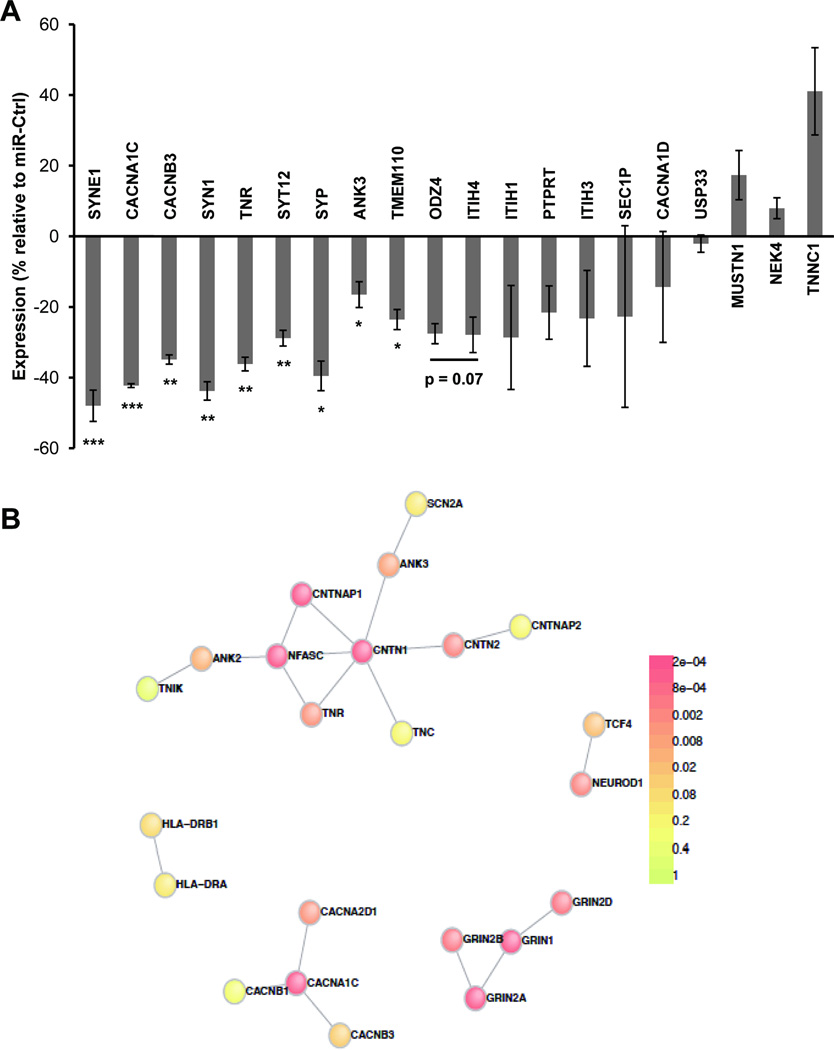
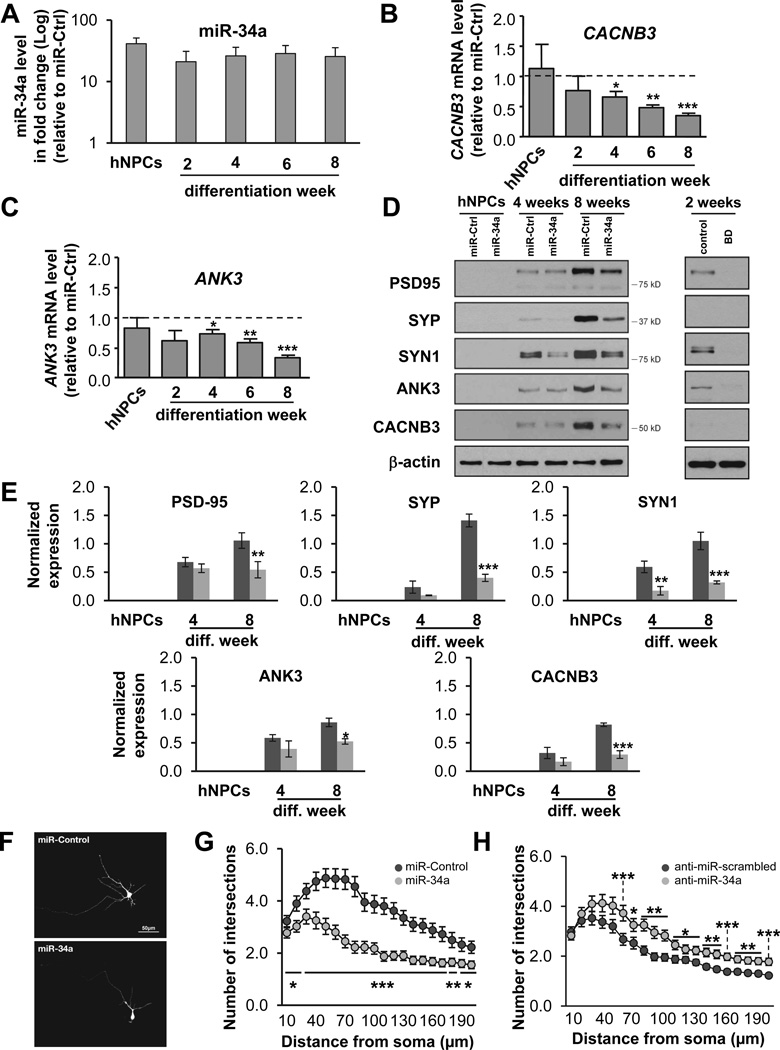
Bipolar disorder (BD) is a heritable neuropsychiatric disorder with largely unknown pathogenesis. Given their prominent role in brain function and disease, we hypothesized that microRNAs (miRNAs) might be of importance for BD. Here we show that levels of miR-34a, which is predicted to target multiple genes implicated as genetic risk factors for BD, are increased in postmortem cerebellar tissue from BD patients, as well as in BD patient-derived neuronal cultures generated by reprogramming of human fibroblasts into induced neurons or into induced pluripotent stem cells (iPSCs) subsequently differentiated into neurons. Of the predicted miR-34a targets, we validated the BD risk genes ankyrin-3 (ANK3) and voltage-dependent L-type calcium channel subunit beta-3 (CACNB3) as direct miR-34a targets. Using human iPSC-derived neuronal progenitor cells, we further show that enhancement of miR-34a expression impairs neuronal differentiation, expression of synaptic proteins and neuronal morphology, whereas reducing endogenous miR-34a expression enhances dendritic elaboration. Taken together, we propose that miR-34a serves as a critical link between multiple etiological factors for BD and its pathogenesis through the regulation of a molecular network essential for neuronal development and synaptogenesis.
双相情感障碍(BD)是一种遗传性神经精神疾病,其发病机制大多未知。鉴于它们在脑功能和疾病中发挥的重要作用,我们推测微小RNA(miRNA)可能对双相情感障碍很重要。在此我们表明,预测靶向多个被认为是双相情感障碍遗传风险因素的基因的miR-34a,在双相情感障碍患者的小脑尸检组织中以及在通过将人成纤维细胞重编程为诱导神经元或诱导多能干细胞(iPSC)随后分化为神经元而产生的双相情感障碍患者来源的神经元培养物中水平升高。在预测的miR-34a靶标中,我们验证了双相情感障碍风险基因锚蛋白-3(ANK3)和电压依赖性L型钙通道亚基β-3(CACNB3)是miR-34a的直接靶标。使用人iPSC来源的神经元祖细胞,我们进一步表明,miR-34a表达的增强会损害神经元分化、突触蛋白的表达和神经元形态,而降低内源性miR-34a表达会增强树突的发育。综上所述,我们提出miR-34a通过调节神经元发育和突触形成所必需的分子网络,在双相情感障碍的多种病因因素与其发病机制之间起到关键联系作用。