Abrol Nitin, Panda Arabind, Kekre Nitin S, Devasia Antony
Department of Urology, Christian Medical College, Vellore, Tamil Nadu, India.
Indian J Urol. 2015 Jan-Mar;31(1):3-7. doi: 10.4103/0970-1591.134235.
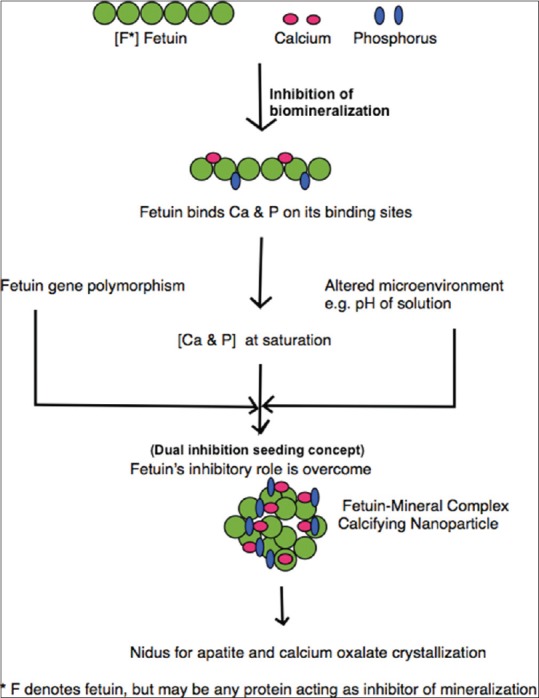
Stone formation in the urinary tract is a common phenomenon with associated morbidity. The exact physicochemical factors responsible for stone formation are not clearly known. Over the past decade considerable interest has been generated in defining the role of nanobacteria in urinary stone formation. A review of the available literature has been carried out to give insights into their nature and outline their role in stone formation. The two aspects of nanobacteria that need to be considered include its biological nature and the other merely as mineralo-protein complexes. Though the current literature favors the concept of mineralo-protein particles, further research is needed to clearly define their nature. Whether living or nonliving, these apatite forming nanoparticles appear to play role in kidney stone formation.
尿路结石形成是一种常见现象且伴有发病情况。导致结石形成的确切物理化学因素尚不清楚。在过去十年中,人们对确定纳米细菌在尿路结石形成中的作用产生了浓厚兴趣。已对现有文献进行综述,以深入了解它们的性质并概述它们在结石形成中的作用。需要考虑的纳米细菌的两个方面包括其生物学性质以及另一个仅作为矿质蛋白复合物的方面。尽管当前文献倾向于矿质蛋白颗粒的概念,但仍需要进一步研究以明确界定它们的性质。无论这些形成磷灰石的纳米颗粒是有生命的还是无生命的,它们似乎都在肾结石形成中发挥作用。