Dai Meiyan, Wu Lujin, He Zuowen, Zhang Shasha, Chen Chen, Xu Xizhen, Wang Peihua, Gruzdev Artiom, Zeldin Darryl C, Wang Dao Wen
Departments of Internal Medicine and Institute of Hypertension, Tongji Hospital, Tongji Medical College, Huazhong University of Science and Technology, Wuhan, China.
Division of Intramural Research, National Institute of Environmental Health Sciences, NIH, Research Triangle Park, North Carolina.
J Cell Physiol. 2015 Sep;230(9):2108-19. doi: 10.1002/jcp.24939.
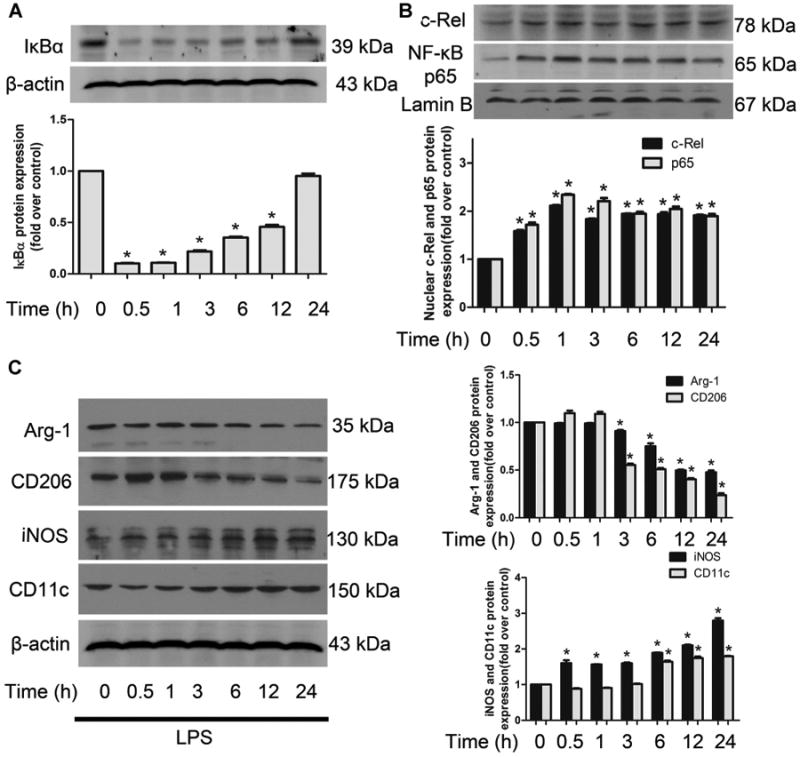
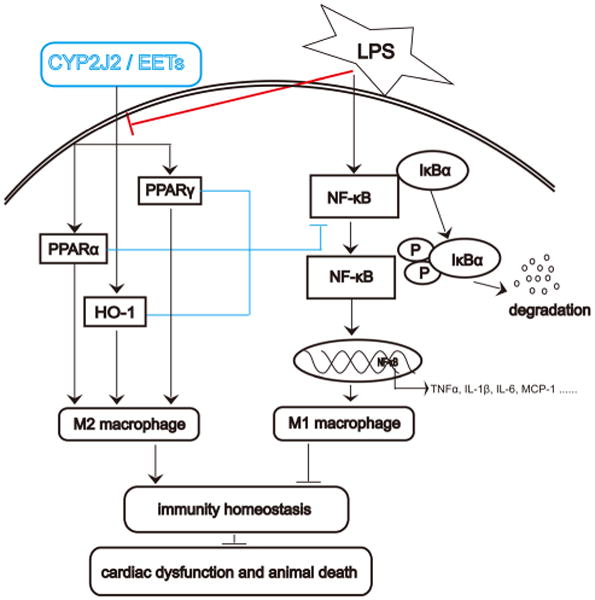
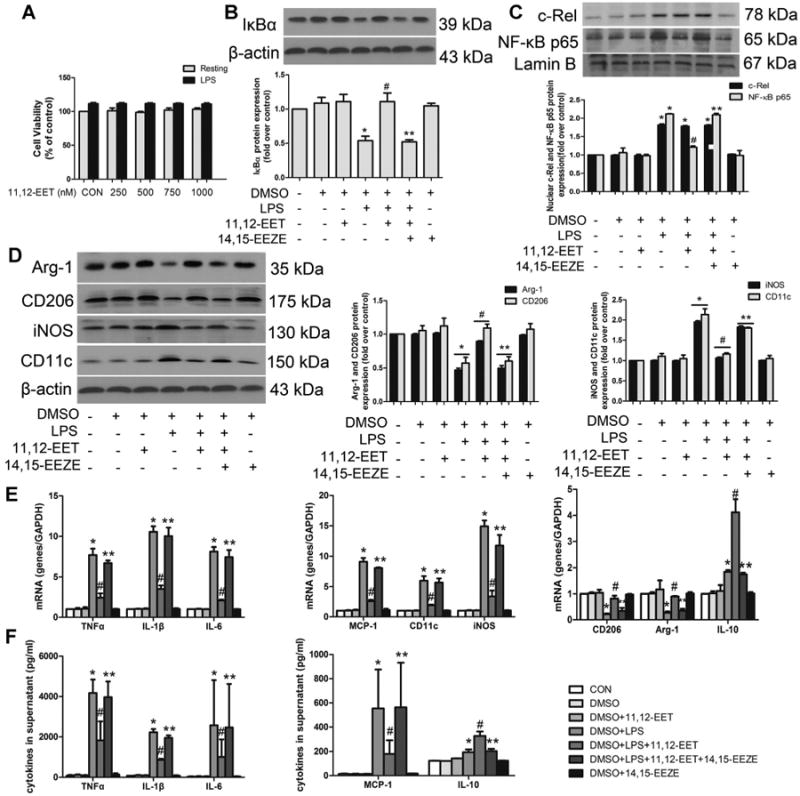
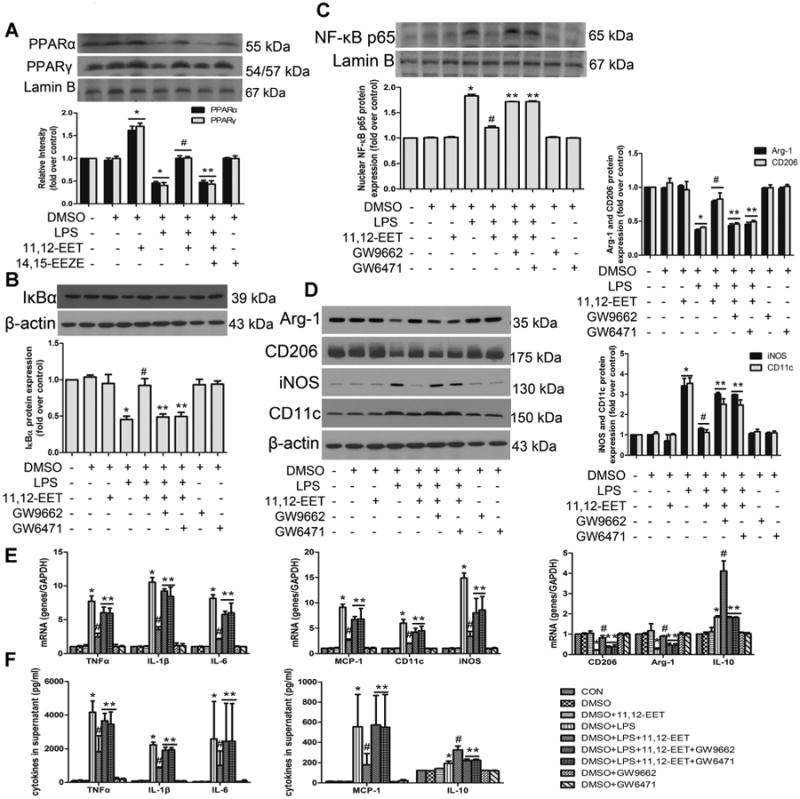
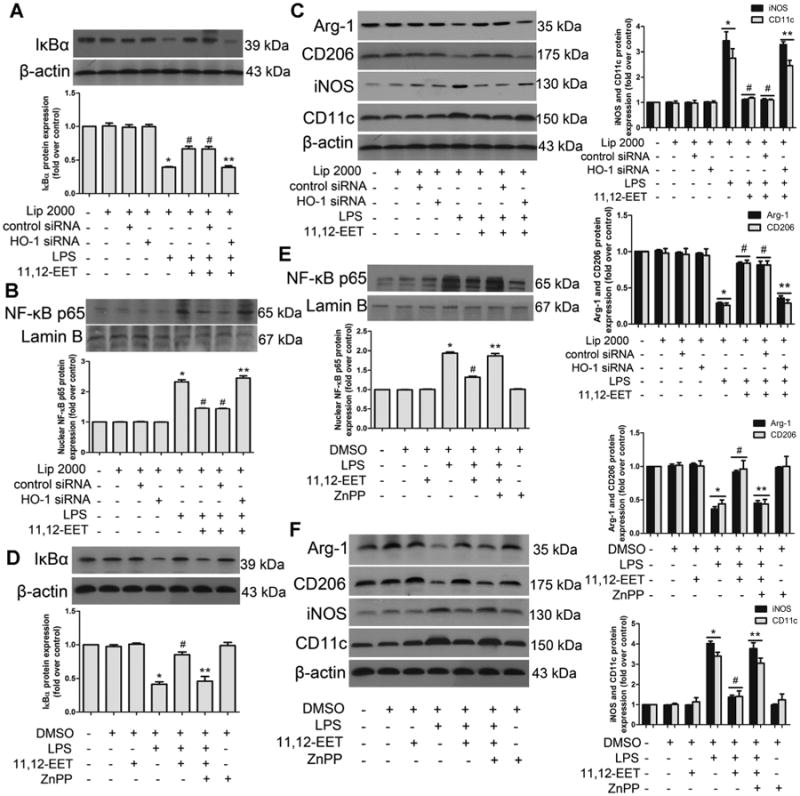
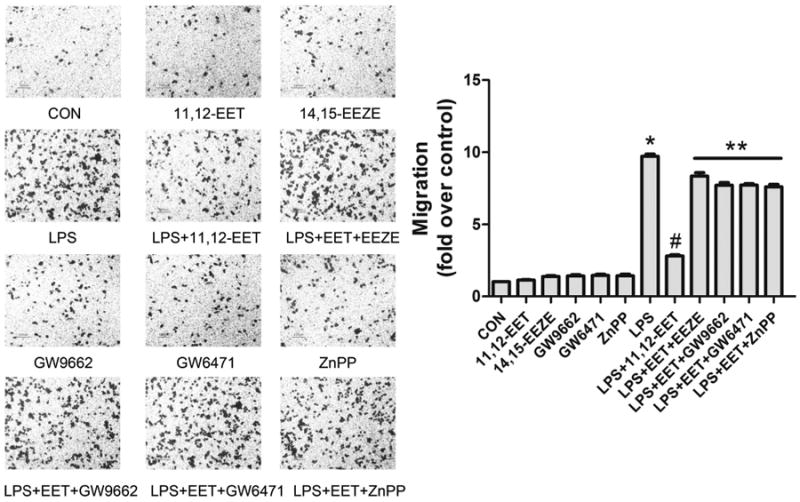
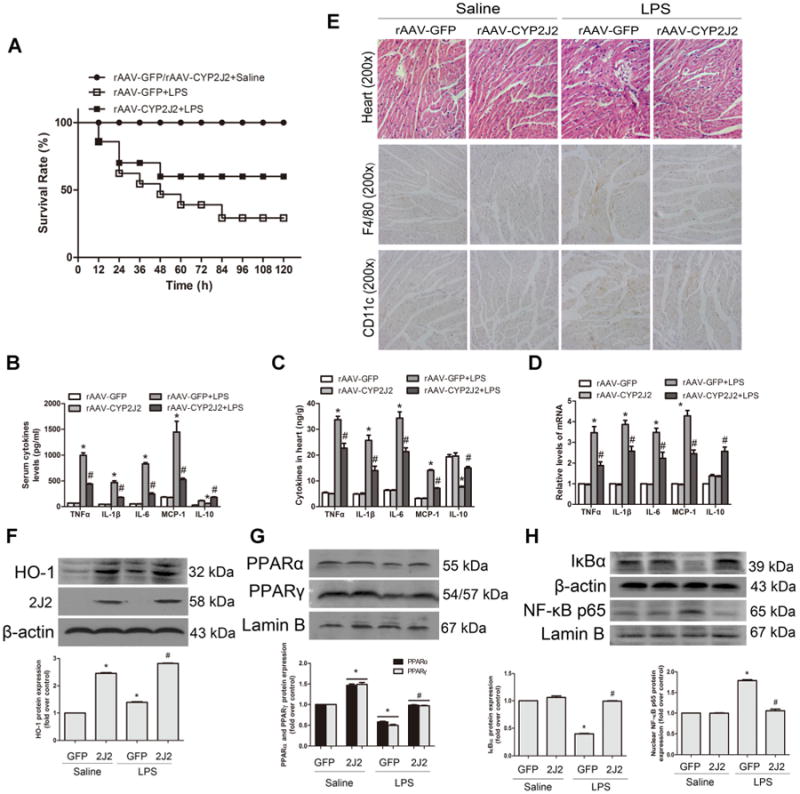
Macrophages, owning tremendous phenotypic plasticity and diverse functions, were becoming the target cells in various inflammatory, metabolic and immune diseases. Cytochrome P450 epoxygenase 2J2 (CYP2J2) metabolizes arachidonic acid to form epoxyeicosatrienoic acids (EETs), which possess various beneficial effects on cardiovascular system. In the present study, we evaluated the effects of EETs treatment on macrophage polarization and recombinant adeno-associated virus (rAAV)-mediated CYP2J2 expression on lipopolysaccharide (LPS)-induced cardiac dysfunction, and sought to investigate the underlying mechanisms. In vitro studies showed that EETs (1µmol/L) significantly inhibited LPS-induced M1 macrophage polarization and diminished the proinflammatory cytokines at transcriptional and post-transcriptional level; meanwhile it preserved M2 macrophage related molecules expression and upregulated anti-inflammatory cytokine IL-10. Furthermore, EETs down-regulated NF-κB activation and up-regulated peroxisome proliferator-activated receptors (PPARα/γ) and heme oxygenase 1 (HO-1) expression, which play important roles in regulating M1 and M2 polarization. In addition, LPS treatment in mice induced cardiac dysfunction, heart tissue damage and infiltration of M1 macrophages, as well as the increase of inflammatory cytokines in serum and heart tissue, but rAAV-mediated CYP2J2 expression increased EETs generation in heart and significantly attenuated the LPS-induced harmful effects, which mechanisms were similar as the in vitro study. Taken together, the results indicate that CYP2J2/EETs regulates macrophage polarization by attenuating NF-κB signaling pathway via PPARα/γ and HO-1 activation and its potential use in treatment of inflammatory diseases.
巨噬细胞具有巨大的表型可塑性和多样的功能,正成为各种炎症、代谢和免疫疾病中的靶细胞。细胞色素P450环氧合酶2J2(CYP2J2)将花生四烯酸代谢生成环氧二十碳三烯酸(EETs),其对心血管系统具有多种有益作用。在本研究中,我们评估了EETs处理对巨噬细胞极化的影响以及重组腺相关病毒(rAAV)介导的CYP2J2表达对脂多糖(LPS)诱导的心脏功能障碍的影响,并试图探究其潜在机制。体外研究表明,EETs(1µmol/L)显著抑制LPS诱导的M1巨噬细胞极化,并在转录和转录后水平降低促炎细胞因子;同时它保留M2巨噬细胞相关分子的表达并上调抗炎细胞因子IL-10。此外,EETs下调NF-κB的激活并上调过氧化物酶体增殖物激活受体(PPARα/γ)和血红素加氧酶1(HO-1)的表达,它们在调节M1和M2极化中起重要作用。另外,小鼠体内LPS处理诱导心脏功能障碍、心脏组织损伤和M1巨噬细胞浸润,以及血清和心脏组织中炎性细胞因子增加,但rAAV介导的CYP2J2表达增加了心脏中EETs的生成并显著减轻LPS诱导的有害影响,其机制与体外研究相似。综上所述,结果表明CYP2J2/EETs通过激活PPARα/γ和HO-1减弱NF-κB信号通路来调节巨噬细胞极化,其在炎症性疾病治疗中具有潜在应用价值。