Kirkpatrick Stacey L, Bryant Camron D
Laboratory of Addiction Genetics, Pharmacology and Experimental Therapeutics, Boston University School of Medicine Boston, MA, USA.
Front Behav Neurosci. 2015 Jan 12;8:450. doi: 10.3389/fnbeh.2014.00450. eCollection 2014.
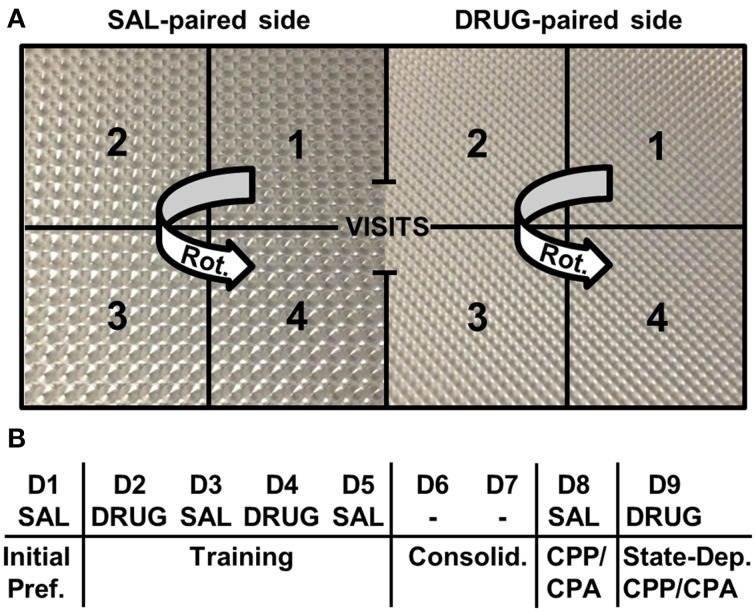
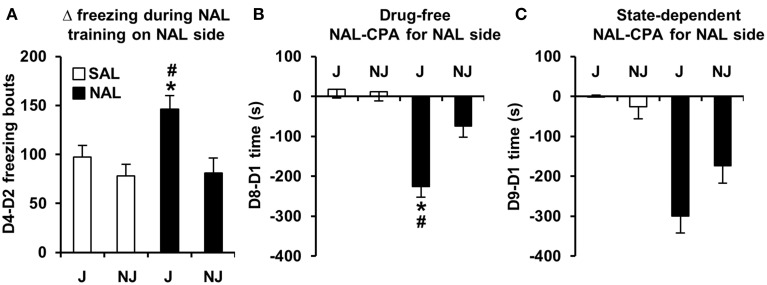
Drug liking vs. drug disliking is a subjective motivational measure in humans that assesses the addiction liability of drugs. Variation in this trait is hypothesized to influence vulnerability vs. resilience toward substance abuse disorders and likely contains a genetic component. In rodents and humans, conditioned place preference (CPP)/aversion (CPA) is a Pavlovian conditioning paradigm whereby a learned preference for the drug-paired environment is used to infer drug liking whereas a learned avoidance or aversion is used to infer drug disliking. C57BL/6 inbred mouse substrains are nearly genetically identical, yet demonstrate robust differences in addiction-relevant behaviors, including locomotor sensitization to cocaine and consumption of ethanol. Here, we tested the hypothesis that B6 substrains would demonstrate differences in the rewarding properties of the mu opioid receptor agonist oxycodone (5 mg/kg, i.p.) and the aversive properties of the opioid receptor antagonist naloxone (4 mg/kg, i.p.). Both substrains showed similar degrees of oxycodone-induced CPP; however, there was a three-fold enhancement of naloxone-induced CPA in agonist-naïve C57BL/6J relative to C57Bl/6NJ mice. Exploratory factor analysis of CPP and CPA identified unique factors that explain variance in behavioral expression of reward vs. aversion. "Conditioned Opioid-Like Behavior" was a reward-based factor whereby drug-free locomotor variables resembling opioid treatment co-varied with the degree of CPP. "Avoidance and Freezing" was an aversion-based factor, whereby the increase in the number of freezing bouts co-varied with the degree of aversion. These results provide new insight into the behavioral architecture of the motivational properties of opioids. Future studies will use quantitative trait locus mapping in B6 substrains to identify novel genetic factors that contribute to the marked strain difference in NAL-CPA.
药物喜好与药物厌恶是一种用于评估药物成瘾倾向的人类主观动机测量方法。据推测,这一特质的变化会影响对物质滥用障碍的易感性与恢复力,且可能包含遗传成分。在啮齿动物和人类中,条件性位置偏爱(CPP)/厌恶(CPA)是一种经典的条件反射范式,通过对药物配对环境的习得性偏爱来推断药物喜好,而通过习得性回避或厌恶来推断药物厌恶。C57BL/6近交系小鼠亚系在基因上几乎相同,但在与成瘾相关的行为上表现出显著差异,包括对可卡因的运动敏化和乙醇消耗。在此,我们测试了一个假设,即B6亚系在μ阿片受体激动剂羟考酮(5毫克/千克,腹腔注射)的奖赏特性以及阿片受体拮抗剂纳洛酮(4毫克/千克,腹腔注射)的厌恶特性上会表现出差异。两个亚系在羟考酮诱导的CPP上表现出相似程度;然而,相对于C57Bl/6NJ小鼠,在未使用过激动剂的C57BL/6J小鼠中,纳洛酮诱导的CPA增强了三倍。对CPP和CPA的探索性因素分析确定了独特的因素,这些因素解释了奖赏与厌恶行为表达中的差异。“条件性阿片样行为”是一个基于奖赏的因素,类似于阿片类药物治疗的无药物运动变量与CPP程度共同变化。“回避与僵住”是一个基于厌恶的因素,僵住发作次数的增加与厌恶程度共同变化。这些结果为阿片类药物动机特性的行为结构提供了新的见解。未来的研究将在B6亚系中使用数量性状基因座定位来识别导致NAL-CPA中显著品系差异的新遗传因素。